New Delhi:
As India urbanizes rapidly, millions of young children are spending their formative years in cities. Yet urban early childhood development remains largely invisible within policy discussions. This is not because governments, administrators, or frontline workers are indifferent. In fact, many city officials, ICDS teams, Anganwadi workers, and community leaders work tirelessly to support young children despite significant constraints. The challenge is that urban realities often fall outside the assumptions on which many existing systems and frameworks were built. What we need today is not merely criticism of existing structures. We need recognition of a new reality and a collective effort to respond to it. Urban childhood is different.
A child growing up in a tribal village, a remote rural settlement, a metropolitan slum, a construction site, or a migrant settlement experiences very different realities. While the principles of nurturing care, play, learning, health, and nutrition remain universal, the systems that support children must adapt to local contexts. Urban Anganwadi workers have already demonstrated remarkable innovation. Every day they navigate challenges related to migration, language diversity, space constraints, parental aspirations, and complex urban environments. Their experiences contain valuable lessons that can inform future policy and practice. The time has come to listen more carefully to these voices. Rather than viewing urban Anganwadis as exceptions within a largely rural system, we must begin to see them as an important and growing part of India’s early childhood landscape.
This requires creating platforms where urban practitioners can share experiences, where city administrations can contribute solutions, where researchers can generate evidence, and where policymakers can develop frameworks that reflect the realities of urban childhood. Most importantly, it requires building a shared vision that places young children at the heart of urban development. Cities are often planned around transportation, housing, commerce, and infrastructure. Rarely are they planned around the needs of a three-year-old child. Yet the quality of a city’s future depends significantly on the quality of experiences available to its youngest citizens today. Urban early childhood development should therefore not be seen as a sectoral issue belonging only to ICDS or education departments. It is a city-building issue. It is a social justice issue. It is a human development issue.
A Growing Reality That Our Systems Must Recognize
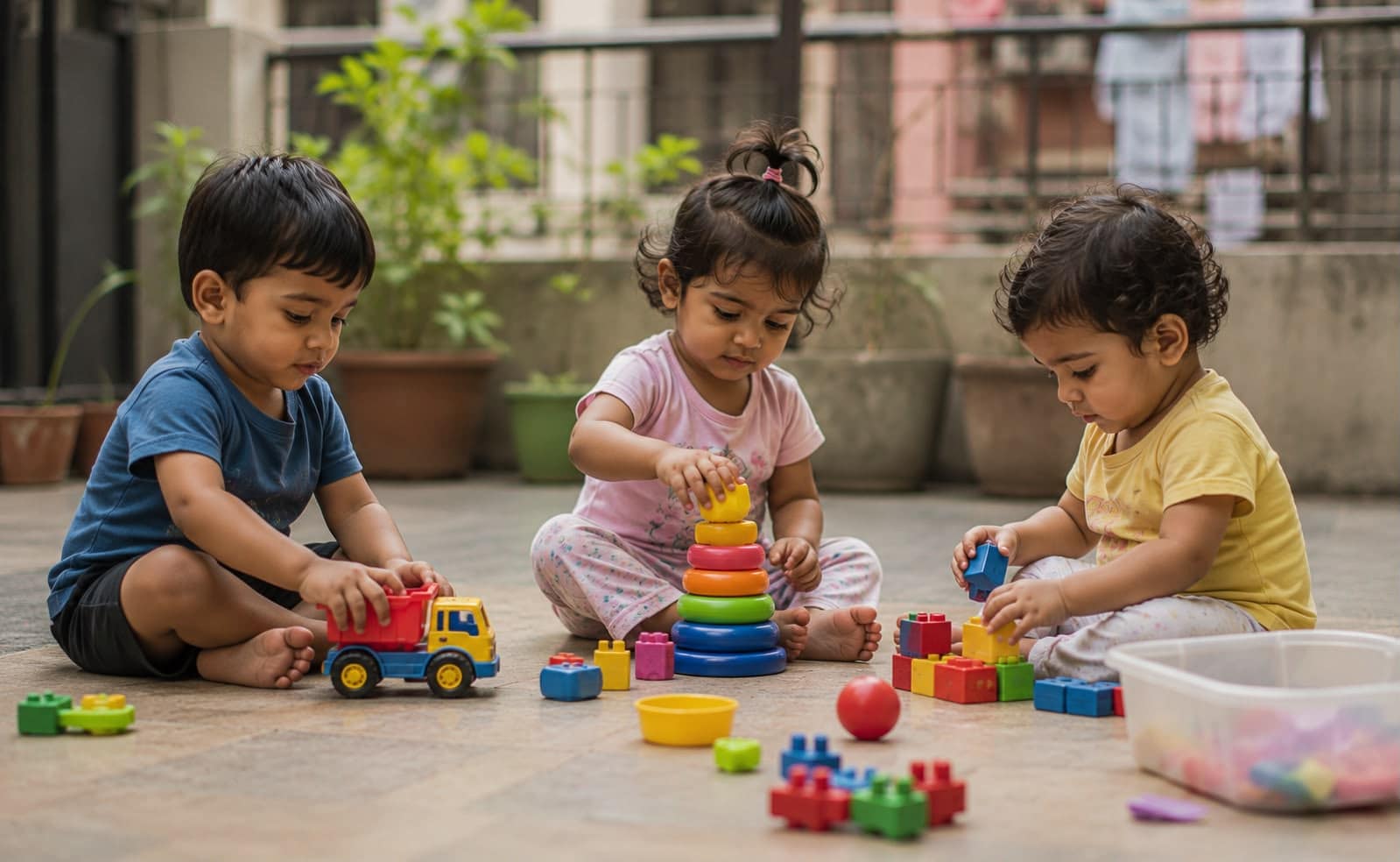
One of the reasons urban early childhood development remains under-discussed is that many of our systems were designed when India was predominantly rural. Naturally, policies, infrastructure norms, operational guidelines, and implementation frameworks evolved around rural realities. While these frameworks have served the country well, rapid urbanization requires us to examine whether they adequately address the realities of children growing up in cities today. Across the country, urban administrators and Anganwadi teams are adapting creatively to local circumstances. Yet many continue to navigate challenges for which there are few dedicated guidelines, limited peer learning opportunities, and insufficient policy attention. Recognizing these realities is the first step toward strengthening urban early childhood systems.
The Reality of Urban Anganwadis
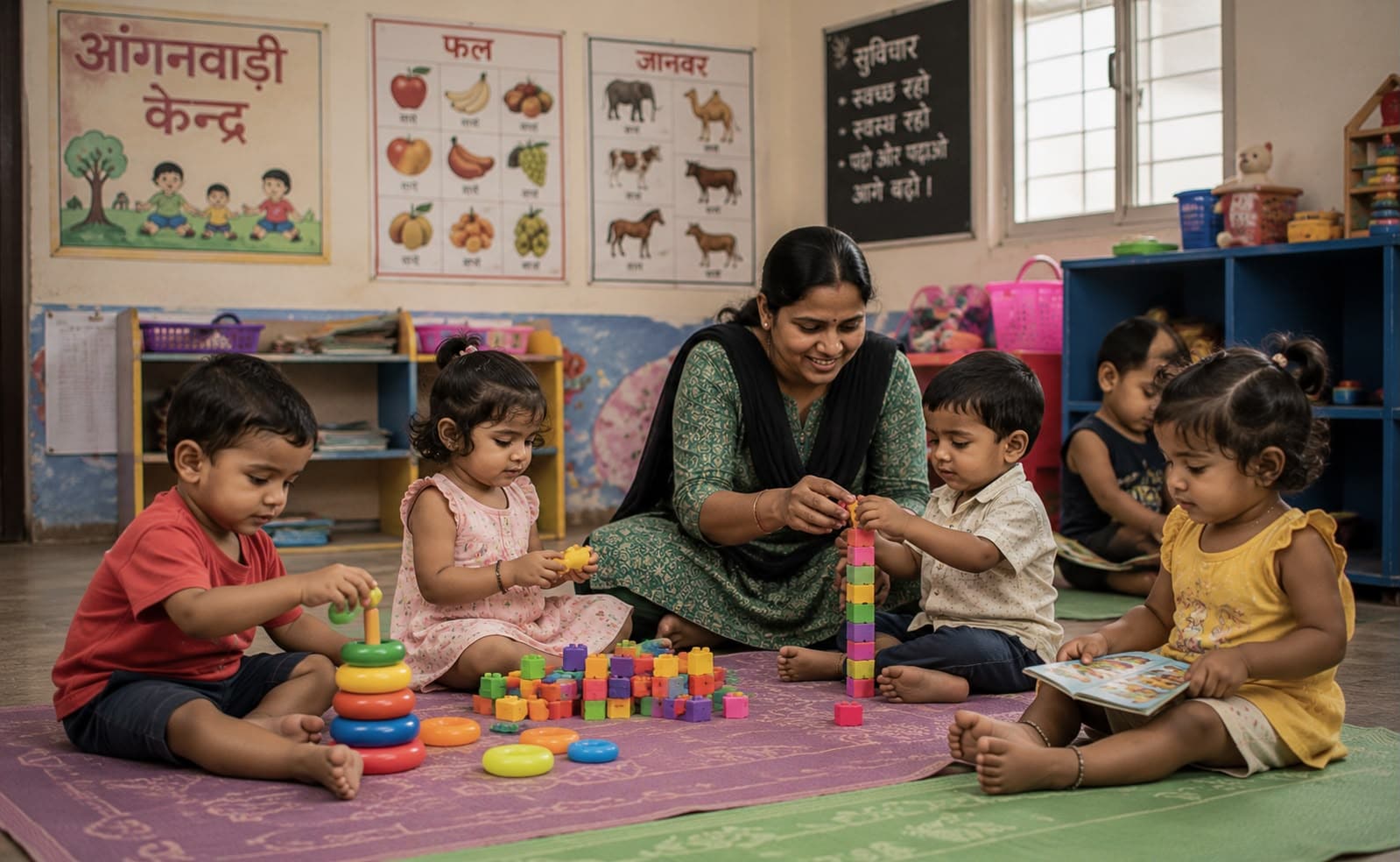
The challenges faced by urban Anganwadis are not simply operational. Many are structural. Space is perhaps the most visible example. Unlike many rural centres that operate from dedicated buildings, urban Anganwadis often function from rented rooms, small homes, temporary structures, or community spaces. In dense settlements, finding safe and child-friendly spaces can be extremely difficult. Rent support, where available, is often inadequate and sometimes delayed, making it difficult to secure quality spaces. As a result, children frequently spend their early years in environments with limited opportunities for play, movement, exploration, and interaction. The challenge becomes even greater in unrecognized slums and informal settlements, where the need for early childhood services is often the highest but securing land or infrastructure is most difficult. At the same time, cities continue to expand rapidly. New settlements emerge around industrial zones, construction sites, and peri-urban areas. Yet mechanisms for opening new Anganwadis often struggle to keep pace with this growth, leaving many children without access to services during critical developmental years.
Migration And Mobility
Migration is one of the defining features of urban childhood. Many families move seasonally between villages and cities or relocate frequently within urban areas in search of work. For young children, this can mean interrupted access to nutrition, health services, early learning opportunities, and school readiness support. Attendance patterns become irregular, developmental progress becomes difficult to track, and continuity of learning is often disrupted. Urban Anganwadi workers manage these realities every day, often without systems specifically designed to support highly mobile populations.
Language Diversity: An Opportunity And A Challenge
Urban India is multilingual. In many Anganwadis, children come from families that have migrated from different parts of the country. They may speak different home languages while the centre functions primarily in the state language. For young children, language is deeply connected to identity, learning, and emotional security. Yet Anganwadi workers often receive limited support in managing multilingual classrooms. Despite this, many workers develop creative solutions on their own. Their experiences can offer important lessons for strengthening multilingual early learning across the country.
Quality Early Learning Cannot Be An Afterthought
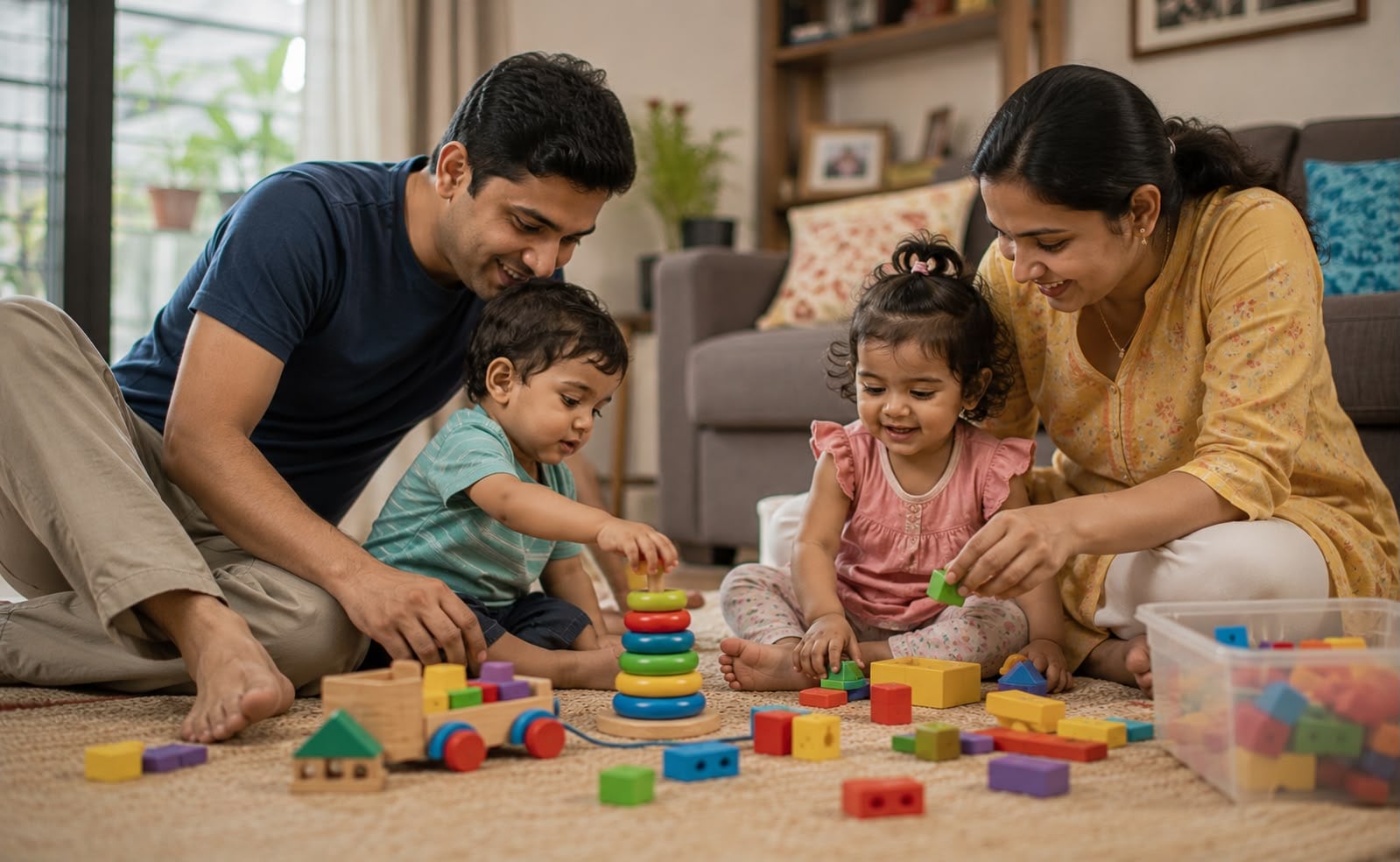
As conversations around foundational learning gain momentum, it is important to remember that foundations are built long before children enter primary school. Many urban parents increasingly choose private preschools because they hope to give their children a better start. However, the quality of many low-cost preschool options remains a concern. Academic drills, worksheets, and rote learning often replace play, exploration, conversation, and meaningful learning experiences. Whether services are public or private, the focus must remain on what children truly need during the early years: responsive relationships, language-rich interactions, opportunities to play, and experiences that nurture curiosity and confidence.
Supporting The Adults Who Support Children
Urban early childhood development depends not only on children Urban early childhood development depends not only on children but also on the adults who care for them. Anganwadi workers require ongoing mentoring, coaching, and professional support. Training alone is not enough to address the complexities of urban contexts. Parents, particularly mothers, also need support. Urban early childhood development depends not only on children but also on the adults who care for them. Anganwadi workers require ongoing mentoring, coaching, and professional support. Training alone is not enough to address the complexities of urban contexts. Parents, particularly mothers, also need support.
Towards An Urban Early Childhood Agenda
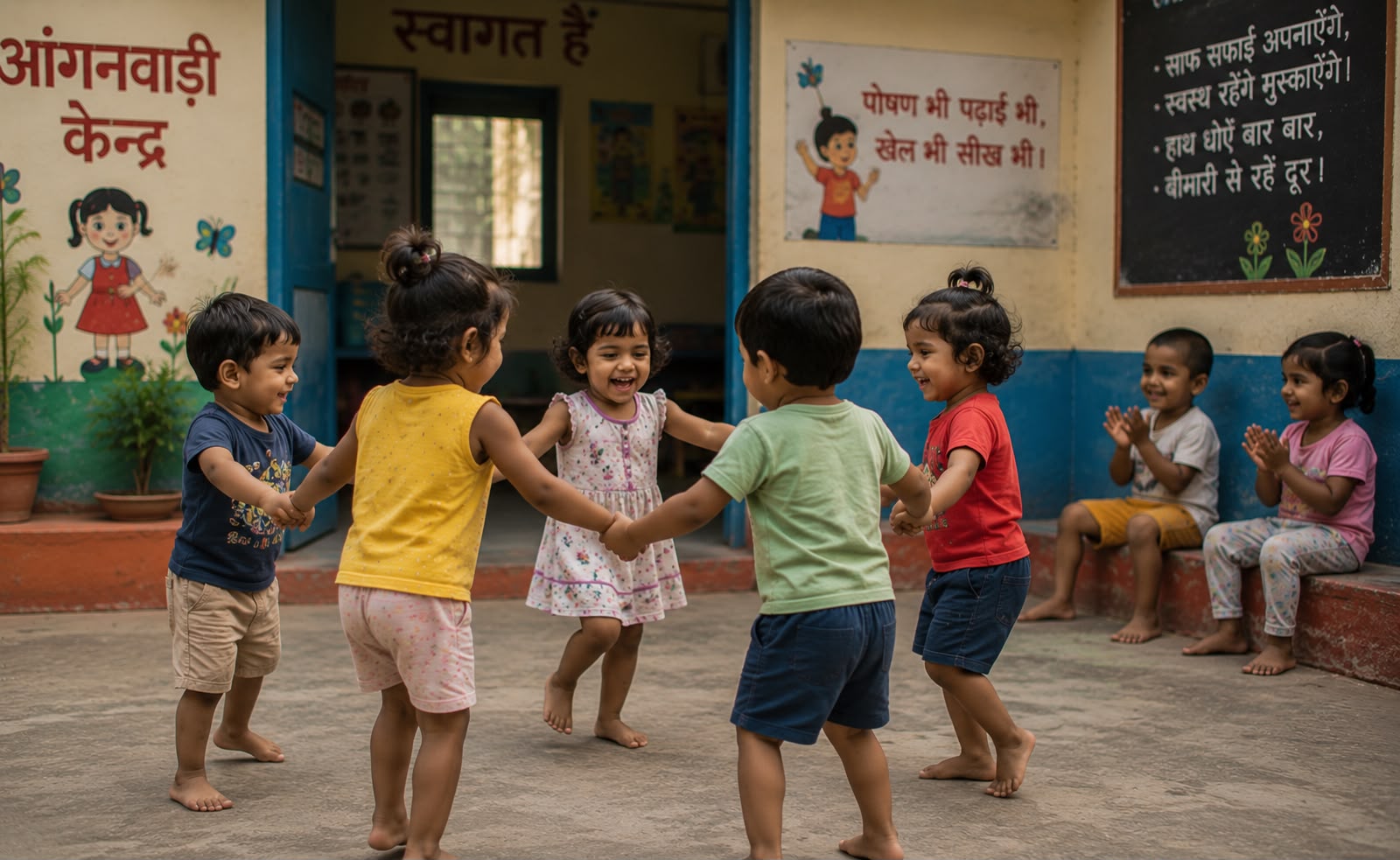
The purpose of highlighting these challenges is not to point out shortcomings. It is to acknowledge a reality that is becoming increasingly important for India’s future. Urban childhood deserves greater visibility within policy, research, planning, and public discourse. It is time to build an Urban Early Childhood Development agenda—one that recognizes the realities of migration, language diversity, informal settlements, caregiver support, infrastructure constraints, quality learning, and child-friendly urban planning. India’s future is increasingly urban. If we are serious about foundational learning, school readiness, and human development, we must begin by making urban childhood visible. Urban childhood matters. And building a voice for urban early childhood development is the first step toward ensuring that every young child in every city has the opportunity to learn, play, belong, and thrive.
From Recognition To Action: Building An Urban Early Childhood Agenda
Recognizing the challenges of urban early childhood development is only the first step. The more important task is to design solutions that reflect the realities of rapidly growing cities while ensuring that every young child has access to nurturing care, quality early learning, health, and nutrition services.
1. Making Urban Children Visible Through Data and Mapping
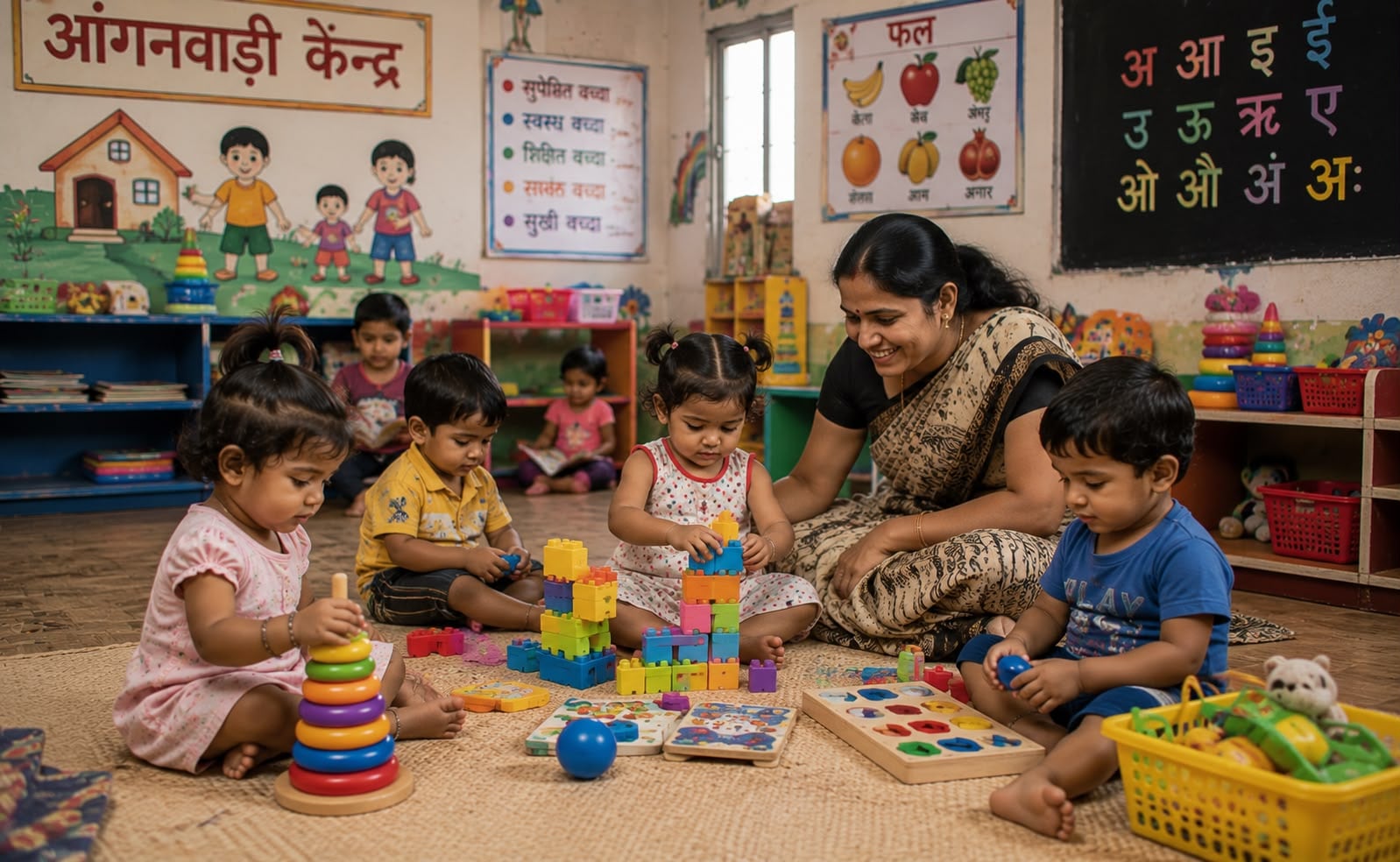
One of the most significant challenges in urban areas is that many young children remain invisible within planning systems. Cities expand rapidly. New informal settlements emerge around industrial zones, construction sites, transportation corridors, and peri-urban areas. However, the location of Anganwadis, the distribution of young children, and the accessibility of services are not always systematically mapped. Maharashtra and other states could consider developing GIS/GPS-based mapping systems that overlay:
- Anganwadi locations
- Population density of children under six
- Slum and informal settlement locations
- Migrant worker settlements
- Construction sites and emerging urban clusters
- Walking distance and accessibility indicators
Such mapping can help identify underserved pockets, improve planning for new centres, strengthen service delivery, and support more equitable allocation of resources.
2. Addressing Access Challenges: Interim and Long-Term Solutions
Urban realities require flexible approaches. In the short term, cities may need innovative interim solutions such as:
- Mobile or satellite Anganwadi services for migrant populations
- Shared community spaces for early childhood activities
- Partnerships with schools, community halls, housing societies, and local institutions
- Flexible service delivery models for highly mobile families
- Special outreach efforts in construction sites and informal settlements
Over the longer term, urban planning systems must recognize early childhood infrastructure as an essential public service. This may include:
- Dedicated space for Anganwadis in urban development plans
- Mandatory allocation of child-development spaces in large housing projects and redevelopment schemes
- Child-friendly design standards for urban Anganwadis
- Integration of early childhood considerations into city planning and infrastructure development
3. Reimagining Parent and Community Engagement
Urban communities function differently from rural communities. Traditional community structures may be weaker, but cities also offer new opportunities for engagement. Many urban parents are deeply invested in their children’s future and actively seek information, guidance, and support. Urban early childhood programmes can build stronger partnerships with caregivers through:
- Parent support groups
- Digital communication platforms
- Community volunteers and local champions
- Engagement with resident welfare associations and housing societies
- Workplace-linked support for working parents
- Programmes that promote responsive caregiving, play, language development, and early learning at home
Strengthening caregivers is often one of the most effective ways to strengthen outcomes for children.
4. Strengthening Quality in Urban Early Learning Environments
Improving access alone is not enough. Urban children need learning environments that provide opportunities for play, exploration, language development, creativity, and social interaction. This requires:
- Strong mentoring and coaching support for Anganwadi workers
- Context-specific training for urban challenges
- Support for multilingual learning environments
- Better learning materials and child-friendly spaces
- Mechanisms for sharing innovations emerging from urban Anganwadis
Urban Anganwadi workers are already developing creative solutions. Their experiences should inform future policy and practice.
5. Exploring Structural Reforms for Urban Early Childhood Services
As India’s cities continue to grow, it may be time to revisit institutional arrangements for urban early childhood development. Municipal corporations and urban local bodies are increasingly responsible for planning and delivering essential city services. A stronger role for municipalities in managing, financing, and supporting urban Anganwadis could improve alignment with local planning, infrastructure development, and community needs. Such reforms would require careful consideration and collaboration between ICDS, Women and Child Development Departments, Urban Development Departments, and municipal institutions. The objective should not be administrative restructuring alone, but creating systems that are more responsive to the realities of urban childhood.
6. Building Inclusive Urban Early Childhood Systems
Urban India is home to children with diverse abilities, developmental needs, languages, cultures, and life circumstances. An effective urban early childhood system must therefore be designed not for the average child, but for the diversity of children who grow up in cities. Inclusion begins in the early years. Across urban Anganwadis, children with different developmental profiles learn, play, and grow alongside their peers, creating valuable opportunities for participation, acceptance, and early support. At the same time, children with disabilities, developmental delays, migrant backgrounds, or other vulnerabilities often face barriers to accessing timely and appropriate services.
For children with developmental delays or disabilities, early identification and intervention can significantly improve developmental outcomes and future learning opportunities. As the first point of contact for many children from birth to six years, Anganwadi workers are uniquely positioned to observe children’s development, engage families, and facilitate access to health, education, and social support services. With appropriate training, simple screening tools, mentoring, and strong referral systems, they can play a transformative role in ensuring that every child receives the support they need during the most critical years of development. Building inclusive urban early childhood systems is therefore not about creating separate programmes. It is about strengthening existing services so that they recognise, value, and respond to the diverse needs of every child. When inclusion becomes a core principle of planning and service delivery, urban Anganwadis become places where every child has the opportunity to learn, participate, belong, and thrive.
Building Child-Friendly Cities

Ultimately, urban early childhood development is not only about improving Anganwadis. It is about creating cities that recognize young children as citizens whose needs matter. A child-friendly city is one where young children can safely play, learn, access services, experience supportive relationships, and grow in environments that nurture their development. Building such cities requires collaboration across sectors—urban planning, housing, transport, health, education, social welfare, and community development. If India’s future is increasingly urban, then investing in urban childhood is not optional. It is essential.