I am sitting at a McDonald’s outlet. At the next table, I see two boys and a girl, probably in their late teens or early 20s, opening a box that contains a big birthday cake to celebrate. I take a start. Given that I have grown up with establishments advertising “Outside Food Not Allowed”. This is strange to me. Mercifully, the kids order an add-on burger meal.
On Sunday, as the Cockroach Janata Party (CJP) headed towards a political victory after weeks of their attention-grabbing Jantar Mantar protests, I watched a popular chat show in a Tamil TV channel, in which people variously stacked as Boomers, Gen X and Millennials, gasped in awe and smirked as the tribe broadly known as Gen Z listed the workplace requirements they seek from their would-be recruiters: no micro-management, flexible hours, WFH at will, joining bonus, retention bonus, midweek off-days, free gizmos, and such.
Advertisement – Scroll to continue
Walking ‘Red Flag’ Detectors
It dawns on me that there is a new generation out there that unconsciously demands or assumes, sometimes with a stubborn entitlement, what to the previous generations meant earned privileges and acquired permissions. But the angst and the anger at Jantar Mantar that led to the resignation of Union education minister Dharmendra Pradhan showed us that unemployment, tough competition, higher aspirations, and career uncertainties are objects of stress for Gen Z, contrasting the perceived sense of entitlement.
You cannot paint an entire generation with the same colour. There are struggling Gen Z-ers in rural areas trying to get their first graduate degree in their families or a white-collar job where the previous generation tilled the fields. There are the rich and the poor, divided by caste, language, and status. Then there are the sanskari Gen Z-ers who do ‘bhajan-clubbing’ while the upscale decadents try their hands at vaping or lounge-hopping.
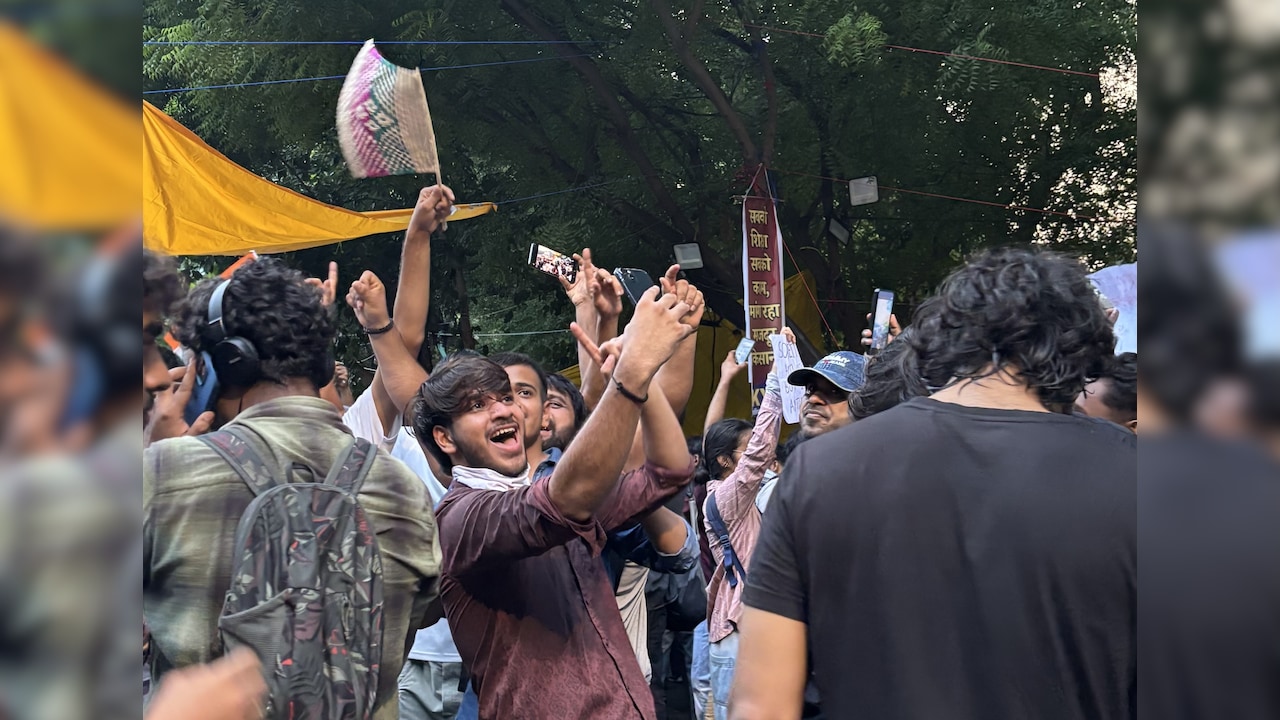
However, across all this, there is a generation gap that is telling. The previous generations cannot easily fathom the minds they had thus far written off as lazy or directionless. The CJP movement showed what they can do when the occasion demands. And the manner in which they did – in a stubborn mix of organisation, courage, comic memes, creative videos and tough but tactful negotiation – shows that even when they have no political affiliations as such, their styles, attitudes, and needs are a new puzzle to be solved in Indian public life.
This is as true for the opposition parties that basked in the CJP’s glory as the ruling Bharatiya Janata Party (BJP) that encountered a staggering Black Swan event in 12 years of Prime Minister Narendra Modi’s record run.
Notes From Mamdani
Modi has begun a Gen Z outreach with Instagram videos, and his party troops have started similar shows at the ground level. However, it seems the new generation needs not as much “outreach” as “insight”. There is a higher need for listening and observing than simply telling them something. The outreach style may well make the kids out of reach.
The millennial Zohran Mamdani is seen as a Gen Z icon, though the New York mayor comes in a traditional leftist mould. What matters perhaps is the ability to capture the imagination of new voters. In my assessment, they also want to see a sense of character that goes beyond promises and words.
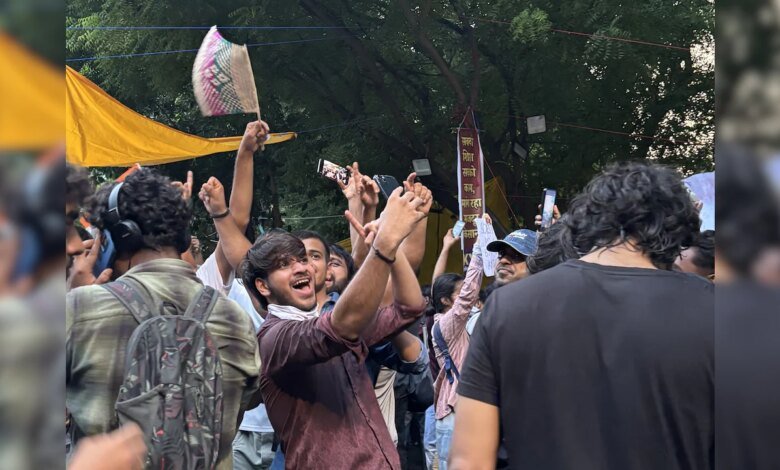
The Gen Z language is only symbolic of the cultural brick wall the older leaders have to climb or move across. One girl says in a post that she was being “gaslit” by her own government, a curious crossover to describe what to the previous generations would have been “state propaganda”. Another one talks of her backside being “legit” attacked by policemen. Jargon and slang apart, the excess of F-words and abuse showed that genteel ladies are passe. But street plays and brandished portraits of Bhagat Singh, Chhatrapati Shivaji, and Ambedkar alike showed a motley mix of the earthy and the Westernised meeting in what is being quickly dubbed as an ‘Instagram revolution’ that upends the fake news factory of the WhatsApp University era. Those protesting against irregularities in the NEET (National Eligibility-cum-Entrance Test) that kick off medical careers are evidently a strange mix of the erudite, the earthy, and the abusively irreverent.
This is just not what the doctor ordered for the elders in public life.
Know Thy Audience
There’s more. Unlike the Bhagat Singhs of the Independence era and the idealists of the JP Movement that led to the imposition of the watershed Emergency in 1975, these are not selfless, sacrificing youngsters, even when they are out for a community engagement. They know their onions – which makes them political hot potatoes.
In a sense, one is reminded of the early days of the Indian National Congress, which was formed in 1885 as a club of the elite seeking fair opportunities for themselves, rather than a bunch out to change the world. Early founders of the Congress had wanted the British-era Indian Civil Service to be accessible to locals. It was a NEET of sorts for those times. The movement acquired complexity and mass support much later as other interest groups joined and new issues and challenges emerged to make the little stream a mighty river.
Who knows, the boys and girls of the CJP may be writing a new wave in history.
If you compare the CJP protests with uprisings in Nepal, Sri Lanka, and Bangladesh, which showed various shades and degrees of GenZ-ism and led to political upheavals, the Jantar Mantar show is a small act. But political leaders are certainly headed for a steep learning curve to deal with those for whom stand-up comedians offer the public-life education that op-ed writers and TV news anchors once used to.
Parties Really Need To ‘Clock It’
What do the entrenched parties do to woo this Gen Z as voters – or pacify them as new-age protesters? There are a lot of drawing-board issues out there. In communication style, demands and aspirations, they are unlikely to sit easy on old handouts, promises, and even achievements.
Recent elections in Tamil Nadu, in which Chief Minister MK Stalin’s DMK lost to the two-year-old TVK led by movie star C Joseph Vijay, had their own Gen Z angle. It is widely believed that Instagram reels played a key role in Vijay’s victory, as did the ability of the youngsters to persuade older family members to vote out the DMK. The DMK failed despite a stellar record in economic growth and welfare handouts. The mood had shifted towards law and order, women’s empowerment, and a host of new aspirations that challenged the old-world to-do list.
The generation gap is probably not the typical Right-Left ideological gap that older leaders are familiar with. Picture it like a Test match generation having to grapple with the rules and styles of the new-age T20 games. “It just isn’t cricket,” they might well say.
For Gen Z to say “Bet” or “No cap” to express their full agreement, there is a lot of homework ahead for political parties – even for those who have gained sympathy after the CJP protest. They are only in a political ‘situationship’.
(Madhavan Narayanan is a senior editor, writer and columnist with more than 30 years of experience, having worked for Reuters, The Economic Times, Business Standard, and Hindustan Times after starting out in the Times of India Group)
Disclaimer: These are the personal opinions of the author