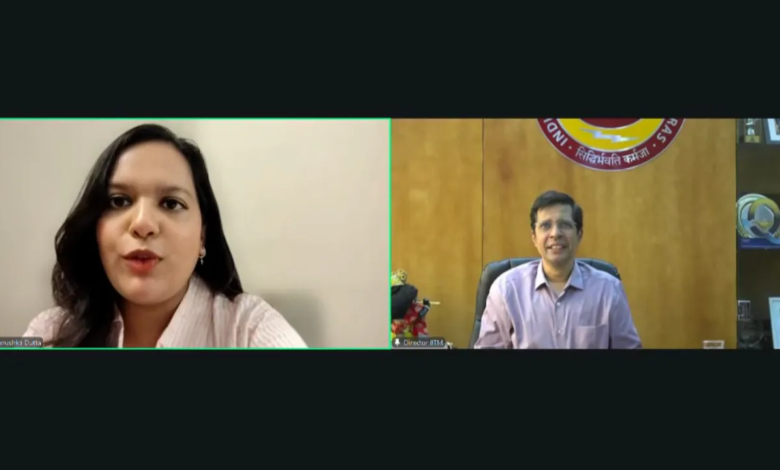
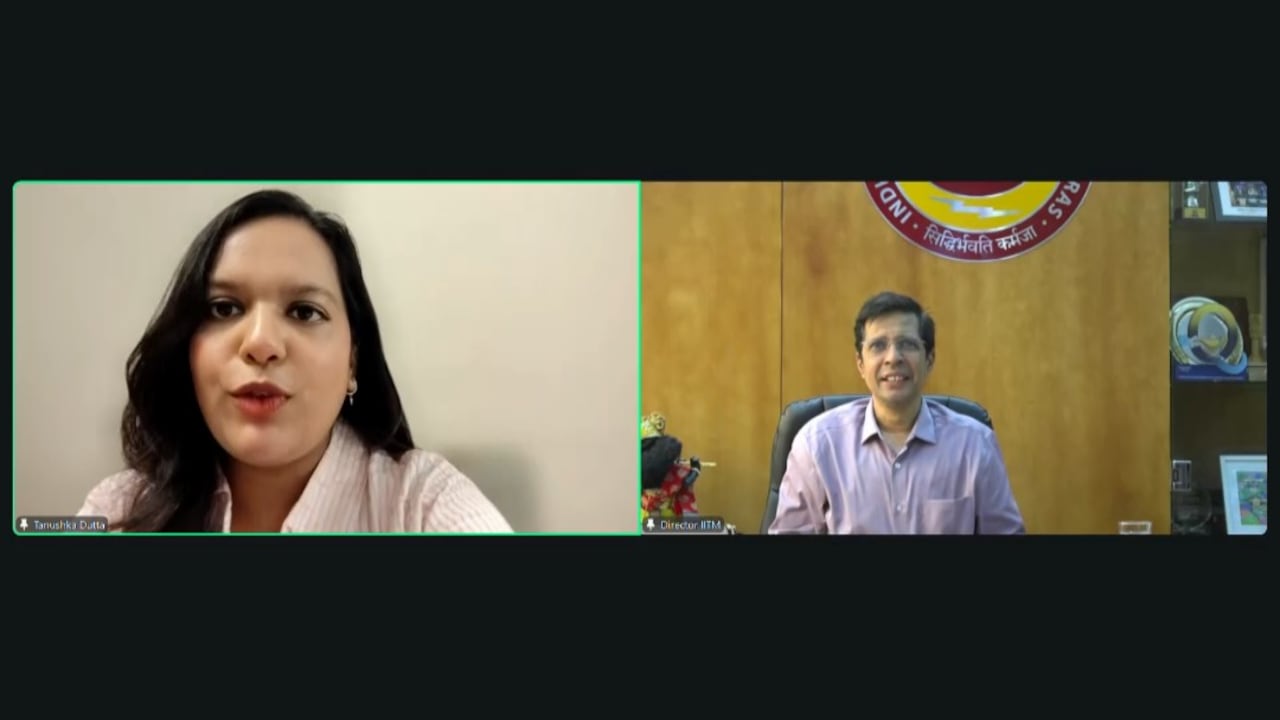
The biggest challenge in preventing examination paper leaks is not technology but ensuring the integrity of question paper setters and invigilators, IIT Madras Director V. Kamakoti, a member of the Prime Minister’s newly constituted High Power Task Force on National Testing Agency (NTA) reforms, told NDTV in an exclusive conversation.
Speaking to NDTV, Kamakoti said the panel’s recommendations would focus on making examinations “leak-proof and transparent”, but stressed that every examination system ultimately depends on what he described as the “root of trust”-the people entrusted with preparing question papers.
“The root of trust is the question paper setter. Even if AI generates question papers, there has to be a trusted human being to verify them,” Kamakoti told NDTV.
The High Power Task Force was constituted after the latest NEET paper leak to recommend reforms for India’s entrance examination system. While the committee is yet to hold its first meeting, Kamakoti said he expects it to propose a mix of short, medium, and long-term reforms aimed at strengthening the credibility of high-stakes examinations.
Panel To Focus On Leak-Proof, Transparent Exams
According to Kamakoti, the task force is expected to recommend reforms with two clear objectives: ensuring examinations are leak-proof and making evaluation more transparent for candidates.
“The two priorities are that the examination system should be leak-proof and transparent,” Kamakoti told NDTV.
He said transparency also means candidates should clearly understand how their marks have been awarded, pointing to recent changes in the CBSE re-evaluation process as an example of improved openness.
Technology Alone Cannot Prevent Paper Leaks
Explaining the committee’s approach, Kamakoti said technological interventions are essential but cannot, by themselves, eliminate the possibility of paper leaks.
“Any operation has a root of trust. If that root of trust is shattered, the whole system collapses,” Kamakoti said.
He said that while artificial intelligence may eventually assist in generating question papers, human oversight would remain indispensable.
He added that the same principle extends to examination centres, where invigilators play an equally critical role.
“If the invigilator starts helping students, technology alone cannot solve the problem,” Kamakoti said, noting that surveillance cameras, jammers and other monitoring systems can only supplement, not replace, human integrity.
Reform Roadmap Likely In Phases
Although the committee has not yet met formally, Kamakoti said he expects its recommendations to be divided into short, medium, and long term measures so that immediate reforms can be implemented ahead of the next examination cycle.
“My intuition is that we will come out with short-term, medium-term and long-term recommendations,” he stated.
With major examinations beginning again later this year, he indicated that the panel would aim to complete at least its initial recommendations before December.
Framework Will Cover More Than NEET
Kamakoti said the committee’s mandate extends beyond NEET and will examine India’s broader examination ecosystem, including JEE, CUET, GATE, state public service commission examinations and other large-scale entrance tests.
Rather than proposing exam-specific solutions, he said the panel intends to recommend a common framework that can be adapted across different examination systems.
Drawing a comparison with the banking sector, Kamakoti said accountability mechanisms similar to the “maker-checker” process could help strengthen examination security by ensuring multiple layers of verification and responsibility.
The committee also includes former Intelligence Bureau Director Tapan Deka, whose experience, Kamakoti said, would help identify vulnerabilities and strengthen security protocols.
Candidate Numbers Have Changed The Scale Of The Challenge
Highlighting the need for continuous reforms, Kamakoti said India’s entrance examination system has evolved dramatically over the past four decades.
“When I wrote JEE in 1985, there were around 5,000 candidates. Today there are nearly 1.5 million engineering aspirants and over 22 lakh candidates appearing for NEET,” he told NDTV.
As participation in higher education continues to grow, he said examination systems must evolve to handle larger numbers while maintaining fairness and credibility.
CBT Not The Biggest Concern
Responding to questions on the government’s proposal to shift NEET to a computer-based test (CBT), Kamakoti said he does not see major concerns relating to question paper leaks under the CBT model.
According to him, the principal challenge lies in conducting examinations across multiple sessions while ensuring parity among candidates.
“The primary concern with CBT is multiple sessions. I don’t see any major concern regarding question paper leaks in a computer-based examination,” he said.
OMR-Based Exams Can Be Secure
On recent allegations by some NEET candidates regarding incorrect OMR sheets, Kamakoti said he was not familiar with individual cases but maintained that robust safeguards such as barcoding, anonymisation and multiple verification processes have made OMR-based examinations reliable over the years.
He said the IIT system had successfully conducted large-scale OMR examinations for several years using such safeguards.
Will there be an NTA Overhaul?
Asked whether the task force could recommend structural changes within the National Testing Agency itself, Kamakoti declined to speculate.
“We have to meet first and then come out with our recommendations,” Kamakoti said.
Emphasising that restoring public confidence should remain the central objective, Kamakoti said the integrity of question paper setters and invigilators would ultimately determine the credibility of any examination system.
“We need people with integrity and honesty,” Professor said. “If these two aspects-the question paper setter and the invigilator-are secured, any examination system becomes significantly stronger.”