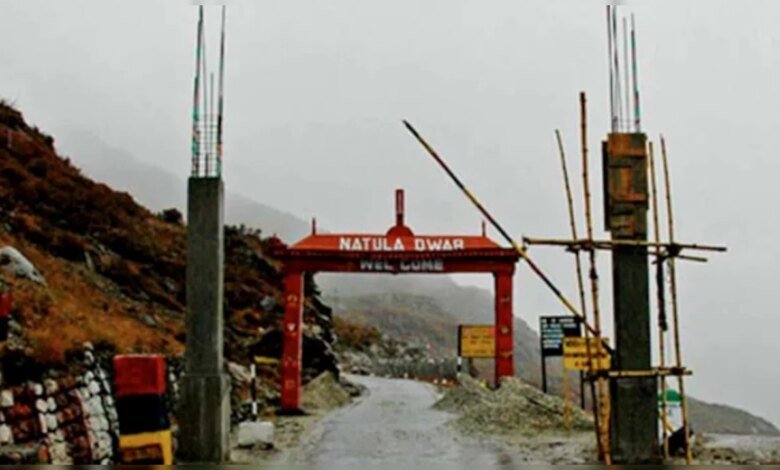
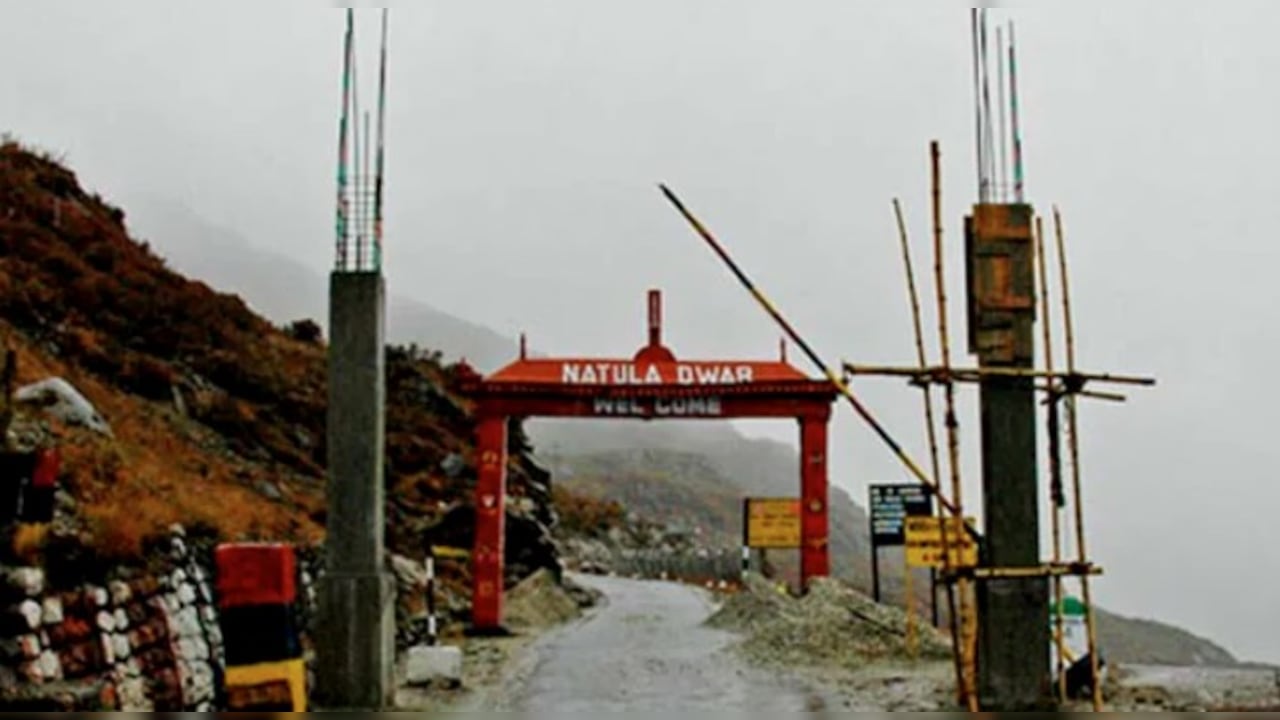
The first traders crossed the gates of Nathu La at 14,140 feet (4,300 metres) above sea level on Saturday morning, quietly restarting a commercial route that has been closed for six years.
The resumption may not make much change for India-China trade. The list of commodities is restricted, the trading through the pass is rigorously regulated with daily transaction cap. But the symbolism is considerably greater than the business itself.
August 1 marks the culmination of a diplomatic process that began almost precisely a year ago for New Delhi and Beijing. What began with a visit by Chinese Foreign Minister Wang Yi to India in August 2025 has now resulted in one of the first tangible indicators of normalisation since relations nosedived after the Galwan conflict.
Beginnings
Wang Yi’s visit to New Delhi last August was a low-key affair. The visit, instead, led to one of the major successes in bilateral engagement since 2020.
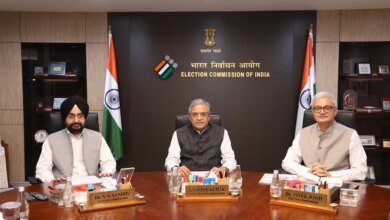
He held talks with National Security Advisor Ajit Doval for the 24th session of special representatives’ talks on the boundary dispute, a dialogue that had been halted throughout years of military tensions. He also held talks with Prime Minister Narendra Modi and External Affairs Minister S Jaishankar.
A joint statement after the visit proclaimed restoration of border trade through Nathu La, Lipulekh and Shipki La. It also promised resumption of Kailash Mansarovar Yatra and the direct flights between India and China.
Jaishankar had outlined India’s position then: “Normal relations with India are possible only if there is peace and stability along the border.”
That premise, officials claim, did not change during the implementation phase.
This declaration could be made since the mood had already started improving following the meeting between Modi and Xi in October 2024 in Kazan. De-escalation and patrolling in eastern Ladakh helped break years of deadlock along the Line of Actual Control. After follow-up conversations, including sessions in Tianjin in 2025, sufficient trust was eventually created for both sides to start restricted exchanges again.
Why It Took A Year
The announcement came quickly. The reopening didn’t. It took almost a year to get the road ready after six winters of neglect.
The Integrated Check Post and the Sherathang Trade Mart were in a bad condition. Heavy snowfalls also provided a short window to carry out the work before the trading season began and buildings, utilities and communication infrastructure had to be repaired.
The security arrangements too had to be changed.
The Indo-Tibetan Border Police ramped up deployment at the checkpoint and deployed, for the first time, an all-women unit at Sherathang. Two days before the reopening, officials conducted a trial run with traders to make sure paperwork, customs processes and logistics all went properly.
Other pledges made in the 2025 agreement have also been delivered in the past year.
After a lapse of five years, the Kailash Mansarovar Yatra has restarted via both the Lipulekh and Nathu La routes. Direct flights between India and China resumed in October. Foreign Secretary Vikram Misri flew to Beijing for talks with Chinese Vice Foreign Minister Sun Haiyan days ahead of the reopening of border trade.
Business Tax Returns
Trading resumed Saturday under the same rules as before the closure in 2020.
The ticket can be used for exchange of permitted commodities, and every dealer can transact Rs 2 lakh worth of items a day. The gate in Sikkim would remain open from Monday to Thursday during the trading season, officials said.
Nathu La, before it was closed during the 1962 war, was a section of the old Silk Route linking India with Tibet. Cross-border trade restarted in 2006 but was again halted in 2020.
More Than Just Numbers
The route used to see a commerce of Rs 49 crore per annum with roughly 600 registered Indian traders before the pandemic. That’s modest compared to the whole bilateral trade of roughly $151 billion presently, with the trade deficit topping $112 billion for India.
Privately, authorities admit that the reopening of the pass will not alleviate the larger issues in the relationship. The border issue is yet to be addressed, and India is still worried about market access and trade imbalance.
But the reopening of Nathu La was never truly about figures.
It’s a deliberate step for both administrations – small enough to avoid substantial political risk, but large enough to indicate that interaction is feasible if there is movement on the border.
India has always held that ties can only improve if there is peace along the Line of Actual Control.
Saturday’s reopening does not mean a return to normalcy in India-China relations. But it does indicate that after years of antagonism, both sides are prepared to see if collaboration may gradually return.