Sikkim is continuously monitoring 16 highly vulnerable glacial lakes and has installed sensors, automated weather stations and early warning systems to detect changes in lake water levels, Sikkim State Relief Commissioner Rinzing Chewang said on Monday, as the state offered to share its experience of managing glacial lake outburst flood (GLOF) risks with Nepal following the devastating glacier-related disaster there.
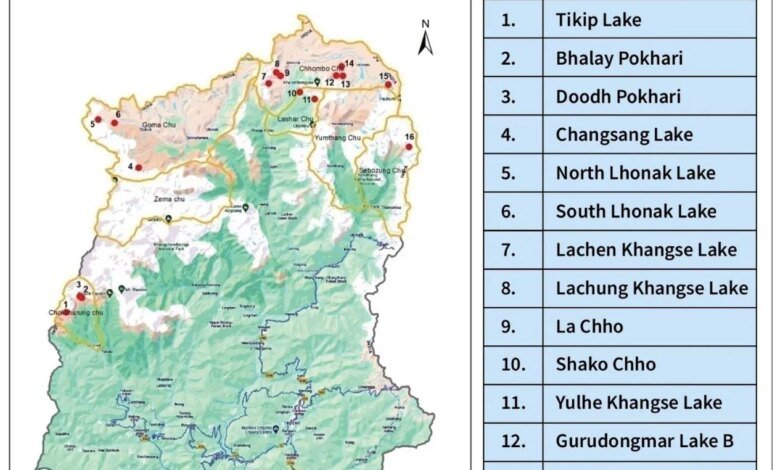
Sikkim has more than 400 glacial lakes, both large and small, of which 16 have been identified under the state’s high-vulnerability assessment. Thirteen of these lakes are located in North Sikkim and three in West Sikkim.
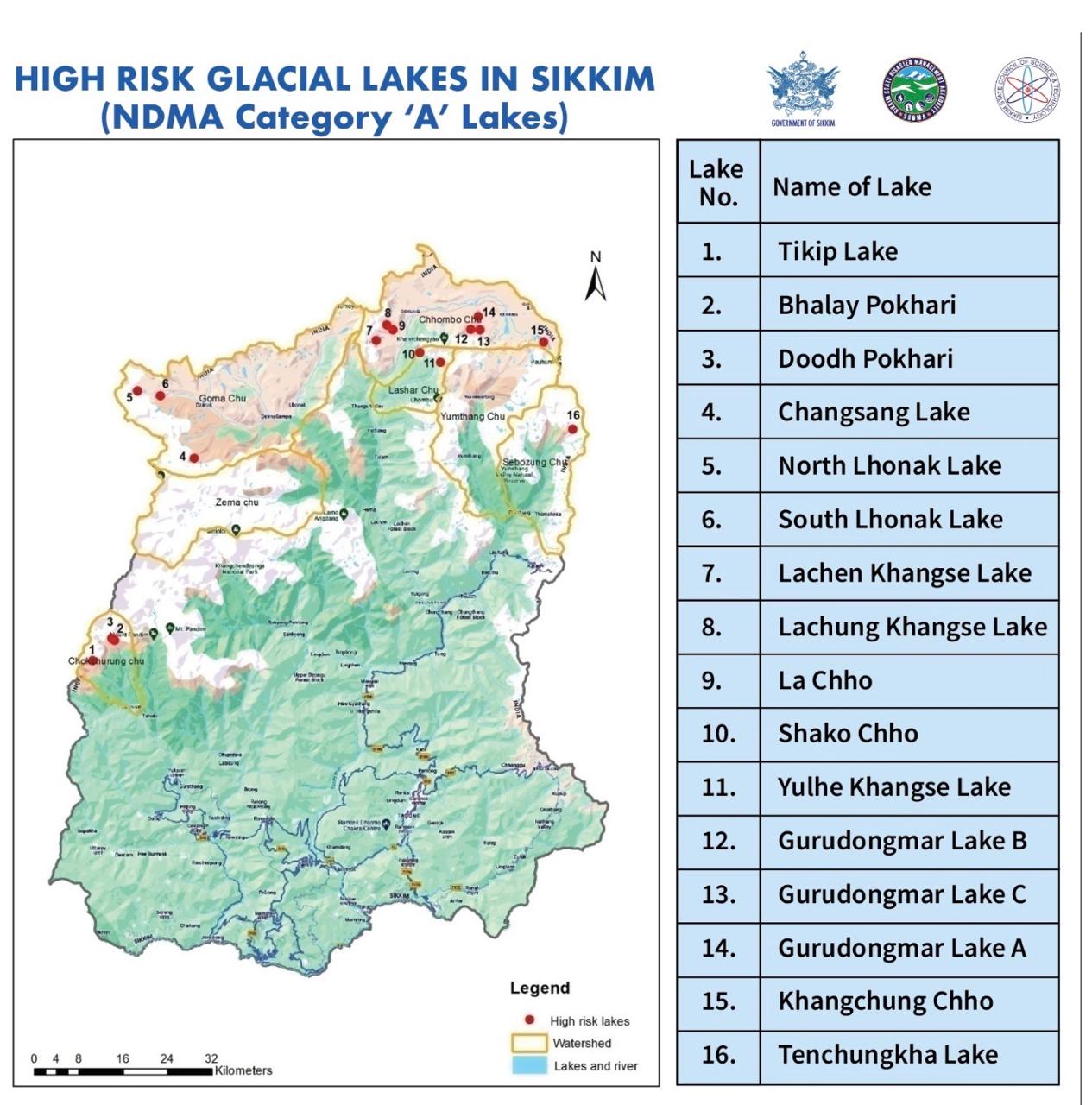
“We have more than 400 glacial lakes in Sikkim, both big and small, out of which 16 lakes are highly vulnerable,” Chewang said.
According to him, the state has put in place continuous monitoring mechanisms for these lakes and installed sensors at most of the vulnerable sites to track changes in water volume and levels.
“We are continuously monitoring the lakes and we have installed sensors in most of the lakes to find out whether the volume of the glacial lake is increasing or not,” he said.
The monitoring network has been further strengthened through the installation of early warning systems and automated weather stations, particularly in North Sikkim where most of the vulnerable lakes are situated.
“In many places in North Sikkim, where the lakes are mostly situated, we have installed early warning systems and automated weather stations to inform us about any rise in the water level,” Chewang said.
Parallel Drawn With South Lhonak Disaster
The state’s preparedness efforts have gained renewed significance in the wake of the disaster in Nepal, where a glacier collapse triggered severe flooding along the Nepal-Tibet border. Rescue operations were continuing on Monday, with authorities monitoring risks from unstable lakes and landslides amid concerns that hundreds of people may be trapped in hydropower project tunnels.
Chewang said the disaster in Nepal bore similarities to the events that led to the October 2023 South Lhonak GLOF in Sikkim.
“As you all know, a huge glacier fell down in Nepal, blocked the river and then later, caused the flood. It affected the entire region. Something similar happened in Sikkim also,” he said.
Referring to the South Lhonak incident, he explained that a portion of the glacier had fallen into the lake, displacing a massive volume of water and triggering catastrophic flooding downstream.
“At South Lhonak, a portion of the glacier fell into the lake and displaced the water. That huge volume of water which was displaced caused this flooding, which we all know of,” Chewang said.
The 2023 disaster, he added, gave Sikkim an opportunity to study GLOF risks in greater detail and strengthen its disaster-response capabilities.
“After the October flood due to the South Lhonak incident, we had the opportunity to study the subject in detail. We have built up our own capacity on how to handle this kind of situation,” he said.
Chewang said Sikkim was prepared to share its experience and expertise with Nepal as it deals with the aftermath of the disaster.
“And, of course, we are ready to share our experience with Nepal also,” he said.
Relief Team Dispatched To Nepal
Meanwhile, Sikkim has extended humanitarian assistance to Nepal. Chief Minister Prem Singh Golay on Monday flagged off a team of volunteers carrying relief materials to the affected areas. The team includes doctors and is expected to provide assistance on the ground, assess the situation and support relief efforts.
Recalling the support Sikkim received after the South Lhonak disaster, Golay said the state wanted to reciprocate through a humanitarian gesture.
“When the disaster (South Lhonak Glacial Lake Outburst Flood) occurred in Sikkim in 2023, there was extensive loss and damage. At that time, Sikkim received a great deal of assistance from the Government of India and also from Nepal and other places. Whether we received material assistance or not, we received prayers and blessings from people everywhere, including Nepal. Keeping this in mind, and as a humanitarian gesture, we want to help Nepal and extend a hand of cooperation. That is our objective,” he said.
The chief minister also said the state government had already initiated extensive disaster preparedness and mitigation measures in coordination with scientific institutions and central agencies.
“We have already started work. We are working with the State’s Science and Technology department and in coordination with the Central Government agencies to determine what needs to be done in terms of prevention and preparedness. The Government of India has also asked us to work further on the model that Sikkim has developed. We are working on the same model and taking it to the next stage,” Golay said.
He added that the state was also focusing on particularly vulnerable and low-lying areas, including relocation wherever necessary.
“We are also working on measures for areas that are particularly vulnerable, including low-lying areas, and on relocating people where necessary. The works being undertaken with the funds sanctioned by the Government of India have already started. Restoration and reconstruction works are underway, along with other necessary protective measures.
“Whatever needs to be done from our side has already been initiated. The necessary arrangements and formalities have been completed, and work on registering the damage, including damaged infrastructure and bridges, is also currently underway,” he said.
SSDMA Officials Join Mission
Chewang said the relief team would also assist local authorities in search-and-rescue operations wherever required.
“This morning, the Chief Minister flagged off a group of volunteers from Sikkim to Nepal carrying relief material. Doctors are included in the group. They are going to visit certain places in Nepal to provide relief material and assess the situation there and assist the authorities in search-and-rescue operations,” he said.
Three officials from the Sikkim State Disaster Management Authority (SSDMA), including two Deputy Directors, have also been deputed to Nepal as part of the mission.
“Three officials from Sikkim State Disaster Management Authority are also there. Two Deputy Directors have been sent along with the team,” Chewang said.
Describing them as experienced personnel, he said the officials would assess the disaster situation and examine how Sikkim could contribute further to the response efforts.
“They are very experienced people. They will go to Nepal and they will also see what is happening there and how we can assist,” he said.
Since the South Lhonak disaster, Sikkim has significantly expanded its GLOF preparedness efforts through scientific assessments, monitoring and mitigation planning. Recent state-led expeditions have focused on vulnerable lakes in North and West Sikkim, including detailed scientific investigations aimed at improving hazard assessment and risk management.
The state’s approach now combines scientific assessment of vulnerable glacial lakes with real-time monitoring and early warning systems. Drawing on its experience from the 2023 South Lhonak disaster, Sikkim is increasingly positioning itself as a source of expertise for other Himalayan regions facing similar glacial and climate-related hazards.