Seeing a tragedy from the ground is one thing. Seeing it from the air is entirely different.
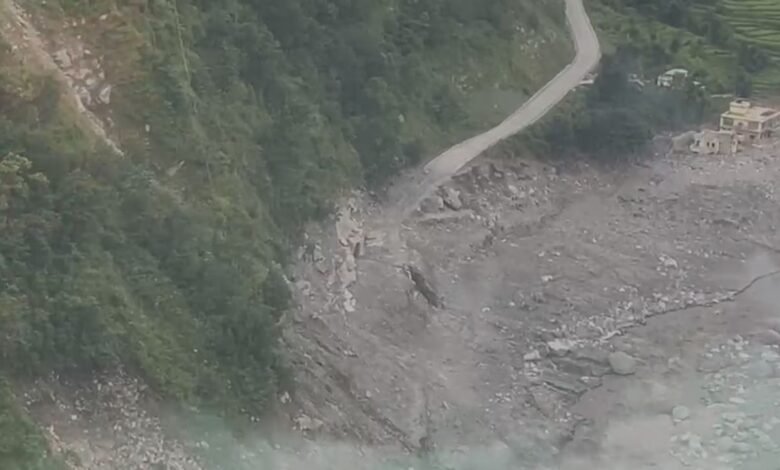
From above, the scale of destruction becomes impossible to ignore. Villages disappear. Roads end abruptly. Buildings stand ruined. Rivers that once ran through these valleys now seem to have swallowed everything in their path.
This is what I saw as we flew into what rescue officials described as Nepal’s “D” zone of devastation, along the Nepal-China border.
We flew in a French helicopter operated by Kailash Helicopter Services, with Captain Rabindra Bahadur Basnet at the controls. Calm and composed, he had known this terrain for years.
The helicopter took off from the Kathmandu airbase shortly after midday. For the first few minutes, everything seemed normal.
Then, suddenly, heavy rain hit us.
Strong winds began shaking the helicopter. The aircraft swung in the air, but Captain Basnet remained completely composed. There was no panic. He held his course and kept flying.
#NDTVExclusive | NDTV’s Vishnu Som (@VishnuNDTV), Ashwini and @ManogyaLoiwal flew in a helicopter to disaster-hit areas in Nepal.
Watch visuals as their helicopter crosses the Kathmandu Valley through intense rain before descending into the disaster-hit Trishuli Valley pic.twitter.com/HtOsnEKotz
— NDTV (@ndtv) September 2, 2026
Our speed increased as we headed towards the Nepal-China border.
We first landed at Trishuli airbase, a technical station used by helicopters operating in the region and a key location for official briefings. Army officials briefed us about the terrain, the challenges ahead and the standard operating procedures that everyone had to follow.
We tightened our seat belts and set off again.
Within minutes, the weather changed. The clouds turned dark grey and the visible route ahead narrowed dramatically – from nearly 500 metres to just 200 metres.
Around 20 helicopters were operating in the area, making nearly 120 sorties a day. That is far beyond what would be considered a normal flying schedule, putting enormous demands on both aircraft and pilots.
Yet there was not a drop of sweat or visible stress on Captain Basnet’s forehead.
He knew this terrain like the back of his hand.
The helicopter’s speed fluctuated between around 70 kmph and 200 kmph, depending on the weather and terrain. But there was one major difference between flying here and flying almost anywhere else.
We were flying inside the valleys of the Himalayas – among some of the highest and narrowest mountain ranges on Earth.
And the challenge was not just the mountains.
It was the traffic in the sky.
More than a dozen helicopters were moving in and out of the valleys. One would cross below us while another appeared overhead. Pilots constantly communicated with each other, speaking over their headsets and keeping a watch on the movements of other birds.
A wrong move of just a few metres could have catastrophic consequences.
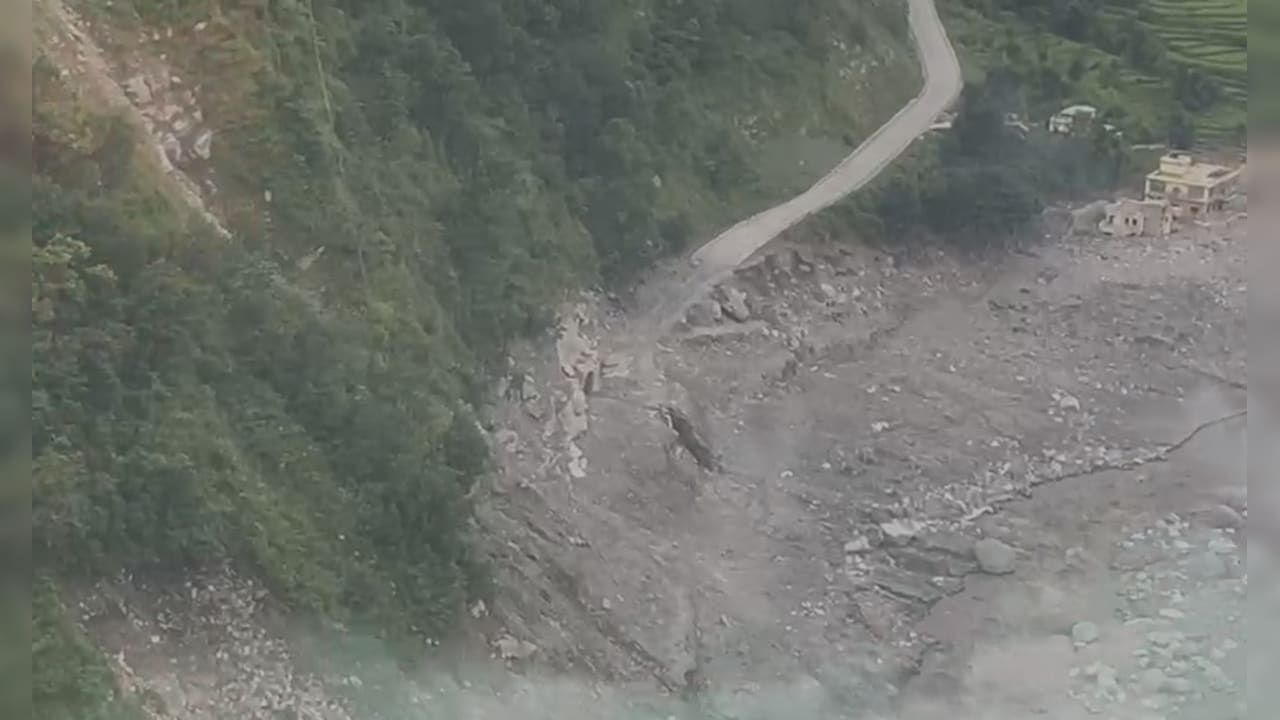
Road cut off by the flood
It was unprecedented for me.
As we flew over the Trishuli river, the devastation below became clearer.
Water was rushing downstream at tremendous speed. Heavy earth-moving machines stood along the river, attempting to clear debris and assist rescue operations. But against the force of the water, even these massive machines appeared helpless. The debris and machinery only seemed to create further turbulence in the already swollen river.
At the Trishuli tunnels, marked 3A and 3B, rescue teams were working relentlessly.
Doctors in protective gear moved through the area. Engineers were excavating debris. Sniffer dogs searched for signs of human presence. Thermal drones were being used to identify possible survivors or bodies buried beneath the rubble.
The village that once had hundreds of residents was now barely recognisable. It had become a monument of debris.
When we landed, the ground was covered in slush and slippery rocks. Captain Basnet kept the helicopter balanced with remarkable precision.
The rotors did not stop.
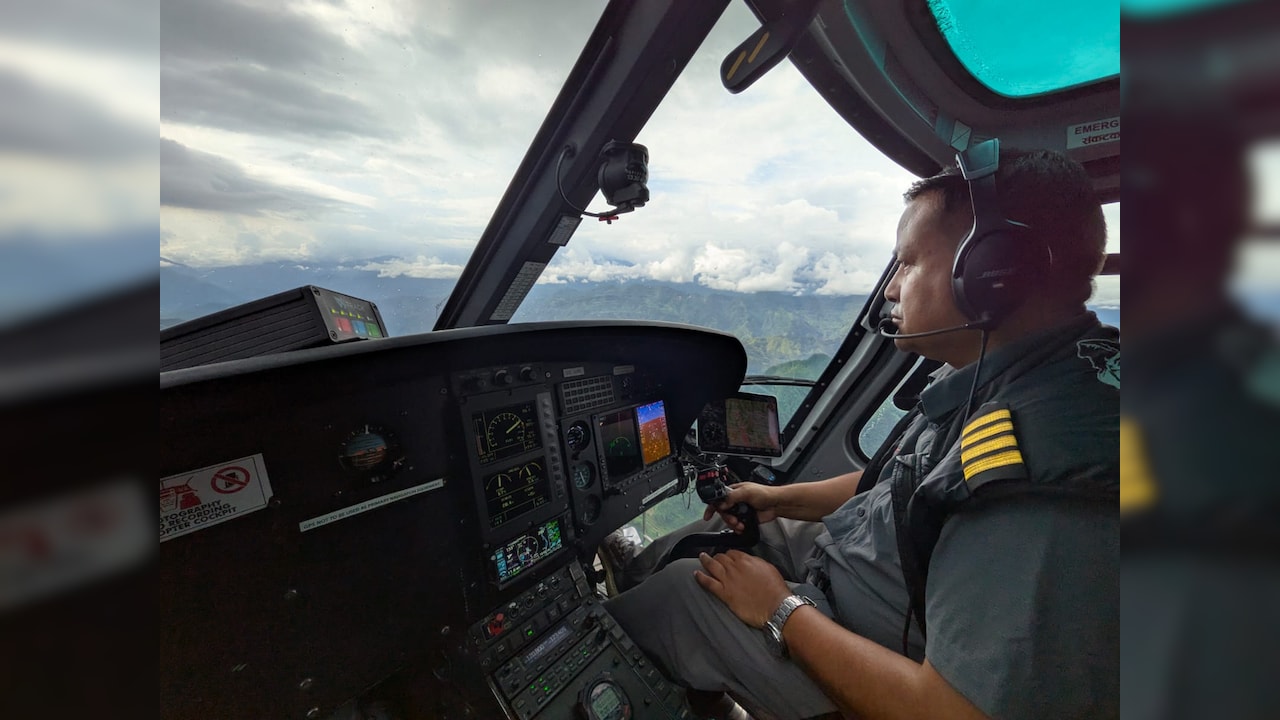
Colonel Rabindra Basnet (retired) at the controls of our helicopter
The engine remained running so that we could take off immediately if the helicopter began sinking into the mud.
Captain Basnet stayed inside while I stepped out for a few minutes to see the devastation up close.
The danger had not passed. Warnings of another flash flood had been issued repeatedly over the previous 100 hours. The river continued to rise, making conditions unpredictable for everyone involved in the rescue operation.
We soon took off again, leaving the tunnel area and heading towards the Bhotekoshi river – one of the worst-affected areas.
By now, there was nowhere to land.
The rain suddenly intensified. It was another reminder of the reality faced every day by the pilots flying rescue missions into these valleys.
#NDTVExclusive | Watch: NDTV’s helicopter touches down at the Trishuli-3 tunnel rescue site, bringing you ground-zero visuals from the heart of the operation#NepalFloods pic.twitter.com/4AJZcRMOma
— NDTV (@ndtv) September 2, 2026
Every time I looked out of the window, I saw trail of destruction.
As we reached Syaprhu, the road had simply disappeared. Buildings stood damaged and abandoned, their walls bearing witness to the force of the water that had brought the entire region to a standstill.
The pilot connected with us through our headphones and indicated that we were flying parallel to the Nepal-China international border, near Timure.
This was the area where the water gushed into Nepal and swept away everything in its path.
Timure, a village in Rasuwa district in northern Nepal, was home to around 1,000 people. Now, large parts of it have been washed away.
From the helicopter, the valley looked almost gothic.
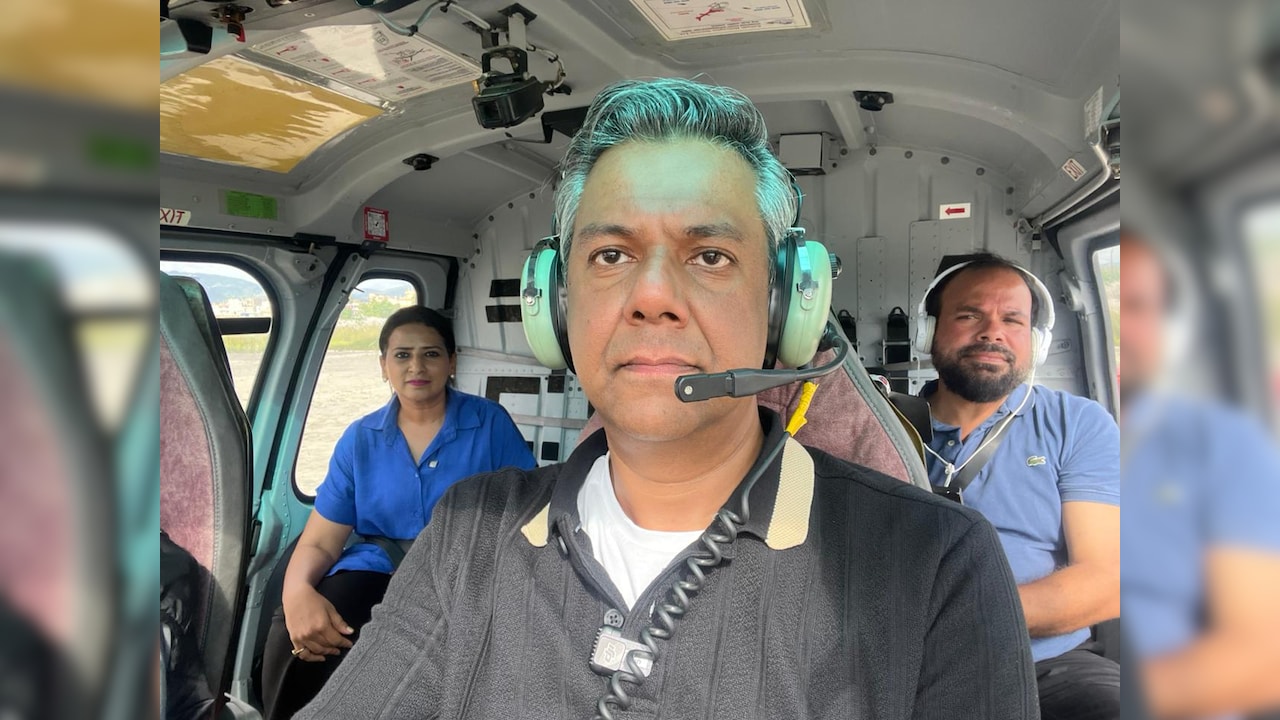
NDTV’s Vishnu Som, Manogya Loiwal and Ashwini Mehra
The hydroelectric power plant damaged. Tunnels filled with debris. Even thermal drones struggling to establish whether there was anyone inside – alive or dead.
I was the only international journalist on this flight to reach the Nepal-China international border near Timure.
We had to circle the area twice.
A sudden windstorm pushed the helicopter sideways, giving us, the passengers, a frightening taste of just how dangerous these rescue operations can be – not only on the ground, but also in the air.
The houses that once lined the mountain slopes had been washed away. What remained were broken walls and fragments of buildings, silent witnesses to the rising waters on the day of the floods.
I looked up at the mountains rising more than 15,000 feet around us. And I kept thinking about the people caught in the floods.
How could anyone run uphill against a wall of water?
What chance would a child have had?
What about an elderly person?
For an ordinary human being, surviving that kind of force would have been almost impossible.
I had goosebumps.
But there was no time to stop.
I continued recording every minute of the journey on my phone, while my cameraperson Ashwani Mehra filmed the devastation and my colleague Vishnu Som documented what we were seeing.
The helicopter pushed through rain and wind, navigating valleys that in places seemed barely 200 feet wide.
Outside the window were mountains, rivers and destruction.
And then came the silence.
The people were gone. What remained was the evidence of lives that had existed here – broken buildings, washed-away roads, debris-filled tunnels and rivers carrying away whatever was left.
The valley had once been alive. Now, nothing remains.
And that silence is killing.