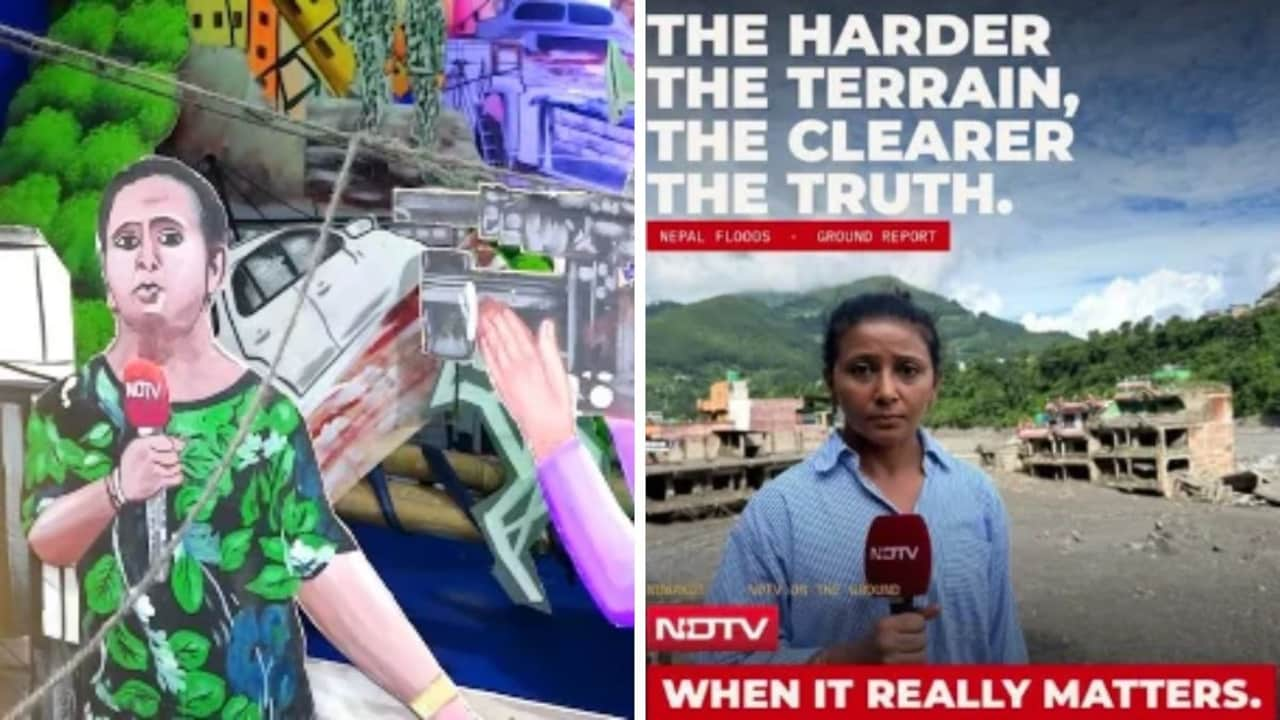
In a unique recognition for NDTV’s Nepal coverage, a Durga Puja pandal in Odisha’s capital, Bhubaneswar, showcased a cutout portrait of Contributing Editor and Senior Anchor Sikta Deo.
The cutout shows the senior journalist holding a red mic with the NDTV logo and a cameraman recording her, in a display of the impact the Nepal coverage had on viewers.
The devastating Bhotekoshi and Trishuli river floods on August 26 killed 1,451 people in Nepal. 5,745 people, including scores of Indians, remain missing. On the Chinese side, 43 people died and 519 are missing.
The floods, which were triggered by the collapse of a glacier, wiped out thousands of houses and washed away bridges, communication infrastructure, roads, electricity poles and grids. The nation had come to a standstill, and access to the affected areas had become difficult.
Despite the hardships, Sikta Deo persevered.
She had gone to the country to cover another event. But when the floods hit Nepal, she began covering the natural calamity.
Also read: Reporter’s Diary | Roads Were Gone, We Kept Going: 6 Days Through Flood, Debris And Death In Nepal
“We had no TV cameras with us since no field equipment was required for the event. All I had was my phone, as did my cameraperson. As the rains intensified, the army barricading the turn to Nuwakot indicated that the tragedy was perhaps bigger than what we anticipated,” she wrote in a blog on NDTV.com.
“Even so, NDTV was the first foreign media to be on ground zero in Nepal on August 26. Drenched and with our phones alerting us that water had entered the devices, we continued reporting until late into the night at Nuwakot,” she added.
During her extensive coverage, she showed the world the true extent of the tragedy.
“I met an old woman, Maiya Tamang, who had decided not to leave her house. ‘Let fate decide for us. I can’t take my bedridden, sick husband anywhere. He can’t move. We survived flash floods. Let’s see what this flood will do,’ she said to me. It was painful to hear this,” she wrote in the blog, revealing the human cost the floods exacted from Nepal.
She also reported back from Nepal the damage the calamity had wreaked.
“We decided to move and trek to the dead end of the Nepal-Tibet road, which led to Syaphrubesi, then Timure Bazaar, and then the Tibet border. We reached the last point, being the only media to bring in those close visuals of the massive destruction that hit Nepal from Tibet. Bridges and roads washed away. Police posts, customs offices, hotels, and restaurants, all submerged. At the dead end was the Chilime hydro project tunnel, where we could see rescue workers and disaster management officials working relentlessly to open the tunnel. We saw helicopters getting the equipment and generators down,” she reported.
Scientists have said climate change played a significant role in the Nepal disaster.
Jorge Moreira da Silva, executive director of the UN Office for Project Services (UNOPS), told the news agency AFP that low-carbon-emitting nations shouldn’t bear the brunt of climate change.
Nepal’s Prime Minister Balendra Shah told the United Nations last month that the flooding “was a warning to the world” about the growing dangers of climate change.