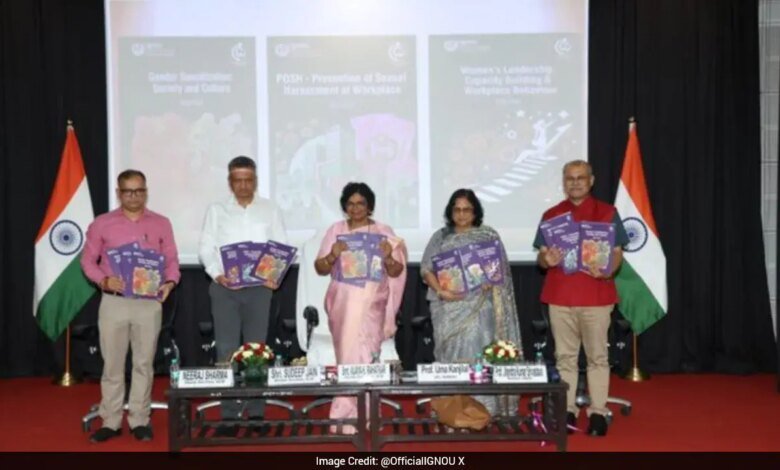
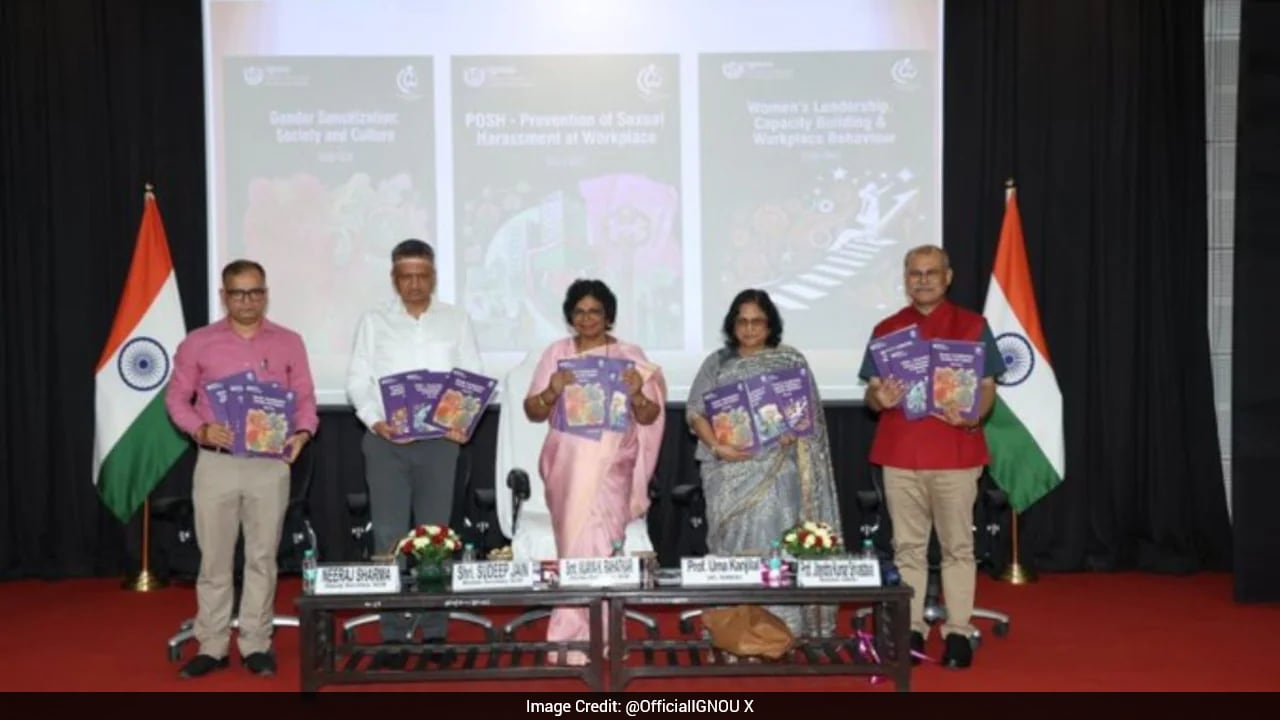
The Indira Gandhi National Open University (IGNOU) and the National Commission for Women (NCW) have joined hands to offer three new micro-credential courses. It will be focused on women’s issues, workplace safety and gender awareness.
The two institutions signed an agreement on August 14, 2026. It aims to improve learning, awareness and capacity building around issues affecting women. The courses are designed to provide practical knowledge that can be useful in both personal and professional settings.
IGNOU Micro-Credential Courses
The three courses introduced under the partnership cover different aspects of gender equality and women’s participation in society and workplaces.
The following are the programmes offered by IGNOU in collaboration with NCW:
- POSH – Prevention of Sexual Harassment at Workplace
- Women’s Leadership, Capacity Building & Workplace Behaviour
- Gender Sensitisation: Society and Culture
The POSH course will focus on creating safer and more respectful workplaces. The women’s leadership programme will help learners understand leadership, professional skills and workplace participation. The gender sensitisation course will explore gender-related concerns from social and cultural perspectives
What IGNOU-NCW Courses Aim To Offer
The partnership focus on practical awareness and capacity building. The broader areas include legal and constitutional awareness, women’s empowerment, digital and cyber safety, leadership development, research and gender sensitisation.
NCW Chairperson Vijaya K. Rahatkar said the programmes should remain learner-focused and practical so that knowledge can be applied in everyday life and workplaces. IGNOU Vice Chancellor Uma Kanjilal also highlighted the importance of moving from awareness towards capacity building and behavioural change.
IGNOU-NCW Partnership: Admission And Future Courses
IGNOU will be responsible for the academic structure, curriculum development, digital hosting, learner support and certification. NCW will contribute thematic content, identify priority areas and support outreach.
The three micro-credential courses are the first programmes launched through the partnership. The collaboration may later expand into areas such as domestic violence prevention, legal literacy, cyber and AI safety, mental health, leadership and safe migration.