New Delhi:
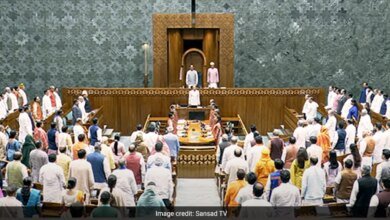
When the Lok Sabha meets for its special sitting on Monday, the Narendra Modi government is likely to present a different picture of where it stands. Over the past few months, student protests that followed the NEET paper leak and the Opposition’s campaign over alleged “vote chori” kept the government on the back foot. Now it appears confident, set to achieve what once looked unlikely.
The delimitation bill package that fell 54 votes short in April is now expected to pass. The parties whose opposition led to the first defeat of a government bill in Parliament in the Modi government’s 12 years are now set to support it.
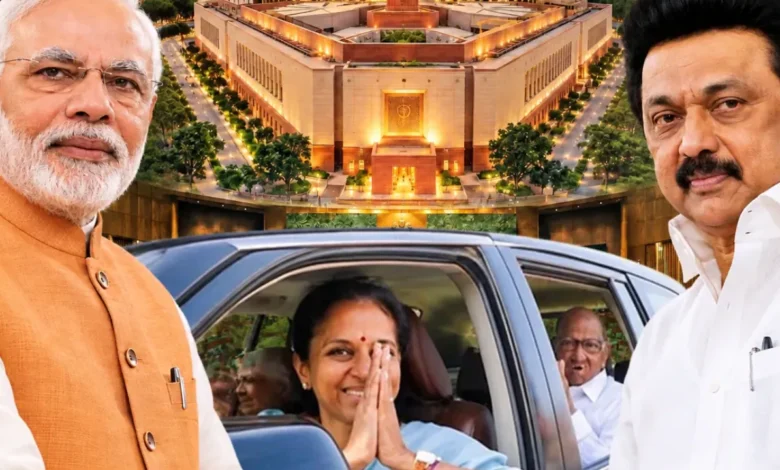
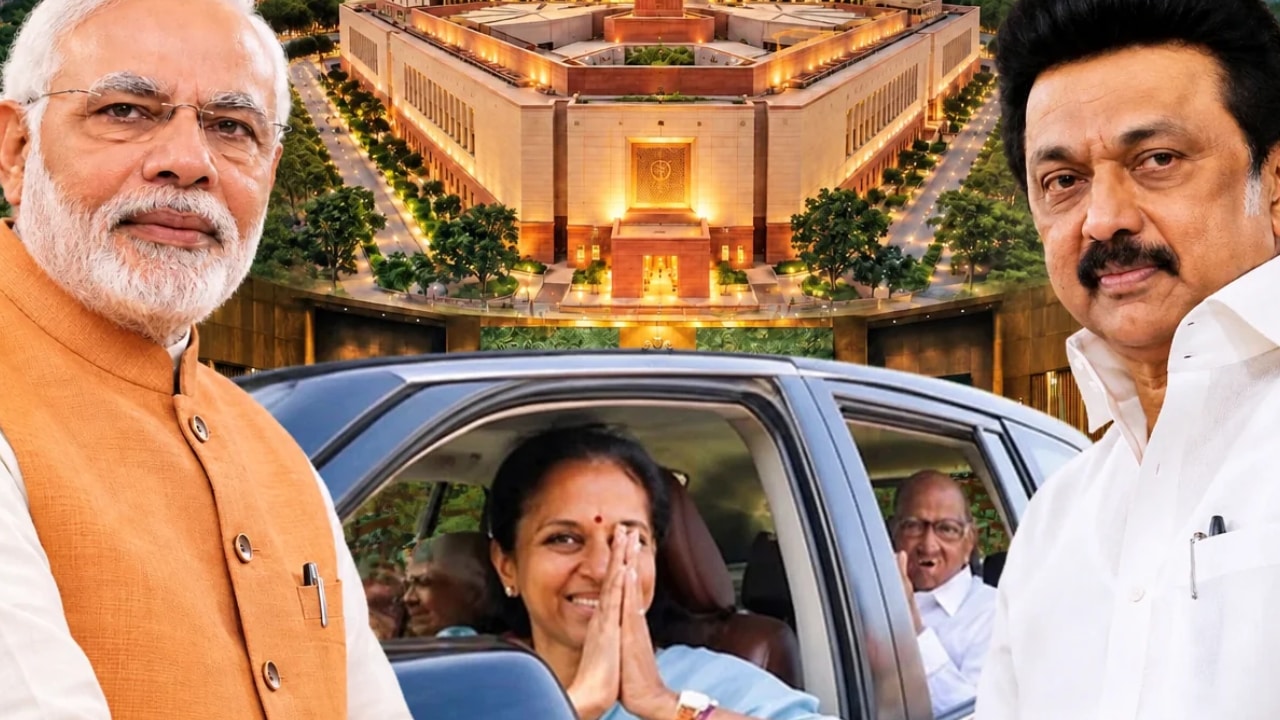
How the BJP brought the DMK and the Nationalist Congress Party (Sharadchandra Pawar) around over eight months is the story within that story.
READ | “Think About The Country”: Rahul Gandhi On DMK’s Support For Delimitation
The government had opened channels with the DMK about a year earlier, NDTV has learnt. But, with the Tamil Nadu Assembly elections then approaching, the DMK was not willing to soften its stand.
Through intermediaries, the government conveyed that it was ready to address the DMK’s concerns about Tamil Nadu’s share in the Lok Sabha. The offer was made before the bill was brought in April.
The DMK, however, was not prepared to pay the political price for supporting the bill in an election year.
READ | Gyanesh Kumar, ‘Again’: Why Poll Body Chief Is Now At Centre Of Delimitation Row
In February, then Chief Minister MK Stalin pushed a resolution against delimitation passed in the Assembly, and on April 16 he burned a copy of the Centre’s bill, calling it a “black law”.
This was despite Home Minister Amit Shah telling the Lok Sabha on April 16 and 17 that the government was ready to bring a provision for a 50 per cent increase in seats for all states.
The DMK did not budge.
So what happened over the eight months from April to November that brought the DMK’s 22 Lok Sabha and eight Rajya Sabha MPs round to supporting the bill?
The political situation in Tamil Nadu and the Assembly election result were the biggest reasons. The DMK lost the election, not to its traditional rival, the AIADMK, but to actor C Joseph Vijay’s new party, the Tamilaga Vettri Kazhagam (TVK). The TVK won 108 of the 234 seats, 10 short of a majority.
The DMK, which was a distant second with 54, was still recovering from the defeat when the Congress, which had fought the election as its ally, broke ranks. The Congress decided to leave the DMK and join the government with Vijay, getting a share of power in Tamil Nadu for the first time in 59 years, with two ministers.
The move angered the DMK, which broke ties with the Congress and the INDIA bloc. It also wrote to the Speaker asking that its MPs be seated away from the Congress in the Lok Sabha. The BJP saw an opportunity in these developments.
In a letter dated May 7, DMK parliamentary party leader Kanimozhi Karunanidhi asked Speaker Om Birla for separate seating “in view of the changed political circumstances and as our alliance with the Indian National Congress has come to an end”.
That request has been okayed now.
As for Maharashtra’s NCP(SP), this is the party the BJP is accused of splitting when it brought Sharad Pawar’s nephew Ajit Pawar into government with it.
Yet the NCP (SP) is now backing the government on the delimitation move.
Between April and now, it was in the Monsoon Session of July that the BJP took steps that can be seen as attempts to woo the DMK and the NCP(SP).
While the government kept talking to the DMK about the delimitation move, the party tried to bring about a merger of the two NCP factions, which would then join the NDA.
READ | In Return For Sharad Pawar’s Delimitation Support, Cabinet Berth For Daughter Supriya Sule: Sources
That merger did not happen because the late Ajit Pawar’s wife, Sunetra Pawar, and son Parth Pawar were not willing. Sunetra Pawar took over as NCP chief after her husband’s death in January. She reportedly told the BJP-led Mahayuti/NDA alliance leaders that she strongly opposes a merger, though the NCP(SP) was welcome in the NDA as a separate party.
The BJP kept talks with Sharad Pawar going. During the Monsoon Session, Pawar met Prime Minister Narendra Modi at Parliament House along with all eight of his party’s Lok Sabha MPs. The stated agenda of the August 10 meeting was the drought situation in Maharashtra, but it was also seen as linked to the government’s effort to win support for the delimitation bill.
When Sharad Pawar, 85, was later admitted to hospital, PM Modi called him to ask about his health. A close aide of the veteran leader later said the PM told him he “should rest now”, and that he (Modi) and Pawar’s daughter Supriya Sule would “together look after the country’s affairs”. This was seen as linked to bringing the NCP(SP) into the NDA and to a possible berth for Sule in the Union Council of Ministers.
Apart from these meetings, the government took other steps during the Monsoon Session that softened the DMK and the NCP(SP). Before that session began, the government had planned to bring several important bills, including ‘One Nation, One Election’, an education-related bill called the Viksit Bharat Shiksha Adhishthan Bill; a bill providing for the removal of a PM, CM or ministers jailed for 30 days; and the Foreign Contribution (Regulation) Amendment Bill that would hit NGO’s finances in particular.
READ | ‘Escape Plan’ vs ‘Anti-Women’: Rahul Gandhi, BJP Trade Barbs On Delimitation
It was then said that the Joint Parliamentary Committees (JPCs) on the first three would report soon, so the government could pass them in the session. The government also intended, at first, to pass the contentious FCRA amendment bill in the same session.
But the tenure of every JPC was extended, and none of them submitted a report. The FCRA bill was also sent to a JPC.
The DMK and the NCP(SP) had opposed all of these bills. The DMK was particularly upset about the FCRA bill and had opposed it openly. Its objections to the other bills are also on record.
Sources say the government held back on these bills as part of a give-and-take, and in return wanted the two parties’ support on delimitation. Senior ministers stayed in constant touch with DMK leaders. The government was so careful about the DMK that when a Minister of State from an ally party, known for off-the-cuff remarks, visited Chennai, a senior minister called him and warned him not to comment on the DMK’s support for delimitation.
That is why, over these eight months, no senior leader of either the DMK or the BJP indicated that talks on the delimitation bill were being held.
The cabinet decision on Friday, overhauling the bills, completed the process. The government accepted the DMK’s two main demands: that the current share of every state, including Tamil Nadu, in the Lok Sabha be maintained with only a flat 50 per cent increase; and that the number then be frozen for the next 25 years, until 2051. After this was done in writing, the DMK made the big U-turn and decided to support the bills.
On Saturday, after a meeting of the party’s MPs in Chennai, DMK president MK Stalin said the party had “succeeded in our efforts to protect Tamil Nadu’s parliamentary representation for the next 25 years”.
These decisions are expected to have far-reaching consequences for politics in both Tamil Nadu and Maharashtra. In Tamil Nadu, the BJP is allied with the AIADMK, which has long opposed the DMK. But Vijay’s victory has brought the BJP and the DMK, besides the AIADMK, closer. In Maharashtra, if the NCP(SP) joins the NDA, it could create new equations within the ruling Mahayuti. And the Opposition would be further weakened.