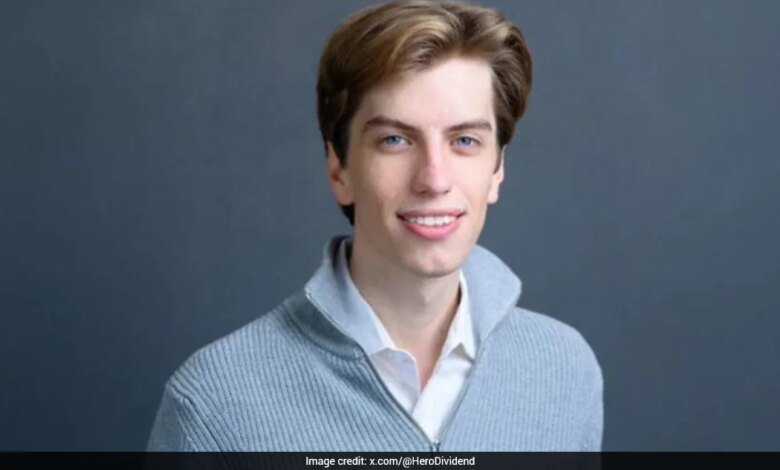
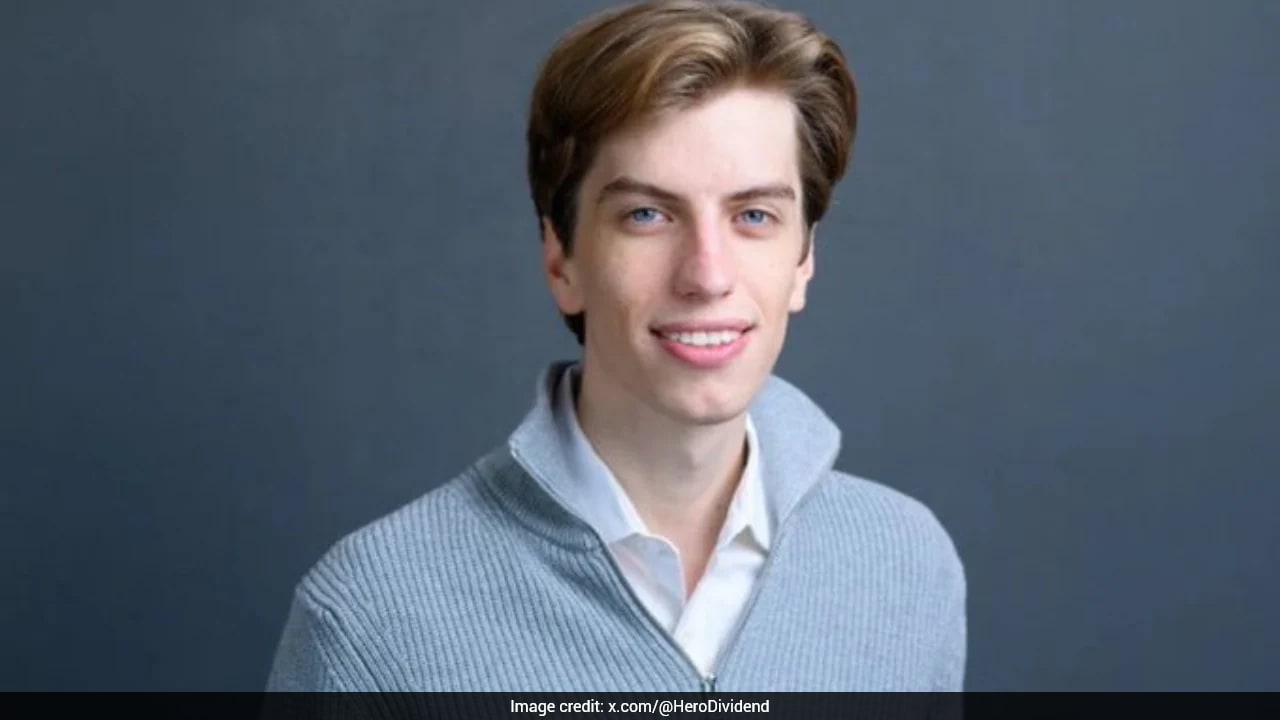
He was hailed as the “Nostradamus” of AI – a young oracle with a bold prophecy for the future.
“Before long, the world will wake up,” Leopold Aschenbrenner, tech-seer-turned-hedge-fund-manager, predicted in 2024. This week, it did – but not in the way Aschenbrenner had foreseen.
In a blink, his wildly successful hedge fund, Situational Awareness, was forced to sell billions of dollars of technology investments that had rapidly lost value, as nervous banks began to demand more and more collateral for his trades. Then came billionaire Ken Griffin.
In less than 24 hours – which included a conversation between Griffin and Aschenbrenner – Griffin’s Citadel hedge fund reached out to Situational Awareness and snapped up the investments at a discount, according to a person familiar with the matter who asked not to be identified citing private information.
It was a startling reversal for Aschenbrenner, a former researcher at OpenAI who – before starting his hedge fund roughly two years ago – had no previous investment experience. His fledging firm has watched its assets plunge from $45 billion at the start of July to about $10 billion.
The development puts Situational Awareness – named after a viral essay that Aschenbrenner posted in 2024 about the future of artificial intelligence – on a new and uncertain course, and hands Griffin, a seasoned finance veteran, stakes in major AI players.
Still, as the dust settles on Aschenbrenner’s chaotic week, it looks like the 20-something is still set to come out only bruised. He continues to run one of the biggest equity hedge funds in the world. And in just two days, he’ll wed his fiancee – the chief of staff to the CEO at Anthropic PBC – at a venue in California’s Carmel Valley.
While Situational Awareness lost about 67% so far in July, the hedge fund is still up around 80% on the year, according to a letter sent late Thursday. Such extreme swings likely mean that investors in the fund may face large paper gains or losses depending on when they gave Situational Awareness money.
“We let you down this month,” Aschenbrenner wrote in the letter.
In Aschenbrenner’s short career as a hedge fund titan, he’s seen both the extreme optimism around AI and the intense fear that this is just the latest technology bubble.
In recent months, banks including Goldman Sachs Group Inc., JPMorgan Chase & Co. and Bank of America Corp. were happy to power his rise, with some firms offering to lend the fund four to five times its capital, according to people familiar with the matter. And then, as technology shares started to slide in the past few weeks, the lenders proved unwilling to ride it out.
Aschenbrenner began liquidating positions to meet the barrage of margin calls. The moves reverberated across markets all over the world in recent days, leaving investors to question what was behind the carnage.
The selloff on Wednesday was “completely unwarranted to be honest,” said Vuk Vukovic, chief investment officer at Oraclum Capital. “There had to be something else behind it.”
“Now we see what happened,” he added.
Even before this week’s margin calls, there were signs that Wall Street was starting to grow cautious.
As some of its positions reached all-time highs in recent weeks, Situational Awareness was on the hunt for more banks that could finance its bets. The fund approached some lenders, including Barclays Plc, to work with their prime brokerage units, according to people familiar with the matter.
Barclays turned away the firm because it was concerned about the level of its exposure to just one sector, the people said. A spokesperson for the bank declined to comment.
Representatives for Goldman, JPMorgan, Bank of America and Situational Awareness declined to comment.
Calls went out earlier this week to a handful of firms that could buy up a big chunk of shares in one go. Millennium Management and Jane Street Group, which also invests in Situational Awareness, were among the firms that considered the portfolio.
The firm even considered selling some of its valuable private investments as it raced to raise capital, and began negotiating to sell some of its $5 billion stake in Anthropic.
Citadel, hearing about the troubles, called Aschenbrenner, who eventually talked to Griffin. After hours of negotiations throughout the night, a deal was struck just before the market opened on Thursday, bailing out the firm and allowing it to keep all its private companies.
Representatives for Citadel, Millennium and Jane Street declined to comment.
Aschenbrenner said he takes full responsibility for the events, but attributed some of the reasoning for July’s plummet on short sellers, who targeted the shares he owned, he wrote in the client letter. He also vowed to run his public stock portfolio without leverage “while we draw the lessons from these developments,” he added.
And he pledged to make changes to the way he manages the portfolio.
“My core promise to you is that we will not waste the opportunity to learn from these events,” he wrote.
FTX, OpenAI
German-born Aschenbrenner was just 15 when he came to the US and enrolled at Columbia University.
“I skipped a few grades, and it seemed normal to me at the time to go to college at 15 and come to America,” he said on a podcast in 2024. “One of my sisters is turning 15 now, and when I look at her, I understand why my mother was worried.”
While at Columbia, he founded its effective altruism chapter – the movement that studies the most efficient way to be philanthropic. He graduated with a B.A. in economics and mathematics statistics in 2021 and was valedictorian. Once, on a trip to Washington, he waited in line at 3 a.m. to watch oral arguments at the Supreme Court.
Before joining OpenAI in 2023, he helped run the FTX Future Fund, a philanthropic arm of Sam Bankman-Fried’s crypto empire that fell apart in a multibillion-dollar financial fraud. Soon after that, he joined Sam Altman’s OpenAI, where he was fired in 2024 from its Superalignment team.
The company said he was let go for leaking information, while he claims he raised the alarm over lack of interest in stopping foreign adversarial attacks.
After a series of posts on his blog, Situational Awareness, Aschenbrenner started a hedge fund by the same name and recruited other young tech enthusiasts to join him, including friends from Columbia. His early investors included Stripe co-founders Patrick and John Collison, as well as Daniel Gross and Nat Friedman, who are both now involved in Meta Platforms Inc.’s AI efforts.
In the blog that launched his investing career, he waxed philosophical about both the dangers and promise of AI. He even quipped that going all-in on Nvidia might look great now, “but the burdens of history are heavy. I would not choose this.”
“Recognizing the power of superintelligence also means recognizing its peril,” Aschenbrenner wrote at the time. “We need to not screw it up.”
(Except for the headline, this story has not been edited by NDTV staff and is published from a syndicated feed.)