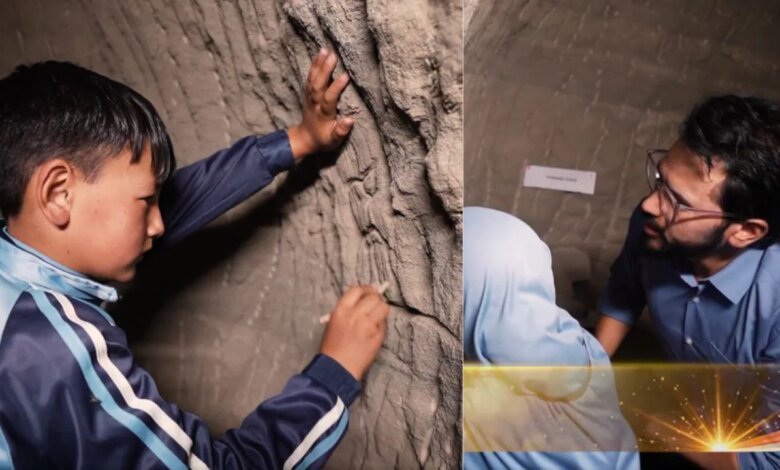
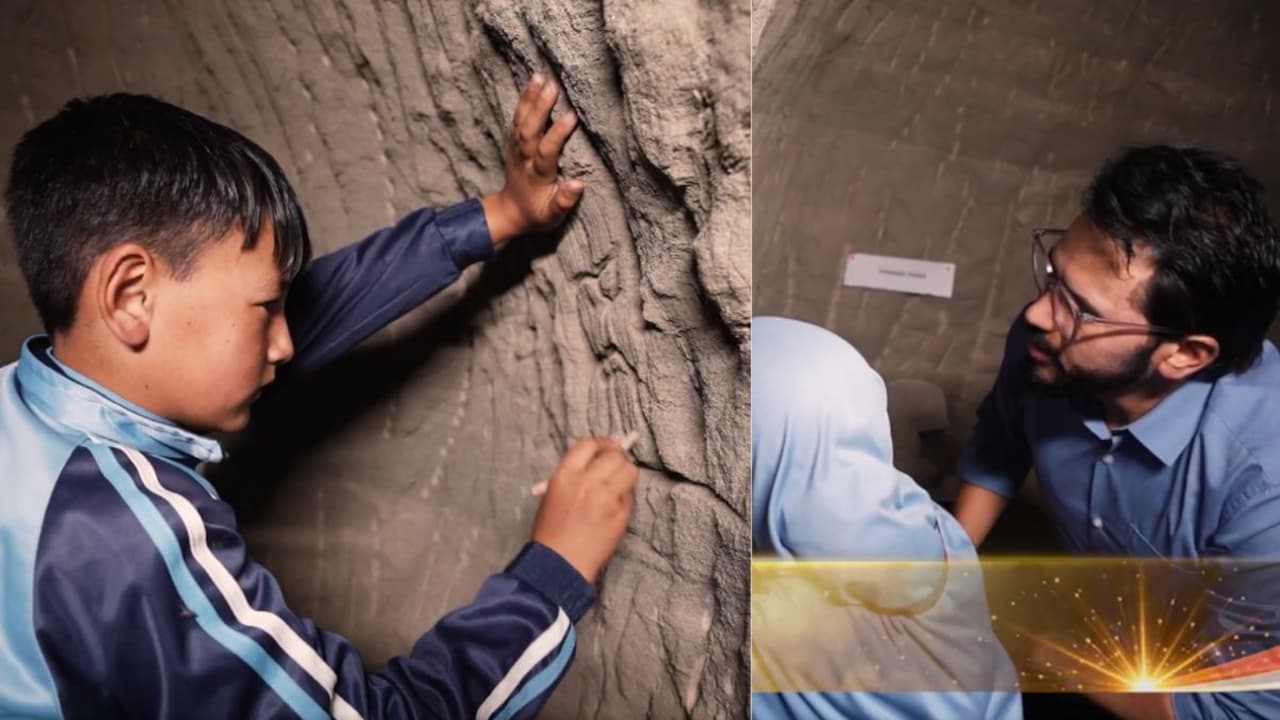
Mohd Mustafa Kamal, a 41‑year‑old teacher from Wakha village near Kargil in Ladakh, has been honoured with the National Teachers Award 2026 for transforming how middle‑school students experience Social Science by turning war‑era bunkers into “cave classrooms” and redesigning lessons around experiential, tech‑enabled learning.
President Droupadi Murmu conferred the award on him in New Delhi on September 5 (Teachers’ Day), recognising his work at Government Model Middle School Grong Pashkum (also listed as Govt. Middle School Zgangjing, Sankoo, Kanoor) in Kargil district.
In a social media post on X, the Education Ministry stated:
“Shri Mohd Mustafa Kamal of Government Middle School Zgangjing, Sankoo, Kargil, Ladakh, has made significant contributions to experiential, contextual, and technology-enabled Social Science education in remote and resource-constrained classrooms.”
The ministry further stated: “Since 2011, he has transformed local surroundings into learning resources through innovative approaches such as the Cave Classroom, Museum Classroom and Classroom Parliament, connecting history, geography, economics and civics with local heritage, livelihoods and community life.”
“He has integrated School Bhuvan, Google Earth, Stellarium, Kahoot and Quizizz, and contributed digital lessons through PM eVIDYA,” the ministry added.
Shri Mohd Mustafa Kamal of Government Middle School Zgangjing, Sankoo, Kargil, Ladakh, has made significant contributions to experiential, contextual, and technology-enabled Social Science education in remote and resource-constrained classrooms.
Since 2011, he has transformed… pic.twitter.com/RaD5XWqShg
— Ministry of Education (@EduMinOfIndia) September 5, 2026
He has trained more than 1000 teachers in context-based education, the ministry noted.
In a research titled “Contextualizing Geography Education in Ladakh: A pedagogical approach,” Kamal asserted that Ladakh’s unique landscape, climate, landforms, and cultural heritage make it an unparalleled destination to learn geography.
Talking about the Cave museum initiative at Government Model Middle School, Pashkum, Kargil, Kamal noted that there the students act as junior archaeologists. “They explore cave shelters that were dug during the 1999 Kargil War by the people of Pashkum village in Kargil district to take shelter from the firing and also the ruins of forts built by local chieftains during the medieval period in Ladakh,” he said.
“This way, they get to learn about the region’s history and cultural heritage,” he added. The educator highlighted that this project instills questioning and curiosity in students, making lessons in social science more interesting, deeply connected, and effective.
“In this initiative, students are provided with hands-on experience of painting the walls of caves,” he mentioned. “Additionally, the replica making activity of seals, coins, toys, etc., from fine clay is another routine exercise of the initiative,” he added.
Kamal further stated that teaching geography in Ladakh involves dynamic methods that make the subject engaging and comprehensible for school students. Through practical activities, field trips, and cultural interactions, educators create an immersive learning experience that fosters geographical knowledge and respect for Ladakh’s unique environment and heritage, he said.
According to reports, inside regular classrooms, Kamal rearranged seating to mimic the Indian Parliament, dividing students into “ruling” and “opposition” groups while he acted as Speaker. Debates on contemporary issues helped children grasp how democracy functions at the national level.
He also introduced game‑based learning, including “Great Bath Ludo” (inspired by Mohenjo‑Daro), and used artefacts such as old stones and utensils collected by students to anchor discussions on ancient history, as per reports. These methods supported his push for stress‑free assessment, aligning with National Education Policy (NEP)’s emphasis on reducing exam anxiety and encouraging continuous, holistic evaluation.