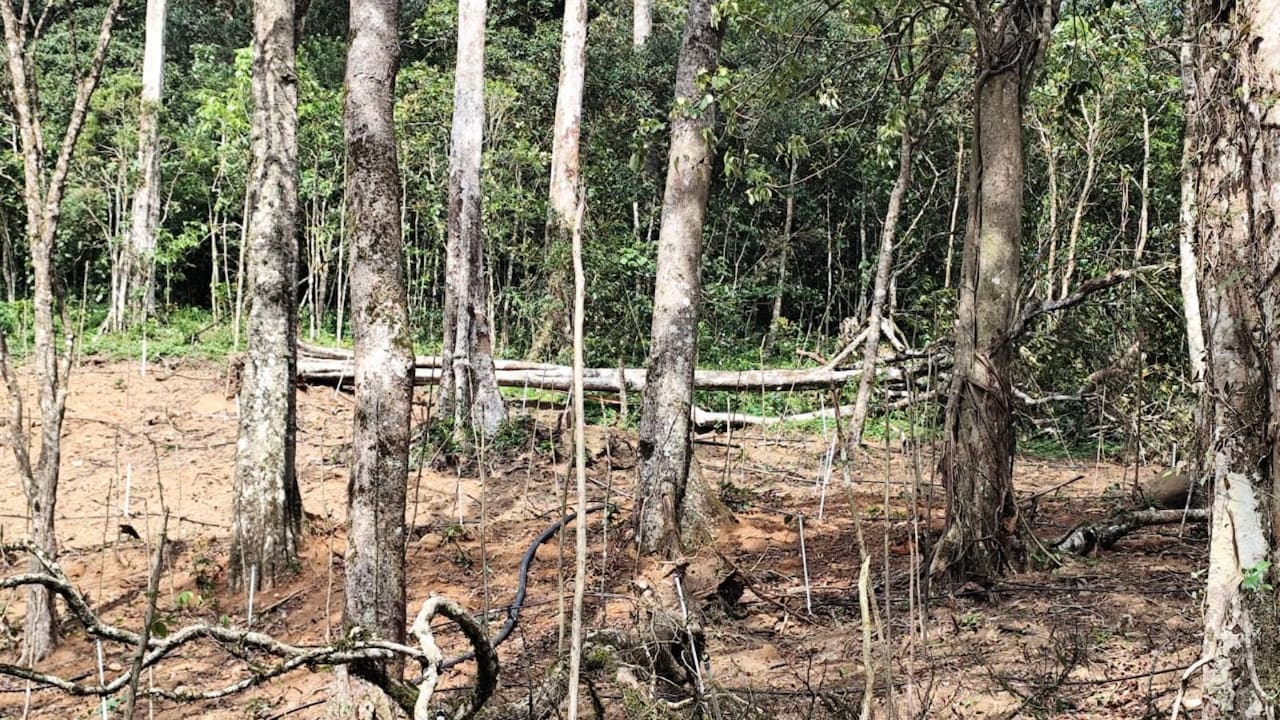
A massive tree-felling operation inside Kerala’s ecologically fragile Cardamom Hill Reserve (CHR) near Santhanpara in Idukki has landed before the Kerala High Court, which has taken up the matter on its own based on media reports.
The environmental damage centres on nearly 300 acres of cardamom patta land at Goodanpara Estate, where forest officials say large-scale tree cutting and excavation were carried out under the guise of developing cardamom plantations.
According to the Forest Department, the land was leased to four residents of Tamil Nadu, who allegedly violated the lease conditions. Officials have submitted a report to the Devikulam sub-collector, seeking a detailed investigation into the transactions and possible fraud.
One of the key findings flagged by the department is a lease agreement reportedly worth Rs 1.25 crore executed on a stamp paper of just Rs 500, raising suspicion of stamp duty evasion and other irregularities. The land is reportedly owned by individuals from Pala.
The Forest Department has so far registered three separate cases over the past one-and-a-half years. The first involved the felling of 65 trees, followed by another case involving 134 trees and the construction of large ponds by blocking natural watercourses. This year, officials booked another case after 39 more trees were cut and the roots of 75 additional trees were damaged.
Officials say the violations extend beyond tree felling. Three large ponds, each spread over nearly three acres, were allegedly excavated without mandatory approvals from the Revenue Department or the Mining and Geology Department. The excavations, they warn, could significantly increase the risk of landslides in the steep hilly terrain.
The forest report describes the area as an important wildlife habitat supporting elephants, tigers, sambar deer, civets, Malabar giant squirrels and several reptile species. It also records the presence of several rare native tree species that have been affected.
Forest officials say the land had never been cultivated earlier and that the recent activities are being carried out under the pretext of establishing cardamom plantations.
The department also says neither the claimed landowners nor the lessees have produced ownership or lease documents before the authorities despite repeated action.
Officials are now trying to trace the Tamil Nadu-based lessees as the investigation widens.