New Delhi:
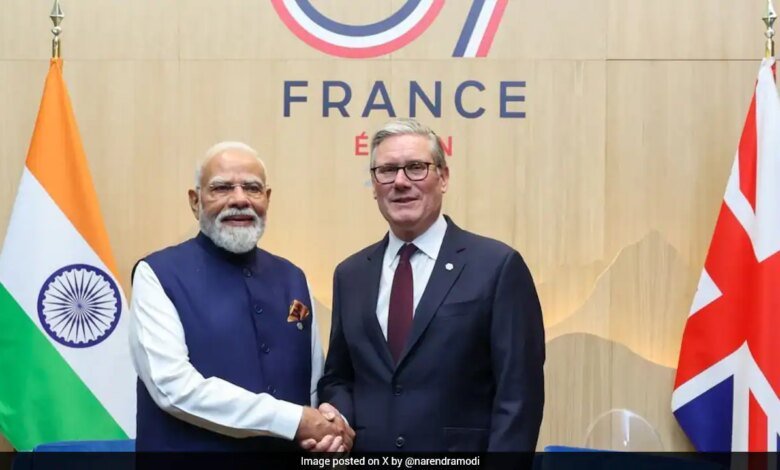
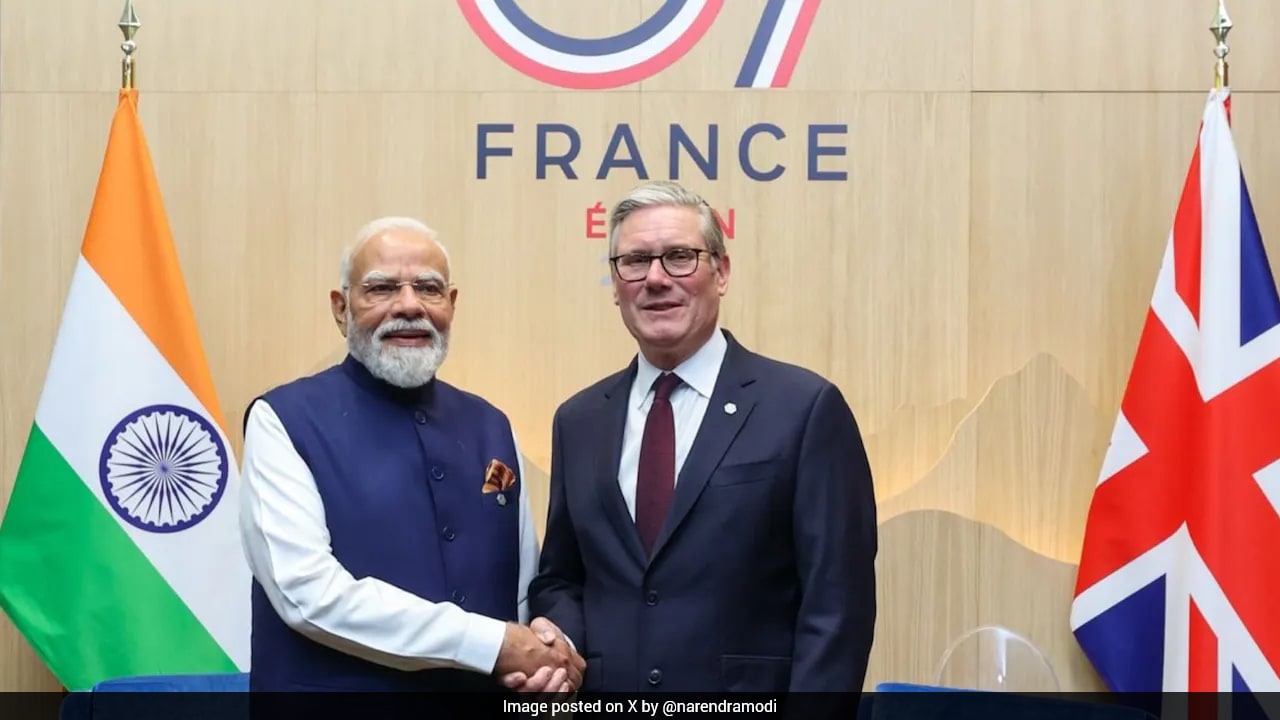
Prime Minister Narendra Modi and British Prime Minister Keir Starmer held wide-ranging bilateral talks on the sidelines of the G7 Summit in Evian on Tuesday, reviewing the growing momentum in India-United Kingdom relations and reaffirming their commitment to deepen cooperation across trade, technology, security and education.
The meeting came against the backdrop of strengthening ties between the two countries following the reciprocal visits by the two leaders last year, which injected fresh impetus into the India-UK Comprehensive Strategic Partnership.
According to the Ministry of External Affairs, the two Prime Ministers assessed progress made under the ambitious Vision 2035 framework, which serves as the roadmap for long-term cooperation between New Delhi and London. Discussions covered a broad spectrum of areas, including economic growth, defence and security cooperation, climate action, clean energy, technological innovation, education and people-to-people exchanges.
A key focus of the talks was the implementation of the Comprehensive Economic and Trade Agreement (CETA), a landmark pact expected to significantly boost bilateral trade and investment flows. Both leaders expressed optimism about the agreement’s early entry into force and highlighted its potential to create new opportunities for businesses and workers in both countries.
India and the UK have steadily expanded their economic partnership in recent years, with bilateral trade reaching record levels. Officials on both sides view the trade agreement as a major step toward unlocking further growth in sectors ranging from manufacturing and services to technology and green industries.
Education emerged as another important area of discussion during the meeting. Modi and Starmer welcomed the growing collaboration between Indian and British higher education institutions and noted recent developments involving leading UK universities establishing campuses in India.
The leaders highlighted progress made by the University of Liverpool in setting up a campus in Bengaluru, while the University of York and the University of Bristol are moving ahead with plans to establish campuses in Mumbai. These initiatives are seen as a significant milestone in educational cooperation and are expected to strengthen academic exchanges, research partnerships and student mobility between the two countries.
Technology and innovation also featured prominently in the bilateral discussions. Prime Minister Modi thanked the UK government for its strong participation in the AI Impact Summit hosted by India earlier this year in New Delhi. The summit brought together governments, industry leaders and researchers to discuss the opportunities and challenges posed by emerging artificial intelligence technologies.
The two leaders reviewed ongoing cooperation under the Technology Security Initiative, which aims to deepen collaboration in critical and emerging technologies. They welcomed steady progress in this area, including the recent launch of the India-UK Critical Minerals Global Supply Chain Observatory, an initiative designed to strengthen resilience in strategic mineral supply chains and reduce vulnerabilities in an increasingly uncertain global environment.
Defence and security cooperation, another pillar of the bilateral relationship, was also discussed as both countries seek closer coordination in addressing emerging geopolitical and security challenges.
Beyond bilateral issues, Modi and Starmer exchanged views on major regional and global developments. Discussions covered the evolving situation in West Asia and the ongoing conflict in Ukraine, reflecting the shared interest of both nations in international peace, stability and rules-based cooperation.
The meeting underscored the growing convergence between India and the UK on a range of strategic issues at a time when both countries are seeking stronger partnerships to navigate global economic and security uncertainties.
The India-UK relationship has witnessed a notable transformation over the past decade, expanding beyond traditional trade and diplomatic engagement into areas such as advanced technology, climate cooperation, innovation, education and defence. The Vision 2035 roadmap, launched to guide long-term collaboration, has become a central framework for advancing these shared objectives.
As the leaders concluded their discussions in Evian, they reaffirmed their commitment to further strengthening the Comprehensive Strategic Partnership and maintaining the positive momentum in bilateral ties. The meeting signalled continued political support at the highest level for expanding cooperation between two of the world’s major democracies amid a rapidly changing global landscape.