Prime Minister Narendra Modi’s tour to Indonesia and Australia is critical in addressing the quickly evolving electric vehicle landscape in India. Lithium and Nickel are crucial for EV batteries. However, India is currently 100 per cent import-dependent for lithium, cobalt, and nickel, according to a report by the Institute for Energy Economics and Financial Analysis published on April 30, 2026.
“Reserves and processing capacity for these minerals remain highly concentrated, while recent trends of export restrictions, resource nationalism, and onshoring or friend-shoring policies are fragmenting global markets that India relied upon,” said Saloni Sachdeva Michael, Lead Energy Specialist, India Clean Energy Transition, South Asia, at IEEFA.
The consequences are price volatility, supply disruptions, and reduced availability, affecting import-dependent economies like India the most, she added. Amid these situations, Indonesia and Australia have become important for nickel and lithium procurement, respectively.
Indonesia And The Nickel
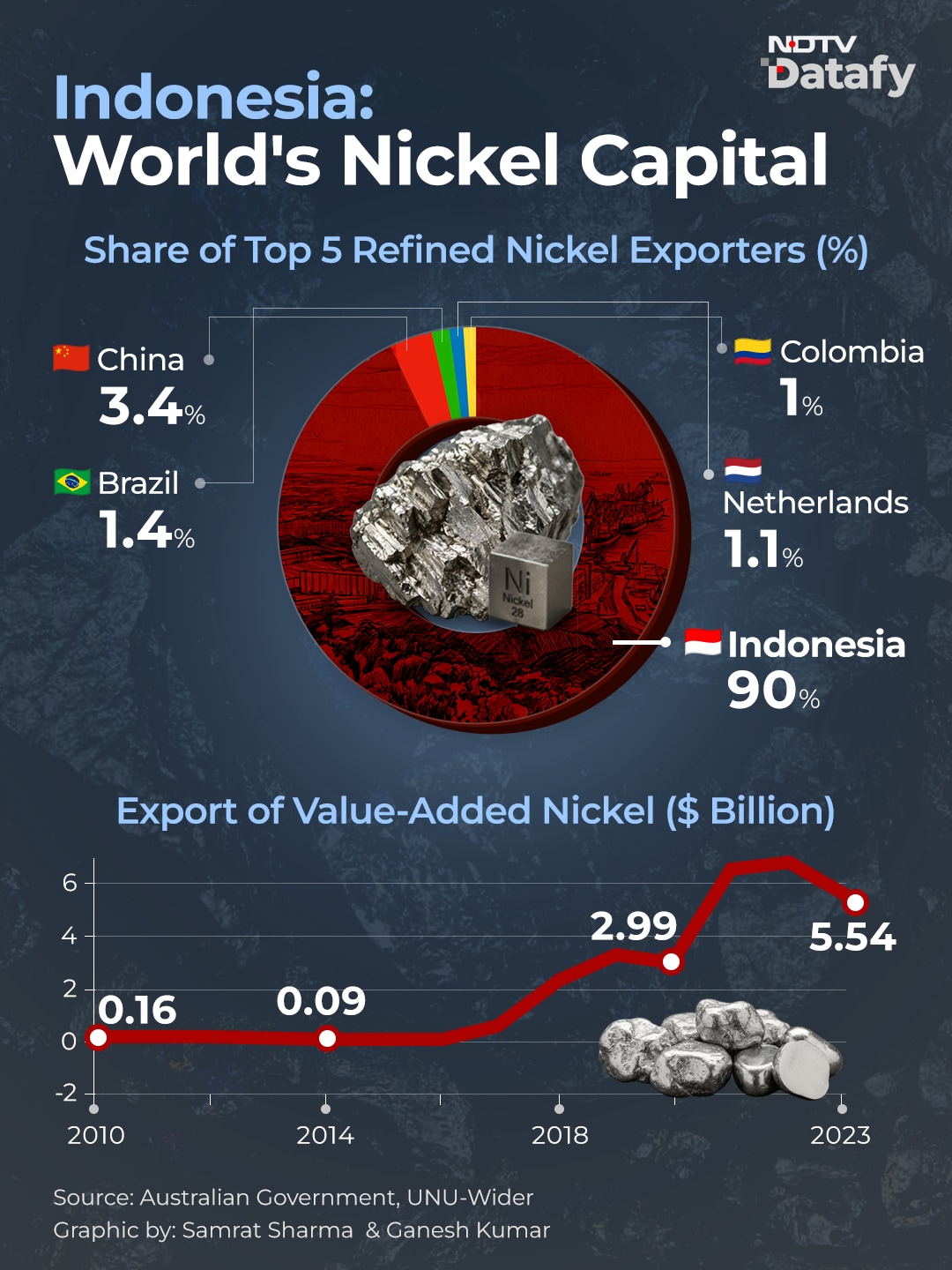
Indonesia has the world’s largest nickel reserves and contributes to more than half of the global production. “Indonesia’s nickel reserves are an estimated 55 million tonnes. It has been the world’s leading producer of nickel over the past few years, with a global production share of 16 per cent in 2017, rising to 54 per cent in 2023, when it produced 2.02 million tonnes of nickel,” according to UNU-WIDER.
The country introduced a mining law in 2014 that required all mining companies to process their minerals domestically before export. The government had put an immediate ban on nickel ore exports, pushing firms to invest in smelting and refining capacity.
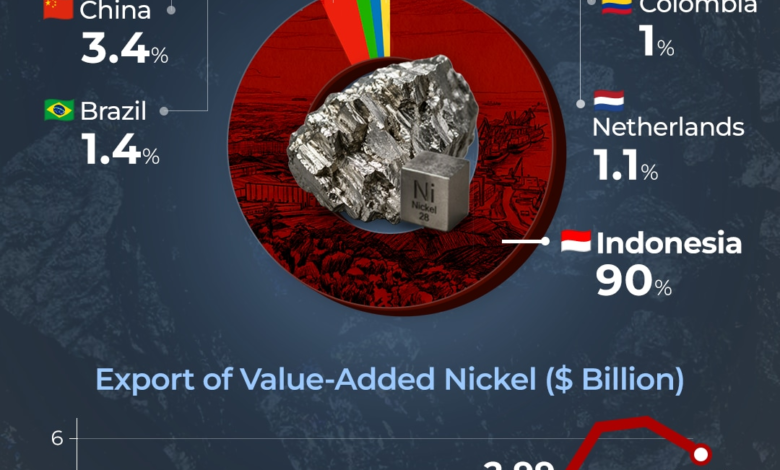
Indonesia thus received huge investment, especially from China, and aggressively shot up its nickel downstream products exports. Indonesia accounted for 90 per cent of the world’s exports of refined nickel in 2025. Its value-added nickel exports rose from $0.09 billion in 2014 to $5.54 billion in 2023.
Australia And The Lithium
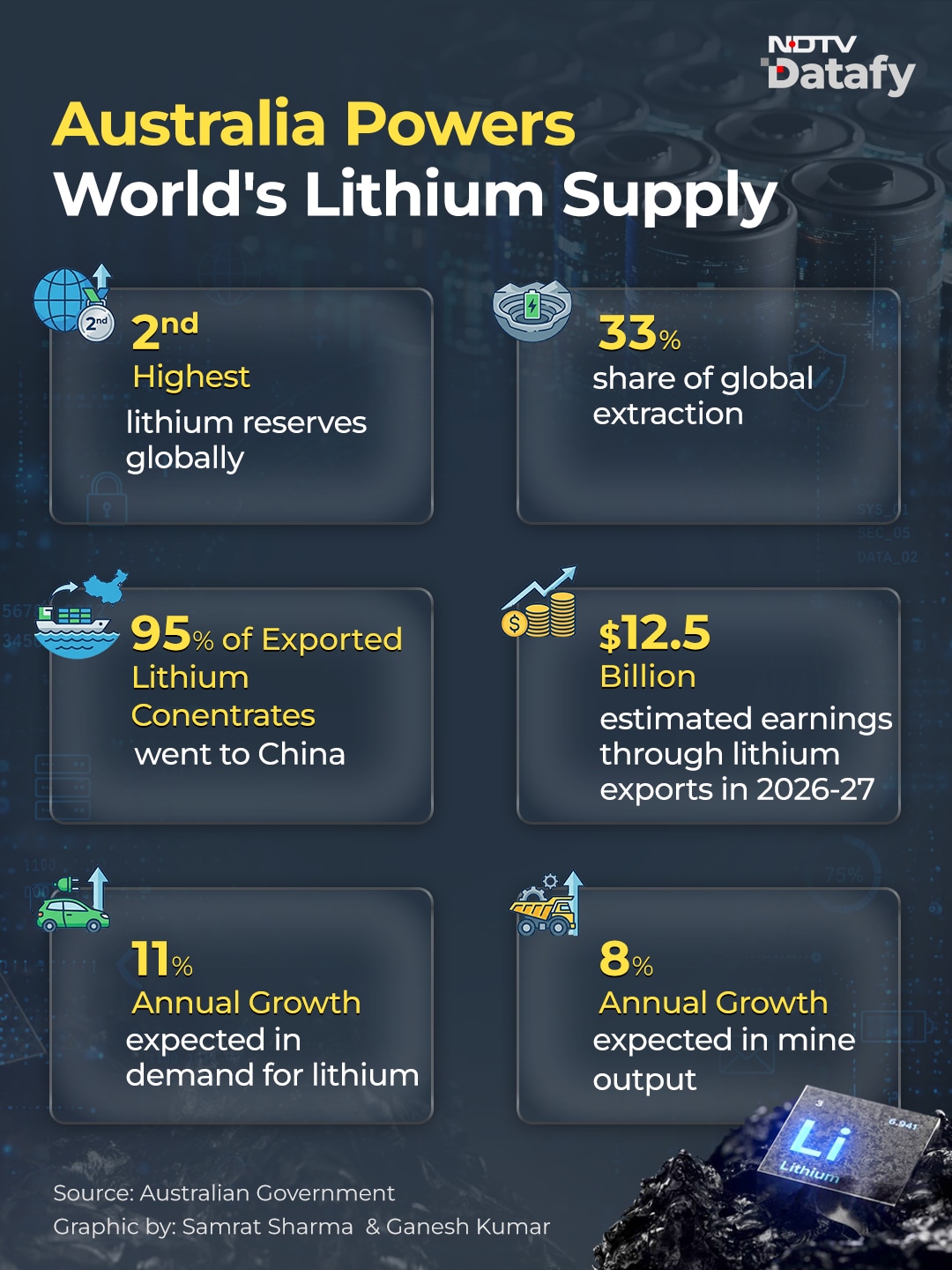
What nickel is for Indonesia, lithium is for Australia. Australia has the second-highest reserves of lithium in the world. It also accounted for one-third of the global extraction in 2025, according to the Australian government. However, it shipped 95 per cent of the exported lithium concentrate only to China.
Projections show that Australia’s lithium export earnings may increase from $9.9 billion in 2025-26 to $12.5 billion in 2026-27. Also, the mine output is expected to grow by eight per cent annually, against the 11 per cent lithium demand rise till 2031.
National Critical Mineral Mission
India has launched multiple EV policies, including a complete ban on petrol and CNG 2-wheelers registration in Delhi from April 2028. Lithium and nickel have thus become even more important to make India self-reliant in pushing out indigenous EV vehicles. The government has already stepped up to increase the critical minerals availability in the country. In 2025, the government launched the National Critical Mineral Mission (NCMM) to secure domestic and global supply chains of critical minerals.
Indonesian President Prabowo Subianto and PM Modi, in the latest discussion, further strengthened collaboration in critical minerals and rare earths with a focus on building diversified and resilient supply chains essential for the growth of domestic manufacturing industries.