New Delhi:
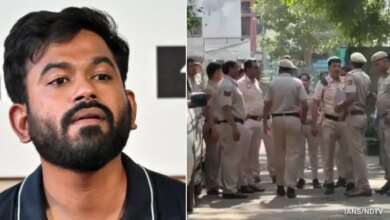
Cockroach Janta Party (CJP) founder Abhijeet Dipke was released on conditions on Saturday because he was taken into custody even before he could join Friday’s ‘Lehra Do Tiranga’ march at Connaught Place, as opposed to his colleagues Saurav Das and Ashutosh Ranka, who were sent to jail for actually having held a protest, sources said on Saturday. They have been holding protests over alleged electoral fraud for days now.
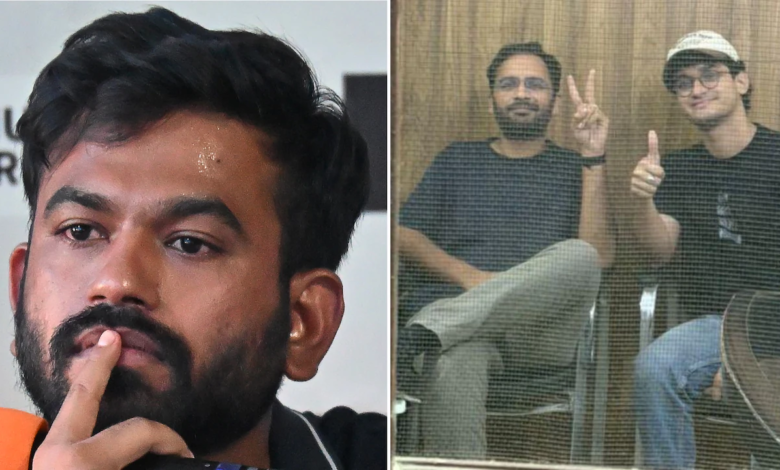
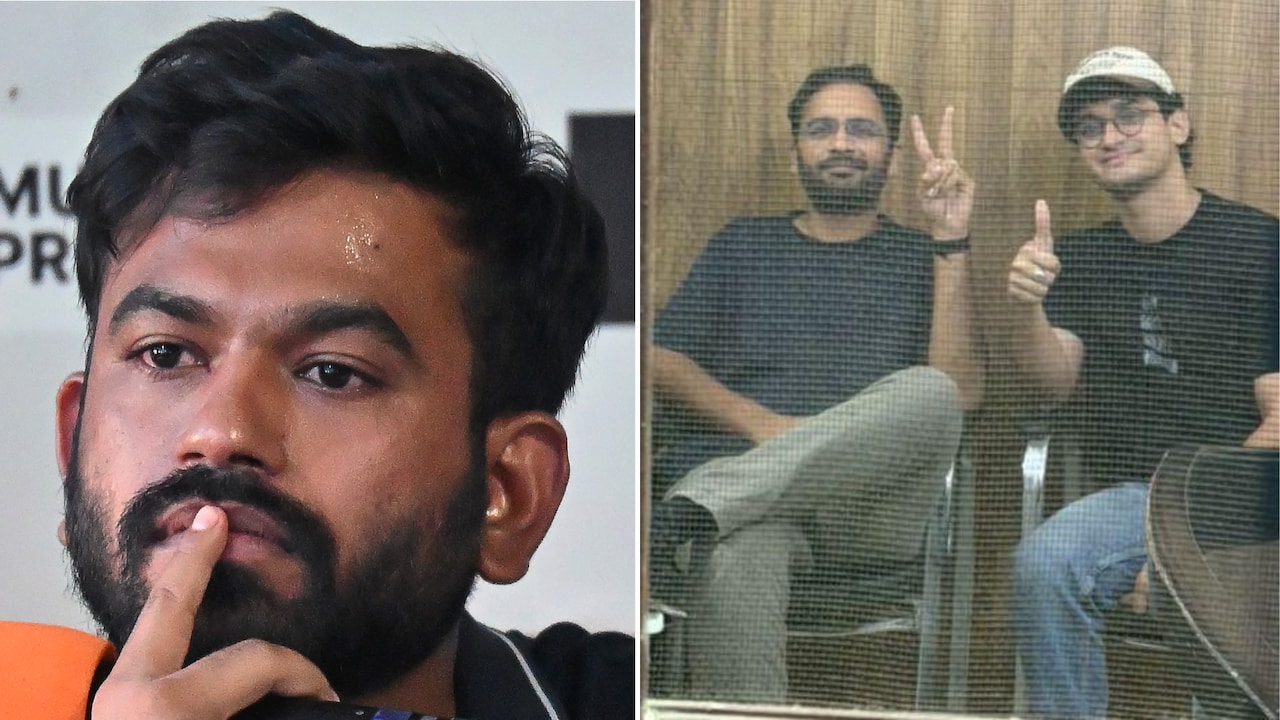
After his release, Dipke shared a photo of the other two CJP leaders and wrote: “Now just waiting for my brothers to be free.”
Earlier this week, Das and Ranka were sent to five-day judicial custody for allegedly entering Jantar Mantar despite police orders and trying to disturb the peace. That period ends on Sunday, October 18.
Dipke was produced before a Special Executive Magistrate (SEM) at Mandir Marg on Saturday. He was ordered to furnish a bond of Rs 50,000 and give an undertaking that he would not disturb the peace. He walked out of the Mandir Marg police station soon after the hearing.
READ | Abhijeet Dipke Released After Signing ‘Peace Bond’ On Court Orders
#WATCH | Delhi: CJP founder Abhijeet Dipke arrives at the residence of NCP-SCP spokesperson Anish Gawande Dipke was released from Mandir Marg Police Station after he was granted bail https://t.co/HsGXDWRYhw
— ANI (@ANI) October 17, 2026
A key reason for Dipke’s release was that he never reached the march, officials told NDTV. Das and Ranka, by contrast, “reached Jantar Mantar stealthily despite being told not to and tried to spread unrest”, the sources said.
Both cases came up under the same law. Dipke was formally arrested in a fresh breach-of-peace case under Sections 126 and 170 of the Bharatiya Nagarik Suraksha Sanhita (BNSS), police said. Section 170 allows police to arrest a person to prevent a cognisable offence, and Section 126 empowers an executive magistrate to demand a bond for keeping the peace. Neither involves prosecution for an offence as such.
READ | YouTuber Dhruv Rathee Faces Bailable Warrants In 2018 Defamation Case
The same provisions were invoked against Das, Ranka and a third CJP member, Ajinkya Shinde, when they were produced before an SEM on October 14. Das and Ranka were sent to jail while Shinde was let go on a bond that he won’t violate peace for six months.
In the Das-Ranka-Shinde case, the three faced allegations of trespass, bond violation and obstruction of a public servant’s duty, according to CJP legal head Ratna Singh. The SEM court observed that there was “a serious apprehension” that they could again violate the law and instigate others to do so if released, a Delhi Police press note said. Das and Ranka were remanded to five days of judicial custody. Shinde was told to execute a personal bond and surety of Rs 5,000, and was bound down to keep the peace for six months. Das and Ranka’s custody ends on Sunday, October 18.
Police said that on the morning of October 13, Das, Ranka, Shinde and 11 other CJP members reached Jantar Mantar by allegedly entering through private property. Two days earlier, on October 11, Delhi Police Commissioner Anurag Kumar had issued an order removing the site from the list of designated protest venues. Police personnel tried to stop them, but the protesters allegedly obstructed the officials in the discharge of their duties, police said. All 14 were detained.
READ | ‘Waving Tiranga Is No Crime’: Opposition Rallies Behind Neha Bora, Abhijeet Dipke
The three were then arrested under preventive provisions. Police said they took into account the three’s “alleged repeated attempts to disturb public order” and their alleged efforts to encourage others on social media to do the same.
Das and Ranka were treated as repeat offenders. Both had signed a one-year peace bond of Rs 50,000 after being detained at an earlier protest in the national capital on October 10. According to police sources, they were found to have violated Section 163 of the BNSS once again, in breach of that bond.
Dipke had also signed a one-year bond on October 10, after he was detained from inside a flight at Delhi airport, and a separate breach-of-peace case was registered against him.
In his first reaction after his release on Saturday, Dipke posted on X a still from ‘Veer-Zara’ (2004), showing Shah Rukh Khan’s character in tears as he walks free after 22 years in a Pakistani jail. He captioned it: “How it feels walking out of jail after 24 hours with no wifi and phone.”
All India Students’ Association (AISA) president Neha Bora was also taken into preventive custody on Friday, at least the eighth such instance for her since October 2, as a wave of protests began demanding the resignation of Chief Election Commissioner Gyanesh Kumar over the contentious Special Intensive Revision of voter rolls and other issues. Bora was released early on Saturday after formalities under Section 65 of the Delhi Police Act were completed, police said.
Unlike Dipke, Bora was not produced before a magistrate. Section 65 of the Delhi Police Act allows police to detain and remove people who resist or refuse to comply with police directions. Such detentions end once the occasion has passed, and no case is registered.
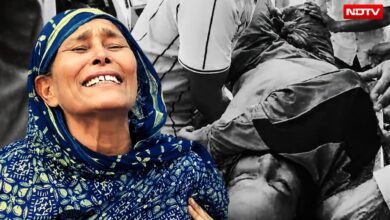
“I was detained at Mandi House and kept here (at the police station) the whole night, until 5 am. Why are you (police) carrying out these illegal detentions? These things have been happening in this country for a long time, and this protest movement has clearly shown that such detentions are taking place. It has brought these kinds of detentions to light. They claim that they adhere to law and order and go by the book, but none of that is happening,” Bora told news agency PTI.
Bora called for the immediate release of all other detained protesters. The JNU research scholar also demanded an end to the SIR, besides the resignation of Gyanesh Kumar.
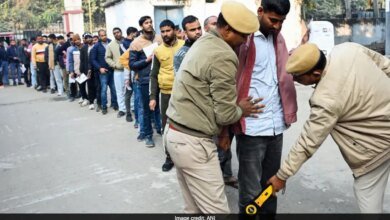
According to the police, around 150 people were detained on Friday to maintain law and order and keep traffic moving. Central Park in Connaught Place was cordoned off, with Rapid Action Force personnel deployed inside. Smaller marches carrying the Tricolour went ahead nonetheless.
The CJP, Opposition parties, student groups and civil society organisations have been protesting across the country over alleged irregularities in the SIR exercise. The Election Commission has said its decisions were cleared by the Supreme Court. The BJP has called the protests “foreign-funded” and “attempts at spreading anarchy”.