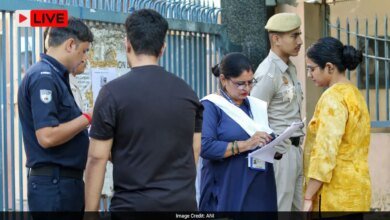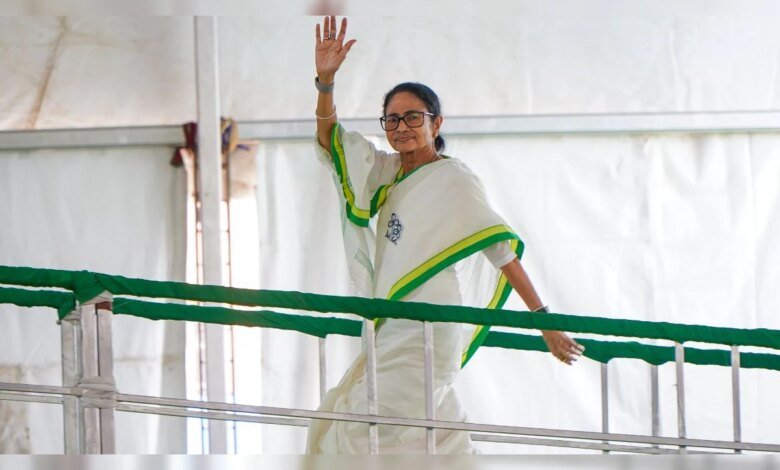
Two flowers. One stem, growing from the same root. Unity was the idea, and Mamata Banerjee drew the symbol ‘Jora Ghas Phool’ by hand for the All India Trinamool Congress she founded in 1998. She had split from the grand old Congress to launch it.
At 11:36 pm on Thursday, 28 years later, her camp emailed the Election Commission a list picking new names for her faction, symbols from a catalogue. The group of “rebels” did the same. This came after the Election Commission did what arbiters usually do when two claimants fight over one heirloom. It has locked the heirloom away until a final call.
Advertisement – Scroll to continue
The stem has now split. The symbol is frozen.
For now, Mamata Banerjee’s faction gets a ‘footballer’, and Arup Roy-Ritabrata Banerjee’s group gets an ‘envelope’. Mamata has prefixed her name to the party name, and the other faction picked the word ‘democratic’, at least for the October 6 bypolls, including in Rejinagar and Nandigram in West Bengal.
The interim order said the time available wasn’t adequate to decide which group is the real party. That question falls under Paragraph 15 of the Election Symbols (Reservation and Allotment) Order, 1968. Even the Indian National Congress that Mamata Banerjee left in 1997 once faced the same question. How it was answered, and how the commission has answered it since, offers a guide.
Advertisement – Scroll to continue

How EC Decides These Matters
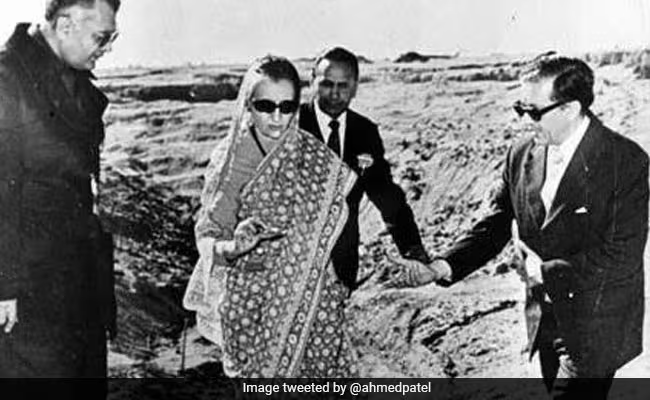
The Election Commission’s method for such disputes was forged in a seminal Congress split of 1969. Prime Minister Indira Gandhi had had enough of the old guard, and her faction elected its own president, Jagjivan Ram. The other faction said it had extended the term of S Nijalingappa as president by a year already.
The Election Commission then weighed three tests: the party’s aims and objects, its constitution, and majority support.
It found that neither group could be differentiated on the party’s aims. Result: neutral.
It said the constitution test was “hardly of any assistance”, given the expulsions on both sides. Result: no conclusion here too.
Test 3, of raw numbers, found that Indira Gandhi’s side had most of the party’s MPs and state legislators, and most members of the All India Congress Committee and its delegates.
In January 1971, Indira Gandhi’s group, headed by Jagjivan Ram, was thus declared the real Congress, entitled to its ‘Two Bullocks’ symbol. Later that year, in a landmark case, the Supreme Court upheld the decision and the commission’s power to make it.
A Name Can Survive A Symbol
Indira Gandhi’s Congress got the ‘two bullocks’ symbol but preferred to, instead, go forward with the ‘cow and calf’ it had got in the interim. She lost power after the Emergency (1975-77) and, after another split in 1978, her new Congress (I) had to give up the ‘cow and calf’ too.
That’s when she asked for the old pair of bullocks, but the EC had frozen that symbol, according to veteran journalist Rasheed Kidwai’s book ‘Ballot’. Party general secretary Buta Singh was offered an elephant, a bicycle, and an open hand or palm, the book says.
Over a bad phone line, Indira Gandhi kept hearing “haathi” (elephant) instead of “haath” (hand), and kept refusing, until PV Narasimha Rao took the receiver and settled it. She was fine with the hand.
Two years later, Indira Gandhi returned to power on that symbol, which has stayed since.
What Shiv Sena, NCP Rulings Say
For Mamata Banerjee, this offers hope of a resurgence, but also carries an immediate worry. That the number of MPs and MLAs could become the sole deciding factor.
This has happened in recent splits, in which the Election Commission has leaned on that test.
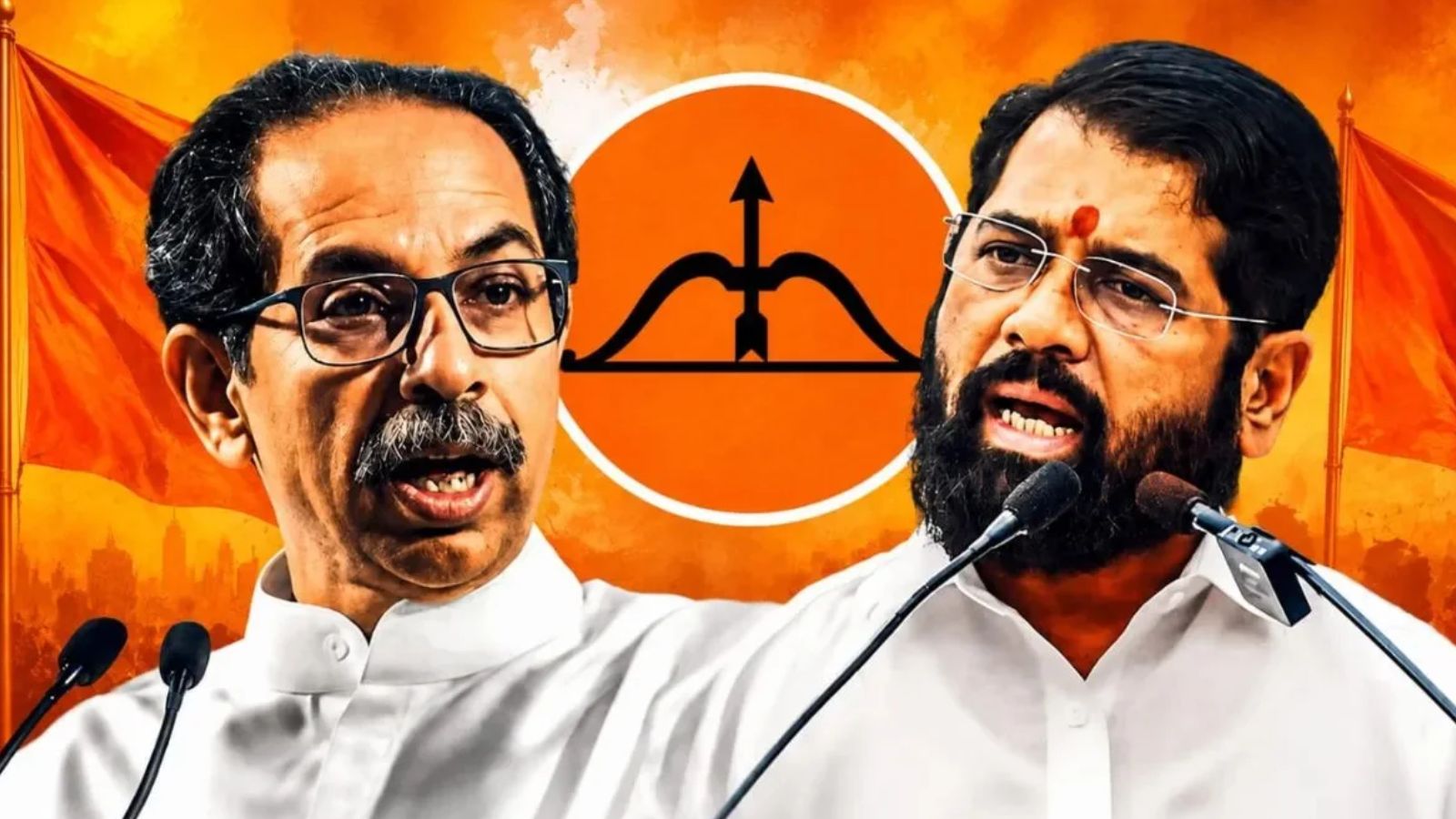
In its 2023 order in the Shiv Sena dispute from Maharashtra, it set aside the party constitution, finding some amendments to it undemocratic. It also could not conclude who has the majority within the party structure. It thus awarded the party name and the ‘bow and arrow’ symbol to Eknath Shinde’s faction, which had most of the party’s MLAs and MPs, leaving party founder Bal Thackeray’s son Uddhav with a modified name and symbol.
Another case is also from Maharashtra, of the Nationalist Congress Party co-founded by Sharad Pawar, who was also in the Congress before splitting away in the 1990s. In the NCP dispute order of 2024, the EC found that the partty’s top bodies were “shrouded with doubt” because of disputed internal elections. Counting legislators alone, it found Sharad Pawar’s nephew Ajit Pawar had most of them. It declared Ajit’s group the real NCP. The other is now NCP(SP), though there are sporadic reports of a possible merger, revived after Ajit Pawar’s death earlier this year.
Numbers End Up Being Sole Factor, EC Explained
In its NCP order, the commission went beyond the case in hand. It said a majority of the symbol disputes before it “show that political parties are either not holding regular organisational elections, or not holding them as per Party Constitution, or have amended their Constitution in such a manner that ‘elections’ have turned into ‘appointments'”.
In such cases, “the Party becomes a private fiefdom of a single person or group of select individuals and the Party is run like a private enterprise”.
That leaves little to count inside the organisation. It is then “forced to ignore the numerical strength of opposing factions in the Organisational Wing despite being conscious of its importance”, it said. In the NCP case, it found the party’s top bodies “shrouded with doubt”. That’s why it decided “on the basis of test of majority in the legislative wing”.
This technicality — as to what really is a “party”, a whole structure or just its MLAs and MPs — is at the nub of a related debate raging over defections.
A June Meeting Holds Key
In Trinamool’s case, a key date may hold an answer: June 22. The revolt had begun a little before that, just after the BJP defeated the TMC (also known as AITC) in the Bengal elections in April-May, ending Mamata’s 15-year rule. Around 60 of the party’s 80 MLAs went with Ritabrata Banerjee, who became Leader of the Opposition. Later, Mamata lost 20 of the party’s 28 Lok Sabha MPs. They joined the little-known Nationalist Citizens Party of India (NCPI) and backed the BJP-led NDA as a “separate bloc”.
The rebels have blamed Mamata’s nephew Abhishek Banerjee and his alleged “corrupt ways” for their move. Mamata, 71, said they made a deal with the BJP. She also lambasted the EC for alleged unfairness in the elections, as she did on Friday as her party’s candidate withdrew from the Nandigram bypoll contest. She announced support for the Congress candidate, who was arrested just after that in an old case. Those are the immediate moves.
On the deeper technicalities, though, June 22 matters because that’s when Ritabrata’s faction elected Arup Roy as chairperson of the party’s “National Working Committee” at a “Special Session” at a Kolkata hotel. The Arup Roy group told the EC that the earlier National Working Committee’s tenure had expired in February 2025. Mamata Banerjee’s faction has said this committee’s term was always five years, not three, from 2006 onwards, and that the next organisational elections are therefore due in 2027. She argues the June 22 “meeting” was void. Such points continue to be debated, also in courts, in this and other cases.
In Indira Gandhi’s case over 50 years ago, the Supreme Court said, “Numbers have a relevance and importance in a democratic system.” Indira had them. Mamata does not, if that’s the final test in her case too.