New Delhi:
The Centre has announced a series of measures aimed at overhauling passenger movement, airport security and immigration services across India’s airports, with Union Home Minister Amit Shah directing authorities to implement technology-driven systems, expand immigration infrastructure and streamline passenger flow.
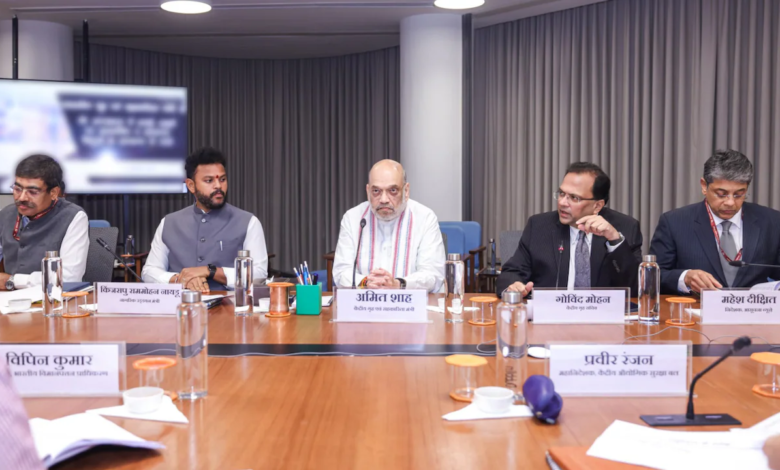
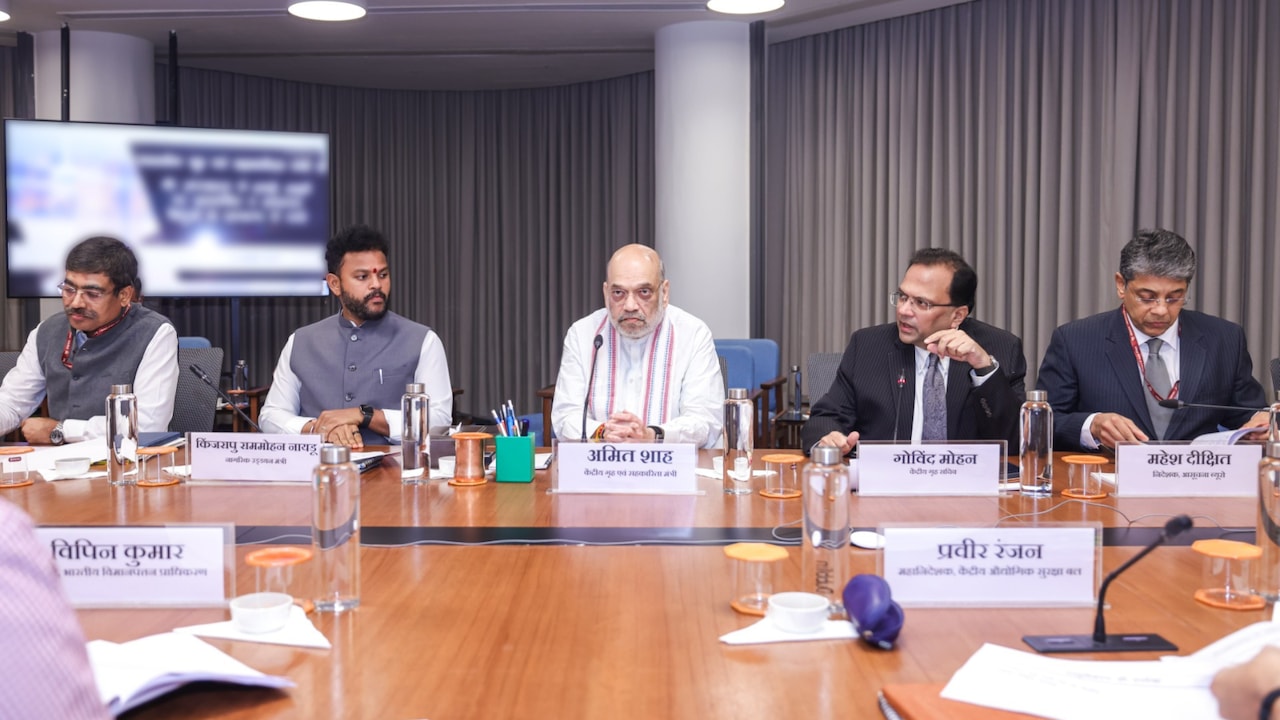
The decisions were taken during a high-level review meeting chaired by Union Home Minister and Minister of Cooperation Amit Shah, along with Union Civil Aviation Minister Ram Mohan Naidu Kinjarapu. The meeting was attended by senior officials from the Ministry of Home Affairs, Ministry of Civil Aviation, Central Industrial Security Force (CISF), Airports Authority of India (AAI) and the Intelligence Bureau.
Among the biggest announcements was the decision to roll out the Automatic Tray Retrieval System (ATRS) in a phased manner across airports nationwide. The system, already used at several major airports globally, is expected to reduce waiting time at security checkpoints while lowering manpower requirements. Shah also directed that all newly developed airports should incorporate ATRS as a standard feature.
To address congestion at airports, the Home Minister directed officials to prepare a comprehensive framework covering every stage of a passenger’s journey-from entry gates and check-in counters to security screening and immigration. According to the Ministry of Home Affairs, a coordinated plan has already been prepared for every touch-point to ensure seamless passenger movement and minimise delays.
The government also set an ambitious timeline for airport infrastructure development. Shah instructed authorities to prioritise the development of 21 airports currently under construction, along with another 41 airports based on passenger traffic and security requirements laid down by the Bureau of Civil Aviation Security (BCAS).
Passenger convenience also received significant attention during the review. Shah asked the Ministry of Civil Aviation to establish norms for the number of aerobridges required at airports based on passenger and aircraft traffic. He further directed that baggage drop facilities, currently available at 16 major airports, should be expanded to other high-traffic international airports.
On the security front, the Home Minister stressed that there should be no compromise in educational qualifications for CISF personnel deployed for X-ray baggage screening. He instructed that only appropriately qualified officers and staff should be assigned to these critical screening responsibilities.
Immigration services are also set for a major expansion. Shah directed that Foreigners Regional Registration Office (FRRO) offices be established at the headquarters of every state by 2027, a move expected to improve services for foreign nationals and strengthen immigration management across the country.
The government also ordered the early operationalisation of authorised immigration check posts at Agartala and the upcoming Jewar airport, expanding India’s international immigration network as air traffic continues to grow.
In another key initiative, the Centre plans to promote the Fast Track Immigration – Trusted Travellers’ Programme (FTI-TTP) among international passengers. Airlines will be encouraged to send WhatsApp messages to travellers at the time of booking international tickets, prompting them to register for the programme, which is designed to enable faster immigration clearance.
To ensure sustained improvements, Shah directed both the Ministry of Civil Aviation and the CISF to commission independent third-party studies during peak travel seasons to identify bottlenecks and recommend measures for reducing passenger delays at airports.
The announcements signal the government’s push to modernise airport infrastructure and immigration systems while balancing enhanced security with faster and more efficient passenger services amid rising domestic and international air travel.