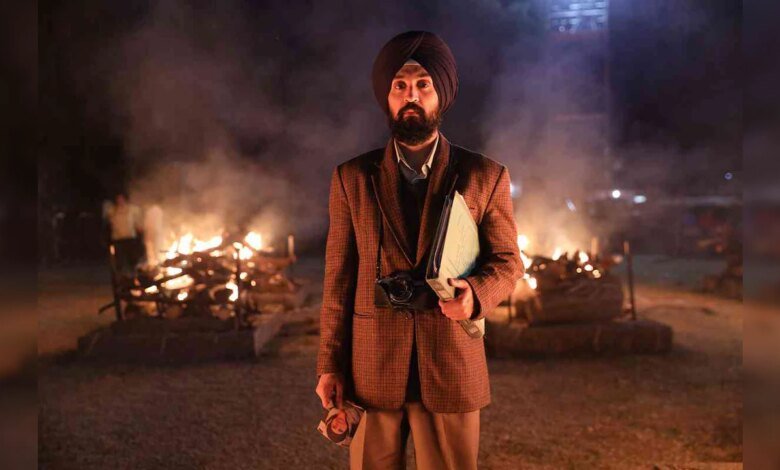
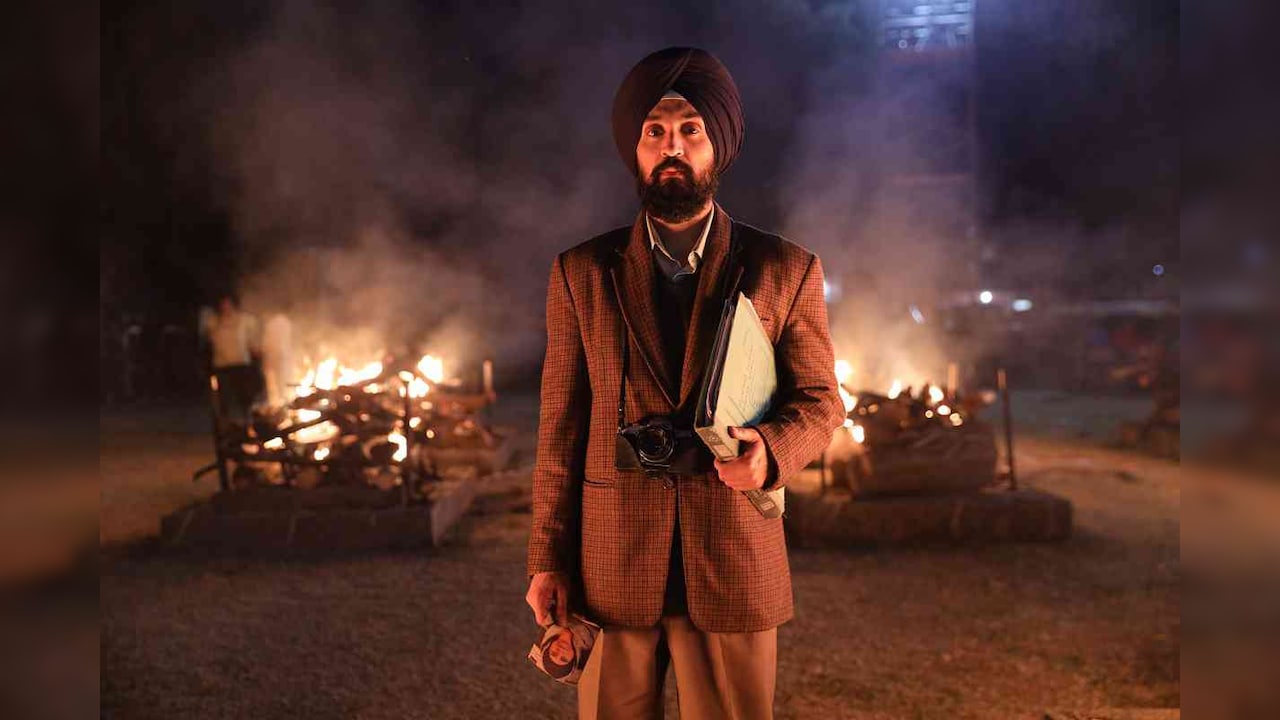
Among the many controversies laid bare by Satluj, Honey Trehan’s movie about Jaswant Singh Khalra, which played peekaboo with viewers, is the use of fictional names for very real characters, in particular DGP Bitta (DGP KPS Gill) and SP Gugga (SSP Ajit Singh Sandhu). Is it fear of reprisal from the state, especially its permanent establishment, the police force, or the comfort of a much-used device: plausible deniability? If it is the former, it joins the most recent recruit to the protect-the-police club, Santosh, a 2024 film by Sandhya Suri, highlighting police atrocities, much feted abroad but not screened in India because the makers refused to comply with the extensive cuts suggested by the Central Board of Film Certification (CBFC). If it is the latter, then it is like Schrodinger’s cat, simultaneously dead and alive, that is to say, only periodically useful.
There are three reasons why films based on real incidents or beloved myths depart from the truth. Creative licence, which Christopher Nolan has exercised in The Odyssey in his casting, specifically the point that has bothered most antagonists of diversity, that of Kenyan-Mexican actor Lupita Nyong’o as Helen of Troy (forgetting that Orson Welles had cast Black actor Eartha Kitt as Helen in the 1950 stage adaptation of Homer’s poem).
Advertisement – Scroll to continue
The second reason is usually adopted by Hindi cinema, as a way of plausible deniability, the kind practised by directors as different as Aditya Dhar in Dhurandhar (the first slide of the film says it is a “fictional work inspired by real-life events”) and Prosit Roy in the Prime Video serial Raakh, which changed the names of both the victims and the perpetrators, though anyone with even limited intelligence knows that it was the gruesome event of 1978, the Sanjay and Geeta Chopra case, by the men forever known by the diabolical shorthand ‘Billa-Ranga’. The production house Applause could have easily avoided this by basing the series on facts or at least the most authoritative version of the killings presented in Sudeep Chakravarti’s Fallen City: A Double Murder, Political Insanity and Delhi’s Descent From Grace.
Or one could say it is like it is: yes, Bollywood is cheap, and it would rather spend on star entourages than on securing book and life rights, and giving acknowledgment where it is due.
The third reason is fear of the Republic of the Easily Offended. These are individuals and groups that surface wherever they smell the opportunity for self-promotion. So it was with the Karni Sena, which objected to Sanjay Leela Bhansali’s Padmaavat (2018), though the director was careful to announce it was based on Malik Muhammad Jayasi’s poem rather than the story of Rani Padmini and Alauddin Khilji mentioned in most textbooks. Bhansali’s sets were disrupted, his heroine was sent threats of her nose being cut, and its release was delayed because of several attempts by state governments to ban the film. Similar attempts were made to disrupt the release of Ashutosh Gowariker’s Jodha-Akbar (2008) on the grounds that the former was not a historically accurate character, though no one, thankfully, has yet said the same for one of Indian cinema’s greatest epics, Mughal E Azam (1960), where Durga Khote plays a doting mother, Jodha Bai, to her son, Prince Salim (Dilip Kumar). What happens in such cases is that in the process of trying not to wrong anyone, everyone gets offended.
In the case of Satluj, originally called Punjab 95, it received 127 cuts from the CBFC but was released, for less than 48 hours, on Zee5. The film follows Khalra’s investigation into the extrajudicial killings and state-sanctioned cremations of thousands of unidentified bodies in Punjab during the insurgency. The security establishment of the time is portrayed in the harsh light that it merits. The argument is that these were difficult times requiring difficult decisions. But clearly, Zee5 was told to stop its streaming, though the platform’s justification for doing so is a masterclass in how to make a meaningless word salad: ”In the light of the current developments (which it fails to identify), Satluj will be unavailable in India until further notice. We remain committed to exploring every appropriate avenue with due process to bring the film back to our audiences at the earliest opportunity”. In other words, blah blah.
The filmmakers spent three years trying to get the film released. The message for other filmmakers is disheartening: anything based on a real event, unless it’s a hagiography, should be made only by consensus, by a committee. But art is about nuance. It can contain multitudes and yet have a singular, particular vision. The rule of law and impartially run cultural institutions are meant to propagate ideas that disturb the comfortable and comfort the disturbed. The alternative is a uniformly infantile people who think and feel alike.
(The author is a journalist)
Disclaimer: These are the personal opinions of the author