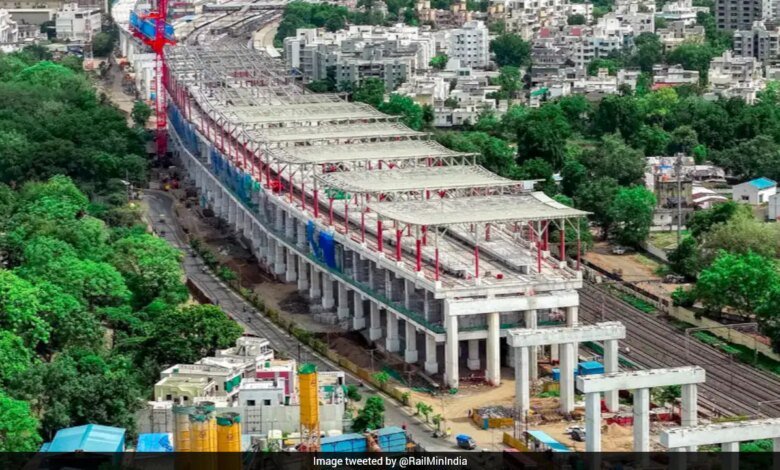
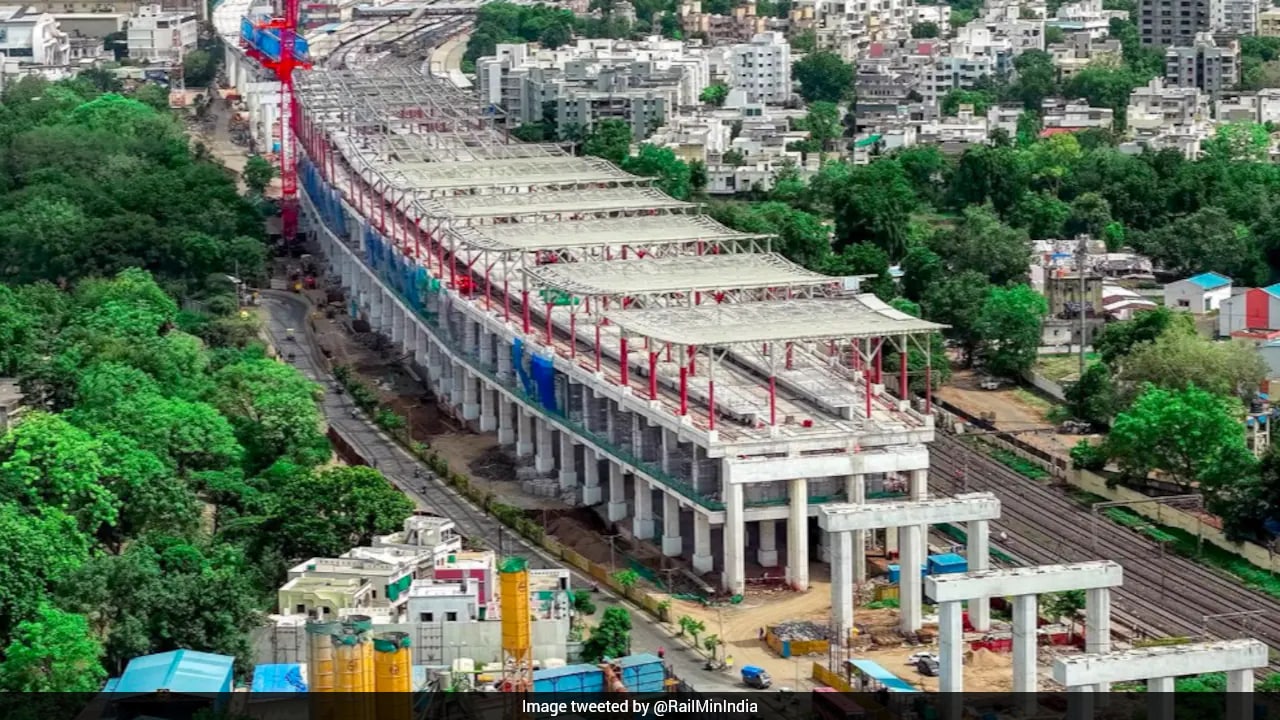
India’s ambitious bullet train project has crossed another important milestone, with construction of the Vadodara Bullet Train Station entering a new phase. Fresh images shared by the Ministry of Railways show the station taking shape, with the main slab casting completed and structural steel work now underway. The ministry shared photographs of the progress on social media, announcing that the concrete slab work has been finished and steel erection has begun, marking another step towards the completion of India’s first high-speed rail corridor.
“Vadodara Bullet Train Station taking shape! Slab casting completed and structural steel erection underway,” the tweet by the Ministry of Railways read.
See the tweet here:
Vadodara Bullet Train Station taking shape!
Slab casting completed and structural steel erection underway. 🚊🚝#BulletTrain #RailInfra pic.twitter.com/F1WjwwsnyM
— Ministry of Railways (@RailMinIndia) August 4, 2026
With the concrete structure now in place, engineers have started installing massive steel beams and columns that will support the station’s platforms, roof, and exterior framework. Heavy-duty cranes and advanced construction techniques are being used to build infrastructure capable of handling trains travelling at extremely high speeds.
The station is also being designed with modern passenger amenities while incorporating architectural elements inspired by the region’s cultural heritage.
India’s First Bullet Train Project
The Vadodara station is part of the Mumbai-Ahmedabad High-Speed Rail Corridor, India’s first bullet train project. The government recently said the corridor is steadily moving towards completion after years of construction.
Developed by the National High Speed Rail Corporation Limited (NHSRCL), this 508.18-kilometer corridor will connect India’s financial capital, Mumbai, with Gujarat’s largest city, Ahmedabad, reducing travel times from several hours to approximately two hours. Once operational, the bullet trains will have a design speed of up to 350 kmph.
The project is being built using Japanese Shinkansen technology and is expected to transform long-distance rail travel in India. The ambitious rail project remains one of Prime Minister Narendra Modi’s key infrastructure initiatives.