New Delhi:
Punjab is witnessing a rise in protests by several sections of employees and workers. The issue has now moved from the streets to Parliament.
The protests by power employees, sanitation workers, and Aam Aadmi Clinics workers have become a major political issue, putting pressure on the Bhagwant Mann government.
The protests have affected essential services and allowed opposition parties to question the government’s handling of public issues. Different groups are demanding solutions to their long-pending problems.
The government is facing the challenge of balancing employee demands with maintaining smooth services.
The biggest concern is linked to the power sector, where PSPCL-outsourced employees have been protesting for regularisation of their jobs. The employees have been demanding that contractual workers should be made permanent. Due to the protest, concerns have increased over electricity services as many field-level employees are not performing their duties.
With several outsourced employees on strike, people may face delays in resolving electricity complaints and repairing faults. Senior officials, like SDOs and XENs, are managing responsibilities, but employees say a shortage of staff can affect the power supply system. However, an AAP leader says that Finance Minister Harpal Singh Cheema is dealing with such issues and is trying to resolve problems.
The issue has also become political, with opposition parties targeting the government over the situation. They have alleged that the government has failed to address the demands of employees who are responsible for maintaining the state’s power network.
Another major protest is by sanitation workers across Punjab. They have been demanding regularisation of temporary employees and better working conditions. The protests became more intense after incidents of police action during demonstrations in Barnala, Sangrur and Khan. Congress Punjab President Amarinder Singh Raja Warring raised the issue and said, “Punjab Congress stands firmly with the students and the people of Punjab. We strongly condemn the brutal lathi-charge on these Rabb De Bande (Safai Karamcharis). In a democracy, no citizen can be treated with such brutality for raising their voice.”
Talking about the issue, Vice Chairman of the National Commission of Safai Karamchari, Hardeep Singh Gill, said that he met Punjab Governor Gulab Chand Kataria regarding the sanitation workers’ protest. He said the governor informed him that the file was linked to an ordinance.
The health sector has also witnessed protests as Aam Aadmi Clinic doctors and staff started an indefinite protest. The employees are demanding regularisation after working on contracts for several years. They are also demanding benefits for government holidays and Sundays. The protest has affected patients who depend on these clinics for basic healthcare.
The controversy over alleged paper leaks has added another issue for the government. Congress leaders have accused the government of failing to protect the future of students.
Raja Warring said, “In just four years, six paper leaks have shattered the dreams of nearly 5 lakh students. Instead of delivering justice, the Bhagwant Mann government has responded with silence and failure.”
The Punjab government has denied allegations of paper leaks and maintained that action is being taken whenever irregularities are found.
Shiromani Akali Dal leader Bikram Singh Majithia has also attacked the government over the protests. He said, “Drive out Delhi rulers, save Punjab,” while accusing the AAP government of failing to resolve employee issues.
Majithia said, “No DA, no arrears, no regularisation of contractual staff, only baton charges under the Punjab model.” He also raised issues related to power employees, sanitation workers, health workers, transport employees and other contractual staff.
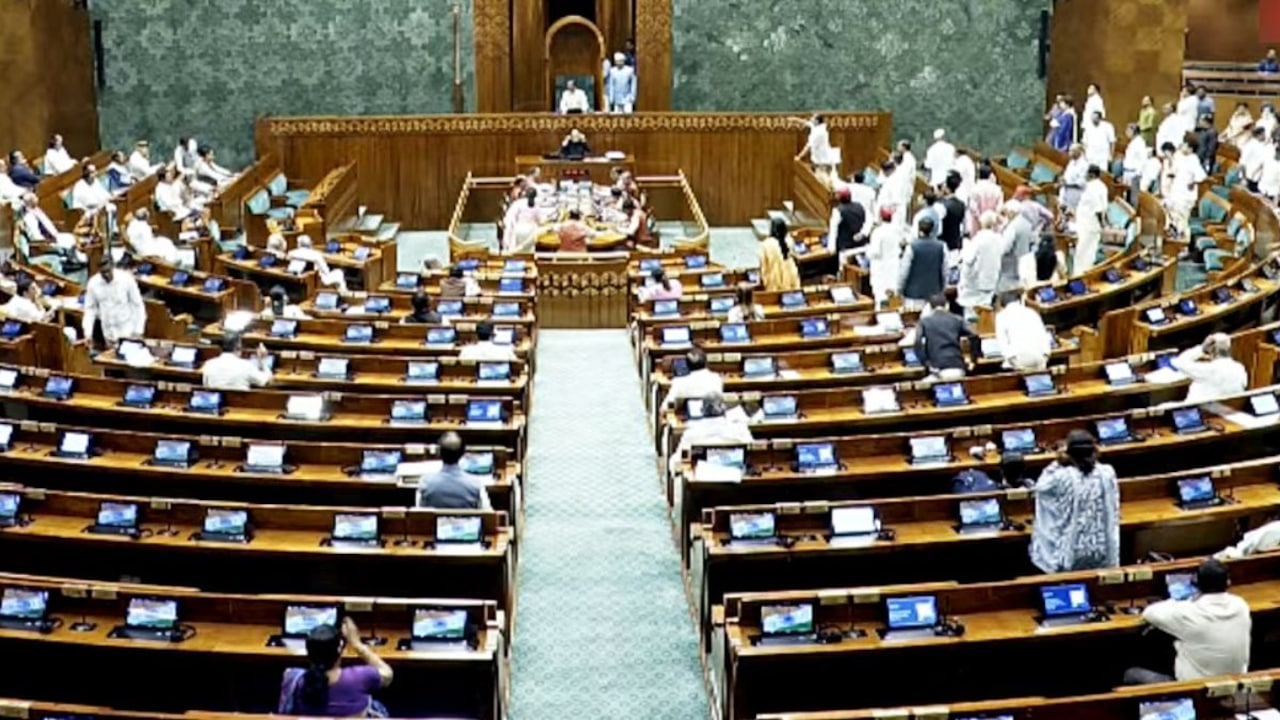
The growing protests have now become a major political challenge for the Punjab government. What started as employee demands on different issues has turned into a wider political debate. With these matters reaching Parliament, pressure on the state government has increased further.
Political observers believe that the way the government handles these protests will have an impact on public opinion. The administration will have to focus on dialogue and finding solutions while ensuring that essential services continue without disruption.