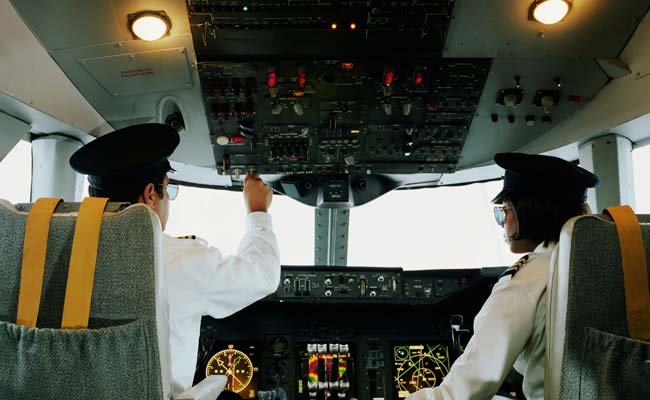
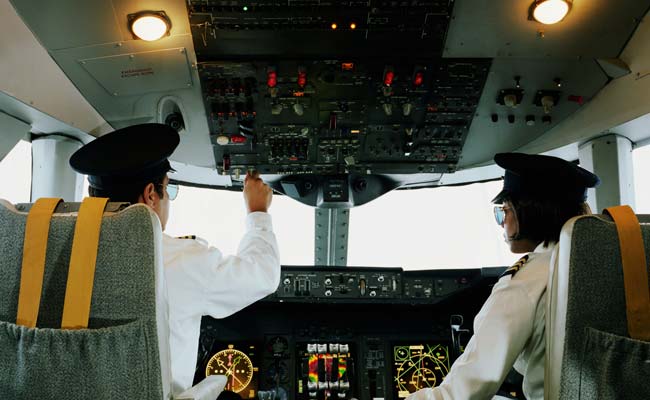
A government-appointed panel has backed the introduction of the Multi-Crew Pilot Licence (MPL) in India, recommending an airline-driven pilot training framework that relies heavily on simulator-based instruction and could help address the country’s growing pilot shortage as airlines rapidly expand their fleets.
In a draft report circulated earlier this month, the Directorate General of Civil Aviation (DGCA) committee proposed introducing MPL as an alternative pathway to the existing Commercial Pilot Licence (CPL) route. The licence, approved by the International Civil Aviation Organization (ICAO) in 2006 and now used in more than 50 countries, is designed specifically to prepare pilots for airline operations.
“If implemented with strong regulatory oversight and industry collaboration, (the new licensing route) can reduce manpower shortages,” the committee said in its draft report.
According to the report, IndiGo currently has 7.6 pilots per narrow-body aircraft, significantly below the global average of around 10 pilots per aircraft.
Airlines Back MPL To Build Pilot Pipeline
According to the draft report, the MPL model has the backing of Air India and IndiGo, which could benefit from a faster transition of cadets into cockpit roles. The committee examining the framework included representatives from both airlines and flight training organisations.
“The MPL is an airline-oriented pilot training programme specifically designed to meet the operational requirements of commercial airlines. In most cases, the programme is fully sponsored, financially supported, or directly facilitated by the partnering airline. A similar framework may also be introduced in India,” the committee said.
The committee, constituted in July last year and headed by a senior DGCA official, included representatives from Air India, IndiGo and flight training organisations. Airlines have been asked to submit their views before a final report is presented to the aviation regulator.
How MPL Differs From Existing Pilot Training
Under the proposed framework, trainee pilots would undergo 240 to 300 hours of practical training. However, only 100 to 120 hours would be spent flying actual aircraft, including a minimum of 20 hours of solo flying, compared with the current requirement of at least 200 hours of flying to obtain a Commercial Pilot Licence.
The training programme would also include upset recovery exercises on aircraft and extensive simulator sessions.
The committee argued that greater use of advanced flight simulators would allow cadets to receive more focused training in handling critical and emergency situations while potentially lowering operational risks.
The report stressed that MPL should not be viewed as a diluted training route.
“The option does not reduce training rigour and only redistributes training emphasis toward structured simulation,” it said, adding that the licence should not be “misunderstood as a shortcut due to lower aircraft flight hours.”
Focus On Domestic Training Infrastructure
The draft report recommends that participating airlines partner only with DGCA-approved flying schools and training organisations in India.
According to the committee, such a framework would help strengthen domestic pilot-training infrastructure and ensure greater standardisation in training practices across the industry.
Flying Schools Raise Safety, Oversight Concerns
The proposal has triggered concerns from sections of the flight training industry, which have raised concerns over safety and regulatory preparedness.
The Association of Flight Training Organisations (AFTO) has argued that reducing actual flying hours could weaken pilots’ hands-on skills, decision-making ability and judgement in unexpected situations.
In a submission to the regulator, the association urged the DGCA to mandate at least 150 hours of actual aircraft flying, along with a 10 per cent buffer, stronger solo-flying requirements and enhanced emergency training.
The industry body also cautioned that MPL is inherently an airline-driven model whose success depends heavily on robust regulatory oversight and airlines maintaining high training standards.
AFTO further questioned whether the DGCA currently has the capacity to effectively supervise such a programme, citing staffing constraints and noting that airlines supporting the proposal have previously faced penalties for training-related non-compliance.
The association has recommended a phased introduction of the MPL route, with only a limited number of pilots initially trained under the programme until regulators and industry stakeholders gain operational experience with the new system.
The committee itself acknowledged some of the concerns, noting in the draft that pilots trained primarily through the MPL pathway could potentially develop “weaker hands-on flying instincts and less confidence handling unexpected situations independently.”