Mumbai/New Delhi:
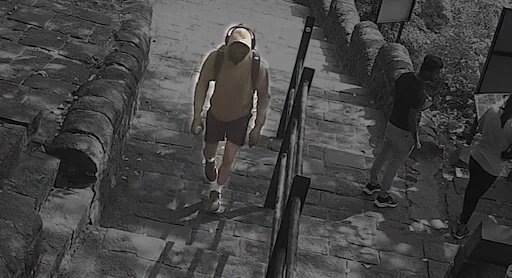
Siya Goyal and her alleged lover Chetan Chaudhary, accused of pushing her fiance Ketan Agarwal to his death, were taken to the Lohagad Fort near Pune on Tuesday and Wednesday to recreate the crime scene. A gait analysis was also carried out to establish that Chaudhary was indeed the man in the hoodie who was spotted trailing Ketan and Siya before the murder.
Both these steps, police officials and experts said, will be crucial to proving the case in court because there is no eyewitness to the killing and the prosecution will have to meet the standards set out by the Supreme Court in the landmark 1984 ‘Panchsheel’ judgment, which need to be satisfied before convicting someone based on circumstantial evidence.
Chaudhary was taken to Lohagad at 7 am on Wednesday, under the watchful gaze of a team of over 25 police officials, while Goyal was taken there the day before that.
READ | Siya Goyal Kept Fiance Ketan Agarwal’s Phone With Her After His Murder: Police
Experts explained that, in a murder case, the crime scene is reconstructed in the presence of the accused. It demonstrates how the accused committed the murder – showing where the victim was standing, how the accused approached them, and the manner in which the killing was executed. This reenactment is documented using video recordings and independent witnesses.
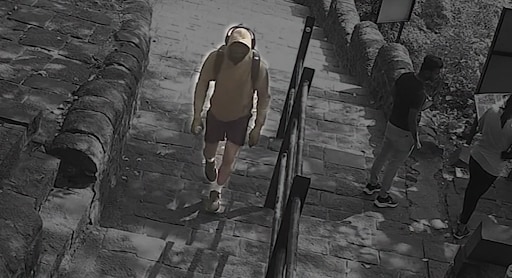
“Gait analysis is performed to establish that the accused was present at the scene on the day of the murder. The accused is taken to the location, and a scientific record is created regarding their gait (walking style), facial expressions, body language, height, and the length of their limbs.
READ | Lawyer Claims Chetan Not Man In Hoodie At Pune Fort, Cops Plan Gait Analysis
Records from forensic gait analysis are difficult to challenge in court because they serve as evidence proving the accused’s presence at the crime scene,” said an expert.
Meeting Strict Conditions
In the Sharad Birdhi Chand Sarda vs State of Maharashtra case of 1984, the Supreme Court clarified that the absence of an eyewitness in a murder case cannot, by itself, be grounds for acquitting the accused.
A sentence of life imprisonment or the death penalty, it said, can be handed down based on circumstantial evidence. The court laid down five extremely strict conditions for this, which came to be known as the ‘Five Golden Principles’ or ‘Panchsheel’.
The conditions were:
- Every circumstance and fact presented against the accused must be fully and conclusively proven.
- All proven facts must point solely and exclusively to the guilt of the accused (leaving no room for suspicion regarding anyone else’s involvement).
- The circumstances and evidence must be absolutely solid, firm, and irrefutable.
- The circumstances must be such that they completely rule out every logical possibility of the accused’s innocence.
- The evidence must form a continuous and complete chain leading to only one conclusion: that the crime was committed solely by the accused.
Ketan Agarwal Murder
The investigation and legal proceedings in the case of Ketan Agarwal’s murder will revolve entirely around these five principles.
“The police do not have any eyewitnesses to the incident. Therefore, the scene recreation and gait analysis conducted at Lohagad represent an attempt to scientifically establish these ‘circumstances’ before the court. The police must prove in court that the sequence of events – Chetan and Siya leaving home, arriving at Lohagad, the incident itself, and the subsequent circumstances – forms an ‘unbroken chain’ that directly establishes them as the killers,” an expert said.

A crucial caveat of the ‘Panchsheel’ principle is that if even a single vital link in the chain of evidence gathered during the police investigation snaps, the defence can capitalise on it.
“If there is even a 1% logical possibility of the accused being innocent, they will be entitled to the ‘benefit of the doubt’ and could be acquitted,” the expert explained.