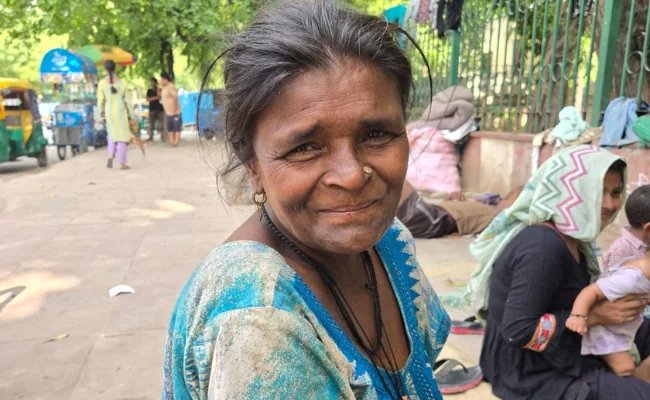
A 10-year-old girl sleeping beside her family on a pavement was allegedly kidnapped, raped and murdered in south Delhi’s Mehrauli this week, turning the spotlight once again on one of the capital’s most neglected communities. The crime has sparked widespread outrage and an uncomfortable question: How many more children are growing up in places where there are no doors to lock, no walls to protect them and no one watching over them through the night?
The answer lies across Delhi’s pavements, beneath flyovers, at traffic intersections and outside railway stations, where thousands of families have quietly built lives in the open. They are among the first people the city sees every morning and the last ones it passes before going to sleep. Yet they remain almost invisible.
Advertisement – Scroll to continue
NDTV travelled across Delhi to meet the people who live on its streets. Their stories reveal lives shaped by migration, poverty, displacement and loss. But beyond the statistics and policy debates are families who dream of nothing more than a safe place to sleep.
A Lifetime On The Pavement
In Delhi’s Nizamuddin area, 70-year-old Amina Begum has spent nearly her entire life on the roadside.
Originally from Bihar, she arrived in Delhi around six decades ago. Today, twelve members of her family live together on a stretch of pavement. Rag picking is the main source of livelihood for most of them.
“There was nothing here when we came. It was all jungle,” she recalled.
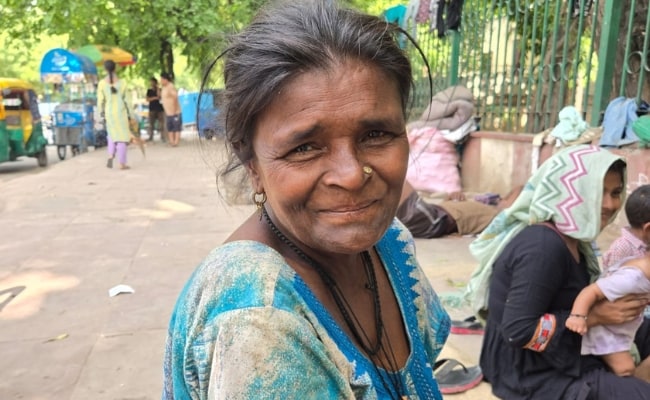
Her family once lived in a jhuggi in Khusro Park before it was demolished around fifteen years ago. Since then, the pavement has been home.
The family members sleep on a mattress and cover themselves with plastic sheets for the roof. A family member sits awake sometimes to guard them in the night, and that person then sleeps in the morning.
Bathing and using the toilet depends on whether they can afford the fee at a public washroom. If there is no money, they walk to nearby wooded areas before sunrise or after dark.
Amina said her children attended school, but poverty forced them to leave after classes six, eight and nine.
She said she has repeatedly asked authorities for housing.
Her daughter-in-law also gave birth to a child on the roadside.
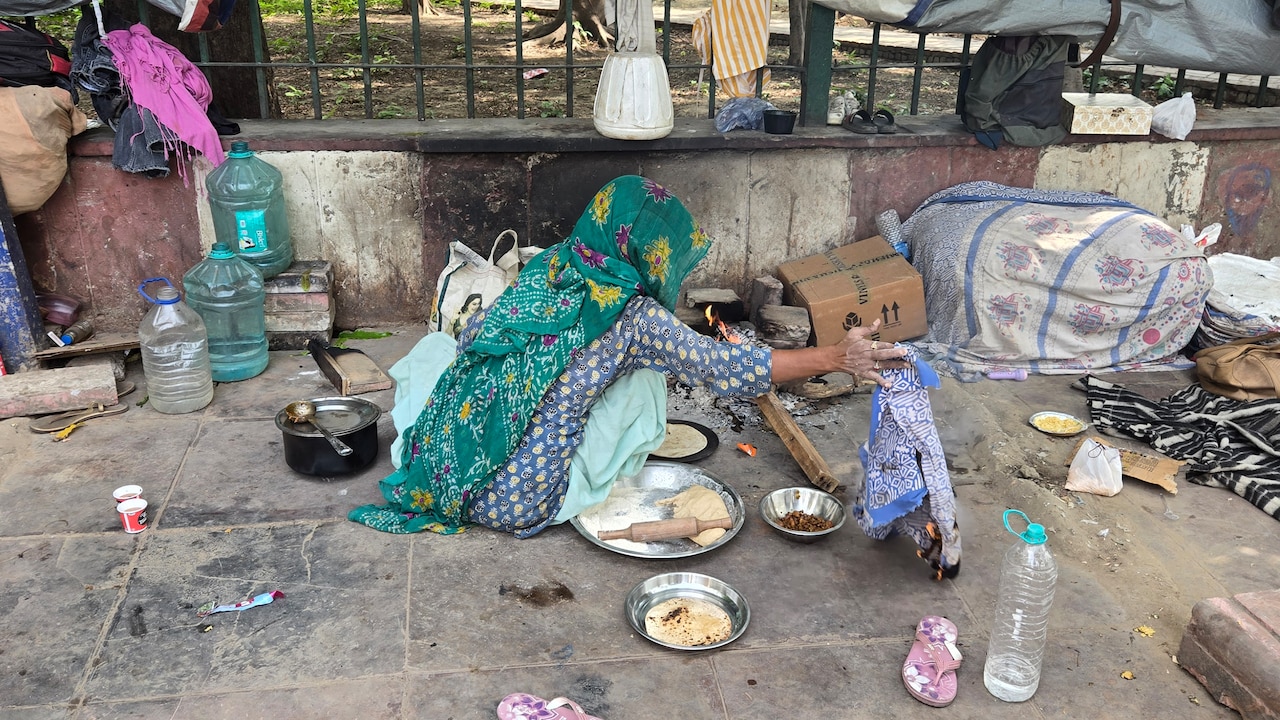
Police have occasionally asked them to vacate the pavement, but she said they have nowhere else to go.
New Flyovers, Skyscrapers But Old Address
For Amina, the city has changed dramatically over six decades. Flyovers have appeared, neighbourhoods have expanded and skyscrapers have transformed the skyline. Only her address has remained the same.
Just a few metres away lives 22-year-old Anju. She came to Delhi from Madhya Pradesh after running away to marry the man she loved. Her family severed all ties with her after the marriage.
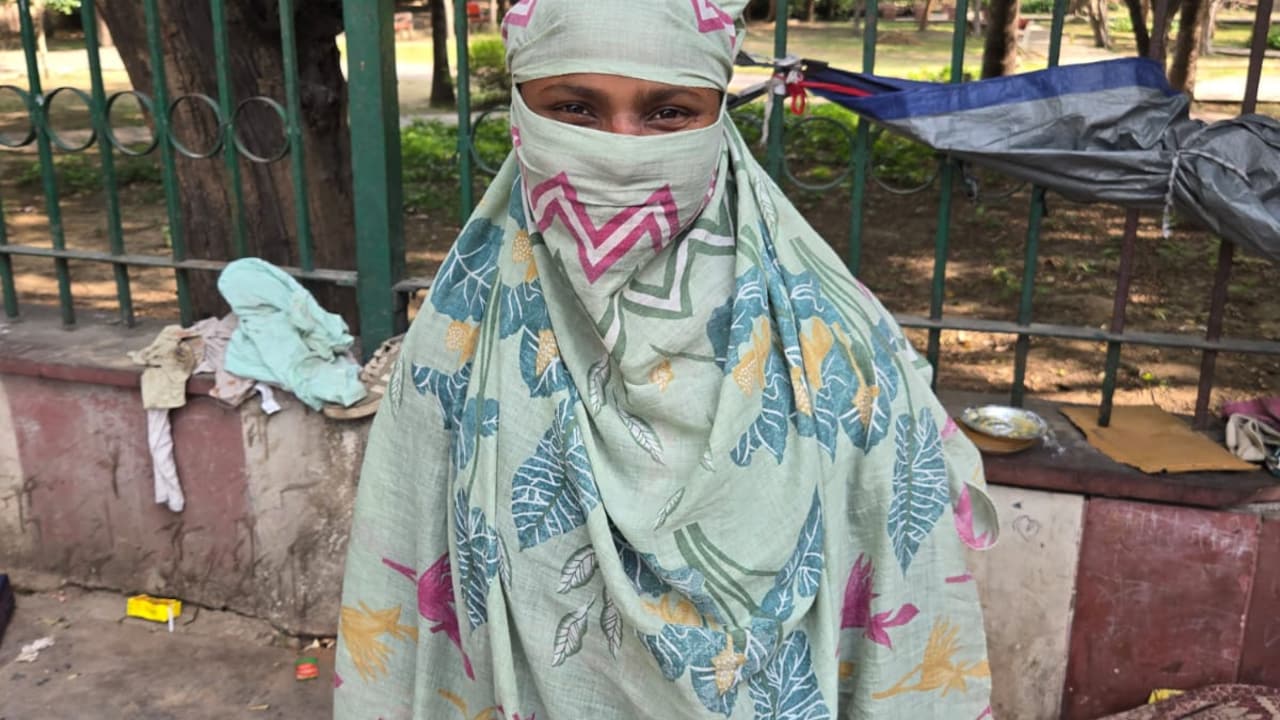
Today, she has two children – a boy and a girl.
Her husband collects recyclable waste while she manages the household.
Both her children were delivered on the roadside with the help of relatives because the family didn’t have anywhere else to go.
She uses public toilets to bathe whenever she can afford them. On days when she cannot spare the money, she quietly fills a bucket with water and bathes beside the road late at night.
One of Anju’s sisters was kidnapped. That memory continues to haunt her family, making every night feel uncertain.
The rape-murder case of the 11-year-old girl has only deepened that fear for families like hers.
“Nothing We Can Do”
Ruksana, 17, got married at the age of fifteen but was disowned by her in-laws over dowry. Having studied until Class 8, she now lives with her maternal family on the pavement. Her husband works with a wedding band and spends most of the time away from home.
He sends her around Rs 5,000 every month, which is enough to survive but not to escape.
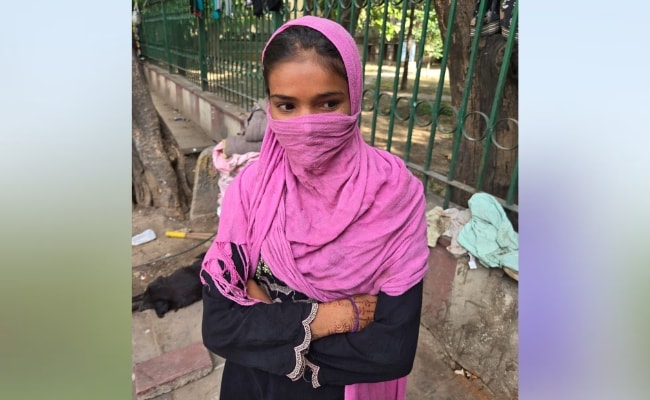
Some nights, she said, strangers come and sleep beside her while she is asleep on the pavement.
“There is nothing we can do,” she said in despair.
Like many women on the streets, she also depends on public toilets or nearby wooded areas for basic sanitation.
She said even getting access to a night shelter is not always easy. She said people are sometimes turned away based on how they appear.
She said the police have removed her family from the pavement several times.
Shelter That Is Never Permanent
In the Sarai Kale Khan area, Gudiya, who has four children, does not know her exact age because she was never educated. For most of her life she has lived in rain baseras (government-run night shelters).
Her husband is a rag picker whose earnings depend entirely on whether work is available.
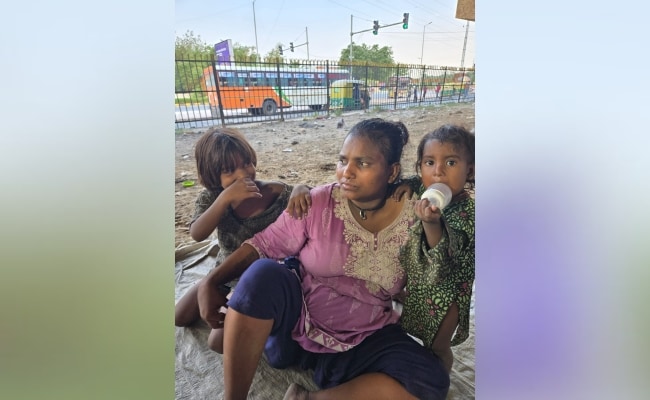
Some days the family earns enough to eat. Other days they sleep hungry.
She is currently living on the pavement after a dispute with relatives forced her to leave the shelter she had been staying in.
For many homeless families, even temporary stability can disappear overnight.
“Accepted This Life”
Under the Moolchand flyover, another settlement quietly carries on with everyday life. Soni came to Delhi from Uttar Pradesh with her husband, a labourer.
She said she has accepted this life.
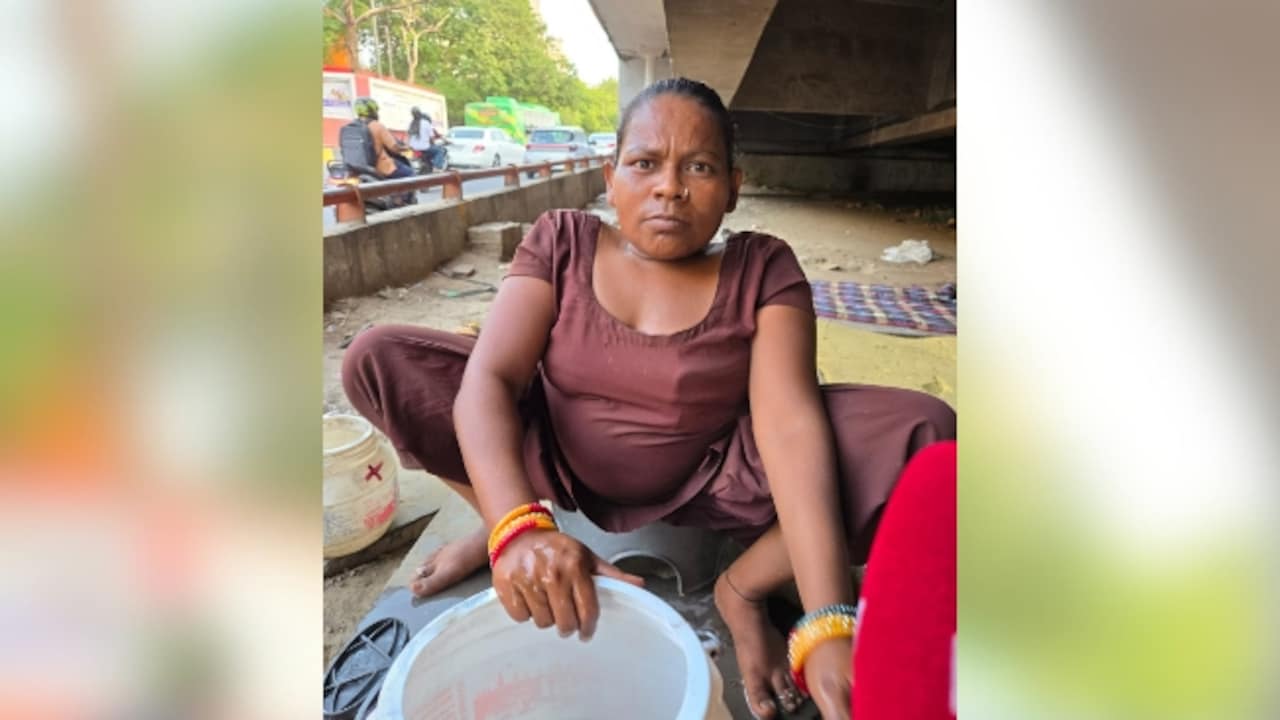
Her family has folded cots lined up beneath the concrete structure. They store small quantities of rice and flour carefully and cook food on makeshift stoves.
Their washed clothes hang from ropes tied between pillars.
The flyover shields them from sunlight and rain.
When Home Disappears
Not everyone on Delhi’s streets was born into homelessness. Kamlesh, 78, once lived in a flat with her husband and children in Kalkaji.
Then life changed. Her husband fell seriously ill, and their medical expenses mounted. She had to sell her house to repay debts.
After her husband’s death, she hoped her children would care for her. They, instead, abandoned her.
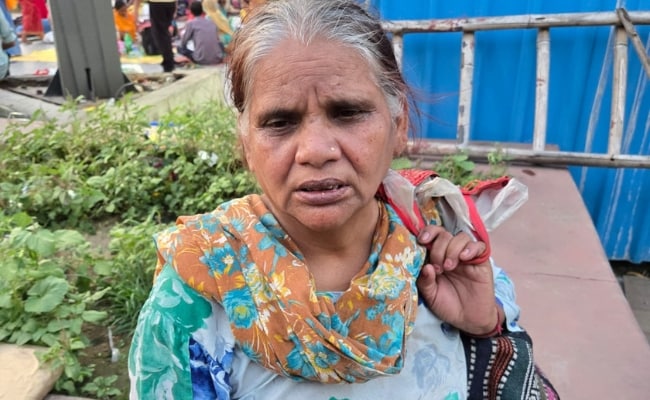
Today, everything she owns fits inside one bag: three sets of clothes and a worn-out bedsheet.
She spends her nights outside AIIMS or wherever she finds a relatively safe place to sleep.
Every day she waits in long queues outside hospitals, hoping someone will distribute free food.
Among hundreds of hungry people, even getting a bread pakoda can become a struggle.
Her stomach is badly swollen, but she cannot afford treatment.
Sometimes, she said, she prays that God will end her suffering.
The Alarming Figures
The dangers facing pavement dwellers become even more alarming when viewed through official data. According to the National Commission for Protection of Child Rights, more than 22,900 children were living on the streets during 2022 and 2023.
Of them, over 12,000 were living directly on the streets with their families, while nearly 10,000 spent their days on the streets before returning to nearby slums or temporary settlements at night.
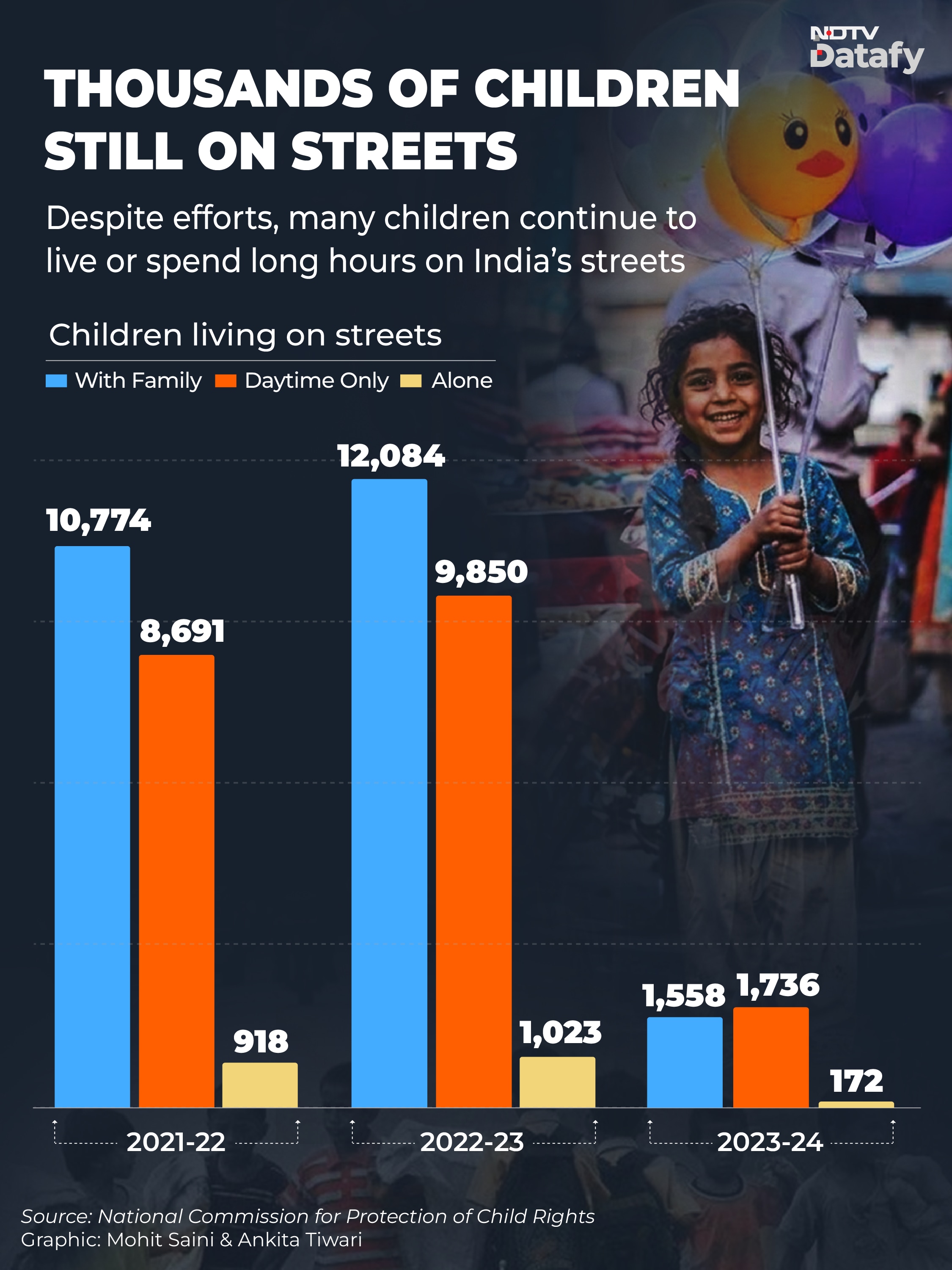
Around 1,000 children were found living entirely alone.
The numbers declined sharply in 2023 and 2024 to 3,466 identified children.
Among them, 1,558 were living on the streets with their families, 1,736 spent the day on the streets before returning elsewhere at night, and 172 children were completely alone.
While the reasons behind the sharp decline are unclear, child rights activists caution that lower identification does not necessarily mean fewer vulnerable children.
Crime statistics also paint an equally disturbing picture. According to National Crime Records Bureau data for 2024, girls aged between 16 and 17 accounted for the highest number of rape victims at 473 cases. Between 2020 and 2024, this age group consistently recorded the largest number of victims.
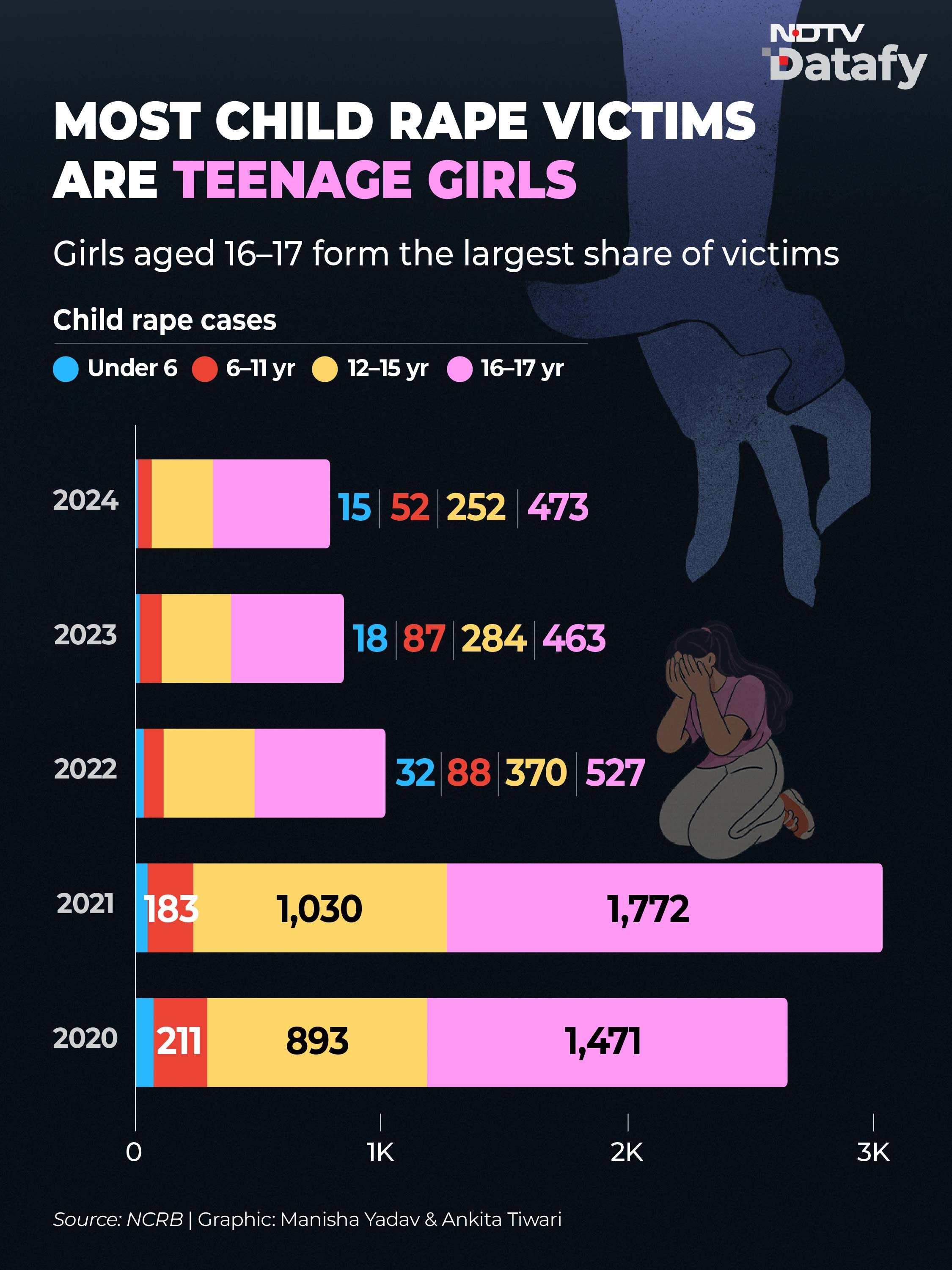
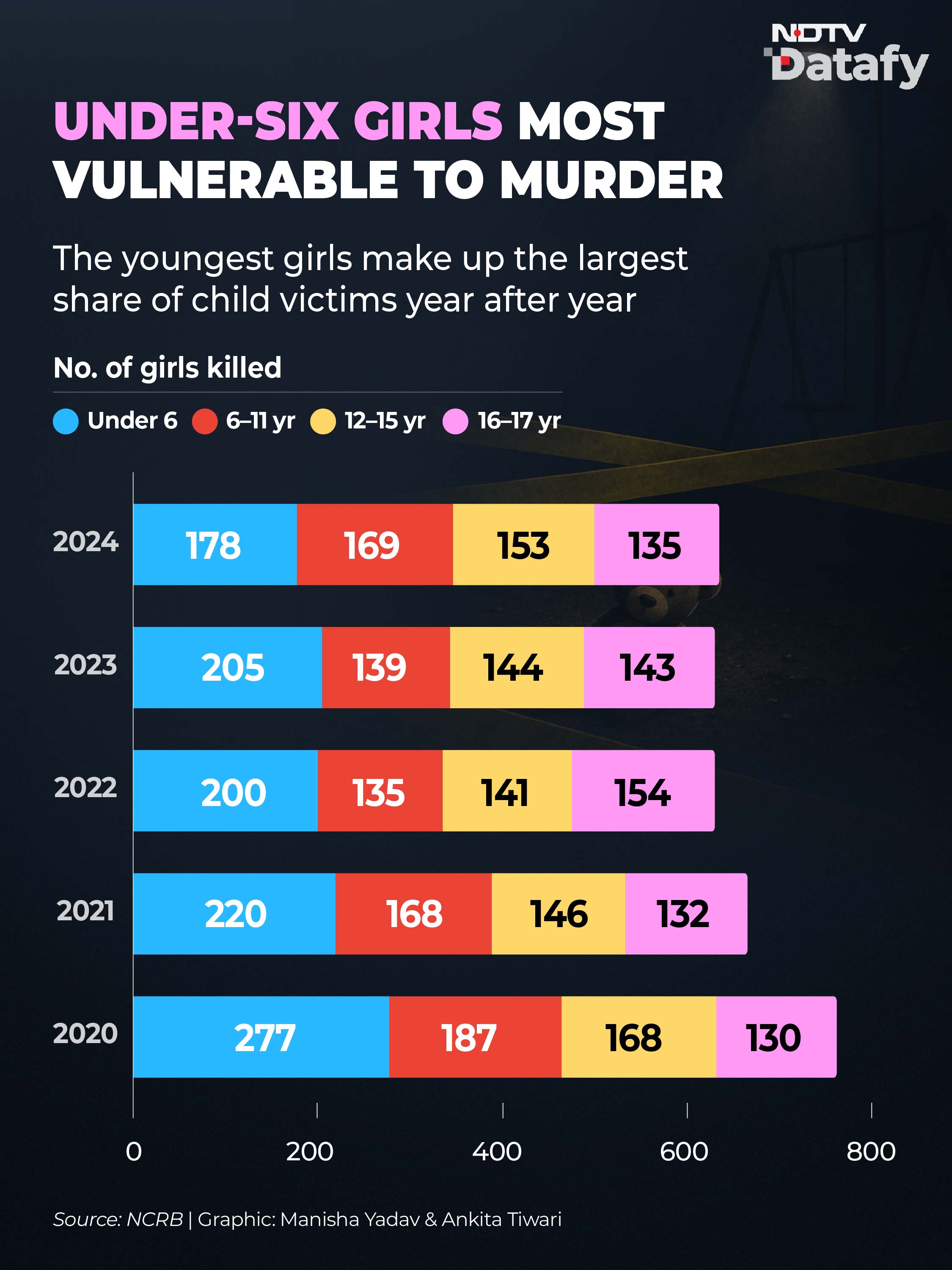
In murder cases, girls below the age of six accounted for the highest number of child murder victims in four of the past five years, highlighting how vulnerable very young children remain.
Migration Driving Homelessness
Sunil Kumar Aledia, Executive Director of the Centre for Holistic Development, said that homelessness in Delhi is closely linked to migration, informal work and repeated demolition drives.
He said many migrant workers initially settle in informal colonies after arriving in the city for construction and daily wage work. As these settlements become more permanent, they are often demolished, pushing families onto the streets.
He estimated that nearly three lakh people currently live on Delhi’s streets, though there is no comprehensive official count.
Aledia said repeated demolition drives over the past five years have increased homelessness, while existing shelter systems do not adequately address the larger question of housing rights.
The gap between policy and ground reality, he argued, continues to grow.
Government’s Actions
The government has said that several measures are in place for vulnerable children and homeless populations. These include the Baal Swaraj Children in Street Situations Portal operated by the National Commission for Protection of Child Rights; open shelters; child care institutions; sponsorship programmes; outreach services under child protection schemes; and the SMILE rehabilitation programme.
Speaking to NDTV, Delhi Home Minister Ashish Sood said the government provides night shelters and rain baseras where food and security arrangements are available.
He said efforts are continuing to strengthen protection for the city’s most vulnerable residents.
For most Delhi residents, a footpath is simply a place to walk. But for thousands of others, it is a bedroom, a kitchen, a playground, a maternity ward and sometimes even the place where life comes to an end.