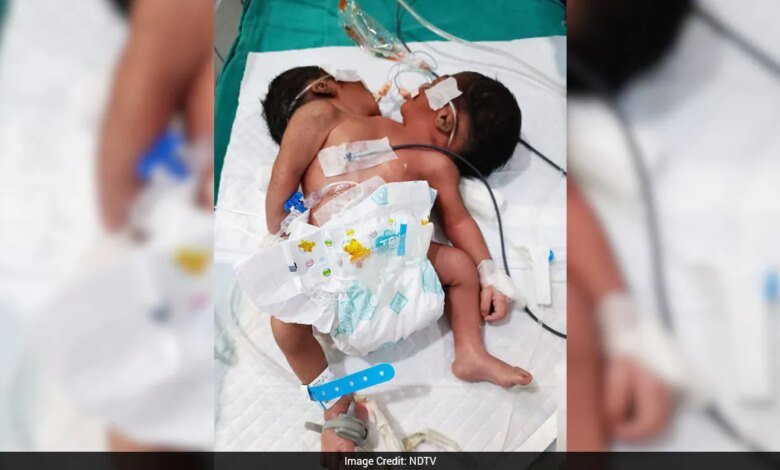
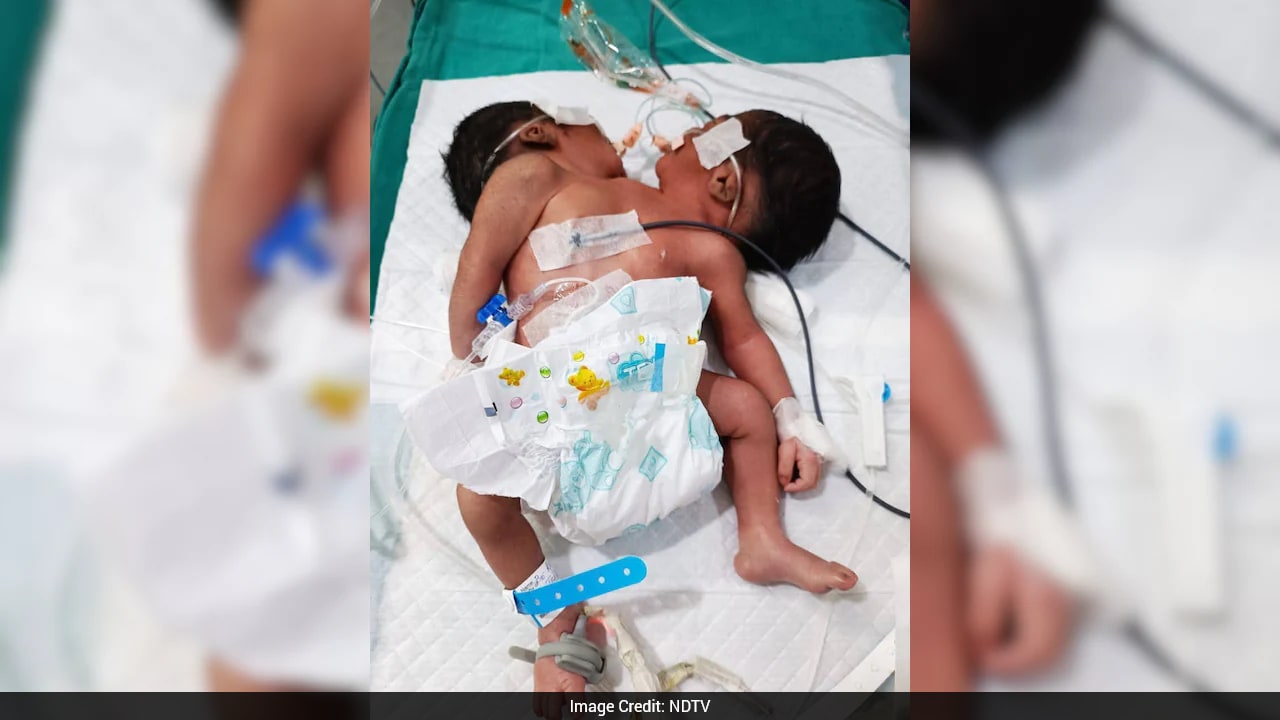
A rare medical case has emerged in the Kandhamal district of Odisha, where a woman gave birth to a baby with two heads. Delivered via C-section on Saturday (October 10) the newborn was immediately admitted to the Special Newborn Care Unit (SNCU) at MKCG Medical College and Hospital in Berhampur. The rare birth has brought the spotlight back to the challenges of complex newborn medical care.
The rare congenital condition is medically known as dicephalis parapagus, in which two heads and necks are attached to a single body. The mother is believed to be a resident of the Tumudibandh area of Kandhamal, while the father works as a daily-wage labourer. The mother was referred to the hospital for specialised medical care. The infant was born at 32 weeks of gestation and is the couple’s first child.
The baby has one pair of arms and legs and a single genitourinary tract with male external genitalia. Detailed information about the baby’s complete health condition, the internal structure of the body and the medical challenges involved has not yet been established publicly.
The newborn remains under medical supervision at the hospital’s SNCU as doctors focus on evaluating the baby’s condition and determining the appropriate course of care.
Conjoined twins are extremely rare, occurring in only one out of every 3,00,000 births. The news has also revived memories of Jaga and Kalia, the conjoined twins from Odisha who became widely known across the state and beyond during their medical journey. Their case drew significant public attention and highlighted the complex challenges doctors face while treating rare congenital conditions.
The next few days will be critical for the baby’s health as the medical team’s findings will determine what treatment or specialised care may be required. In such cases, the baby’s health depends on the nature of the anatomical abnormalities, the organs involved and the complications that develop after birth.
(Inputs from Dev Kumar)