New Delhi:
Do cows hold the answer to controlling some superbug infections? In a discovery that could have far-reaching implications for medicine, scientists at the Indian Institute of Science (IISc), Bengaluru, have identified an enzyme from the gut of cows that can help disable one of the world’s most feared hospital superbugs.
The research offers a fresh approach to tackling antibiotic-resistant infections at a time when many antibiotics are steadily losing their effectiveness.
The research is still at the basic science stage and is years away from becoming a therapy. But scientists say it opens up a promising new line of attack against dangerous, drug-resistant bacteria.
Acinetobacter baumannii has earned a fearsome reputation in hospitals across the world. It was nicknamed “Iraqibacter” after infecting wounded soldiers during the Iraq war.
According to the US Centres for Disease Control and Prevention (CDC), Acinetobacter bacteria are commonly found in soil and water, but human infections occur mainly in hospital settings. A. baumannii, the most common disease-causing species, can trigger severe infections of the lungs, wounds, bloodstream and urinary tract.
What makes it especially dangerous is its ability to resist multiple antibiotics. The World Health Organisation (WHO) has classified it as a critical priority pathogen because of the growing threat of antimicrobial resistance.
Against this backdrop, the IISc team’s discovery stands out. Instead of trying to kill the bacteria directly, the researchers targeted one of its greatest strengths, its protective biofilm. Special biofilms are formed by some bacteria and are unique to some types or communities of bacteria that cover themselves with a sticky protective layer made up of sugars, proteins, fats and DNA. This slimy shield acts like armour, preventing antibiotics and immune cells from reaching the bacteria hidden inside.
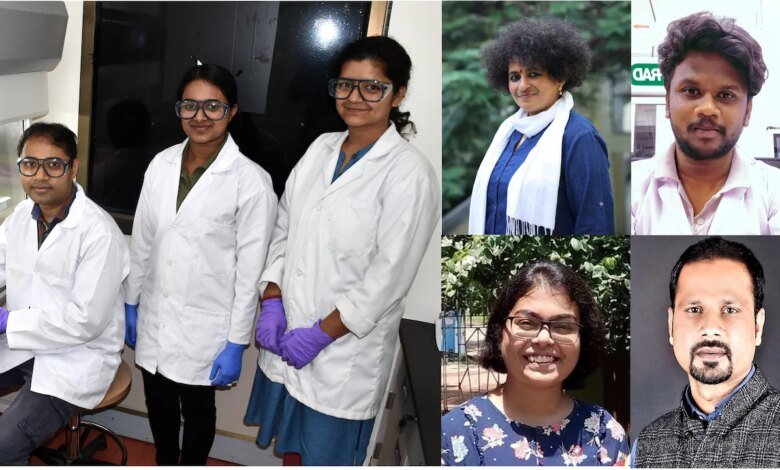
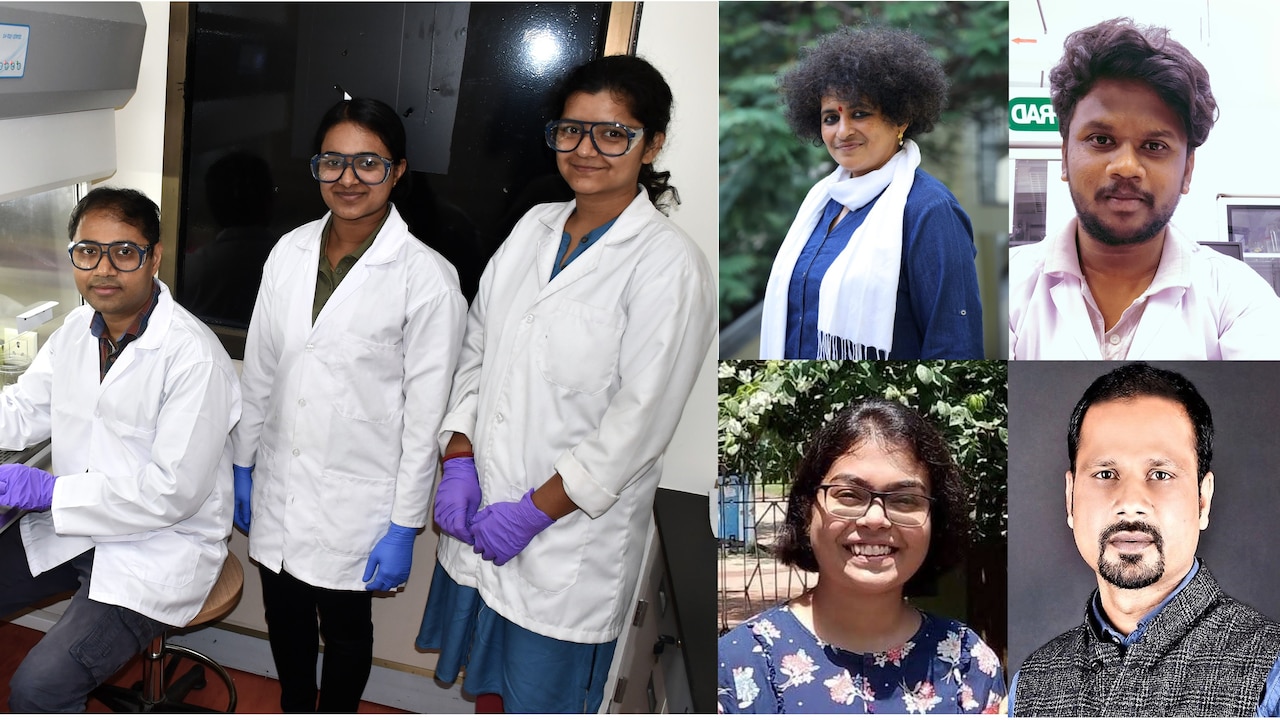
“Polysaccharides, a type of complex sugars, are one of the major components of bacterial biofilms, constituting between 45 per cent and 95 per cent,” explains Debasis Das, Associate Professor at IISc and one of the lead researchers. These sugar-based molecules provide strength and structural stability to the biofilm.
The researchers turned to an unlikely source in search of a solution: the rumen, or first stomach compartment in cows
The rumen is packed with microbes that help cows digest fibrous plant matter. Using genomic data from these microbes, the scientists screened for enzymes capable of breaking down complex polysaccharides and found one that stood out.
The team named it CRhAB, short for Cow Rumen Hydrolase against Acinetobacter baumannii. Laboratory studies showed that CRhAB could significantly reduce biofilm formation by the bacteria and also disrupt already established biofilms. It also suppressed important genes that help bacteria maintain these protective structures.
The importance of this approach lies in the fact that the enzyme does not directly kill bacteria. Instead, it dismantles their fortress-like sticky slimy walls.
“Matrix inhibition or disruption makes A. baumannii more vulnerable,” says Reshma Ramakrishnan, first author of the study published in the peer-reviewed journal `Biofilms and Microbes’. “Instead of directly killing the bacteria, it weakens their defences, potentially restoring the effectiveness of existing antibiotics while reducing the selective pressure that drives antibiotic resistance.”
In simple terms, if bacteria are no longer protected by their biofilm shield, conventional antibiotics may once again become effective. This could be particularly important in an era when antimicrobial resistance is spreading rapidly across the globe.
The IISc team made another encouraging observation. The enzyme was also effective against Klebsiella pneumoniae, another dangerous multidrug-resistant pathogen responsible for severe hospital-acquired infections, especially severe pneumonia. Both A. baumannii and K. pneumoniae belong to the notorious ESKAPE group of pathogens. ESKAPE is an acronym used for a group of organisms that form part of the community often called superbugs, as they are known for evading antibiotics and causing difficult-to-treat infections.
Professor Dipshikha Chakravortty of IISc points out that this dual activity increases the significance of the discovery. A single enzyme capable of attacking biofilms produced by two major superbugs could have considerable clinical value if future studies validate its effectiveness.
The researchers went a step further, developing a medical gauze coated with the enzyme. In a mouse wound infection model, the enzyme-coated dressing reduced bacterial colonisation and improved wound healing.
The team is now exploring advanced dressings for conditions like diabetic foot infections, which often involve stubborn, biofilm-producing bacteria. They’re also studying whether the enzyme could be delivered via inhalers or nebulisers to fight chronic, drug-resistant lung infections.
Much of the public conversation in India around the medicinal use of cow-derived substances has centred on cow urine or dung. This study takes that conversation in a very different, evidence-based direction, identifying a specific enzyme from the cow gut microbiome with genuine potential against dangerous bacterial biofilms, grounded entirely in molecular biology, microbiology and genomics.
Scientists are cautious about overstating the findings. CRhAB is not a drug and is not available to patients. Extensive research, safety studies and clinical trials lie ahead before it could be considered for human use. For now, this is an important scientific discovery, not a ready-made cure.
Still, at a time when the pipeline for new antibiotics has struggled to keep pace with rising drug resistance, even incremental advances matter. By targeting a superbug’s defences rather than the superbug itself, the IISc study points to a potentially smarter way to make existing antibiotics work again, reason enough to keep watching this space closely.