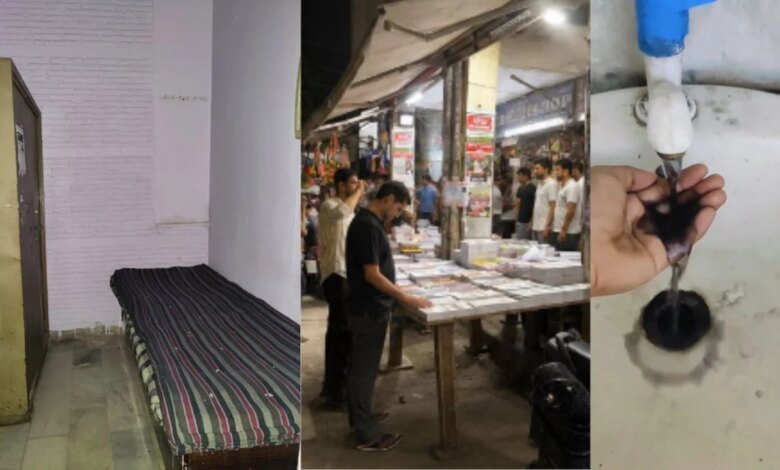
UPSC Dreams: In the lanes of Delhi’s Mukherjee Nagar, known as one of the UPSC hubs in India, fortunes can turn in an instant; what was once dust can become gold, and gold can turn to dust. Many stories of IAS aspirations have emerged from here, while countless others have crumbled just as they were taking shape. NDTV set out to explore these very lanes in search of such stories.
The area is filled with coaching institutes, libraries, bookstores, and tea stalls; in every lane, one sees young people searching for a future amidst their books. However, a ground report on the conditions faced by aspirants in Mukherjee Nagar suggested that there is another side to this city of dreams, a reality often overshadowed by the glossy advertisements of coaching institutes and the success stories of aspirants who made it.
In this ground report by NDTV, students share the reality of life in Mukherjee Nagar: a place where dreams are big, but the cost of keeping them alive is steep.
Gold Medalist In History To Ordinary Aspirant
Rahul Jadaun from Agra shared his story with NDTV. Rahul is a gold medalist in History and has qualified for the NET exam twice; his academic record is exemplary, the kind that would be cited as a model in any small town. Yet, here, all these achievements count for nothing until the golden milestone of becoming an IAS officer is added to the list.
Rahul’s story is not unique. Every year, thousands of young people from various states, cities, and villages across the country arrive at Delhi’s Mukherjee Nagar in search of a better future. Some aspire to become UPSC officers, others aim for government jobs via the SSC, and some dream of transforming their families’ lives by clearing State Public Service Commission exams.
‘The Food Concern’ Of Students Living Away From Home
For any student living away from home, the essentials go beyond just academics; arrangements for accommodation and food are equally critical. In conversations with students in Mukherjee Nagar, the most frequent complaints centered on paying guest (PG) accommodation and street food.
Many students pointed out a lack of balance and nutritional value in the food available to them. Green vegetables are not available regularly, and in many places, potato curry is served almost every other day. Some students also questioned the quality of the ‘paneer’, while others claimed that the onions used in the meals often appeared spoiled or moldy.
Preparing For Dreams Amidst Rising Daily Expenses
Preparing for civil services and other competitive exams involves not just a mental struggle but a financial one as well. Vivek Pachauri, a native of Aligarh who has been preparing for the civil services exam for the past few years, explained that even excluding rent and other overheads, the cost of breakfast and two meals a day alone comes to around Rs 300.
When asked if he ever visits the nearby cafes or coffee shops, he smiled and said,
“When you have to tally up the cost of daily meals, things like coffee start to feel like a luxury.”
Even Water Isn’t Free, It Must Be Purchased
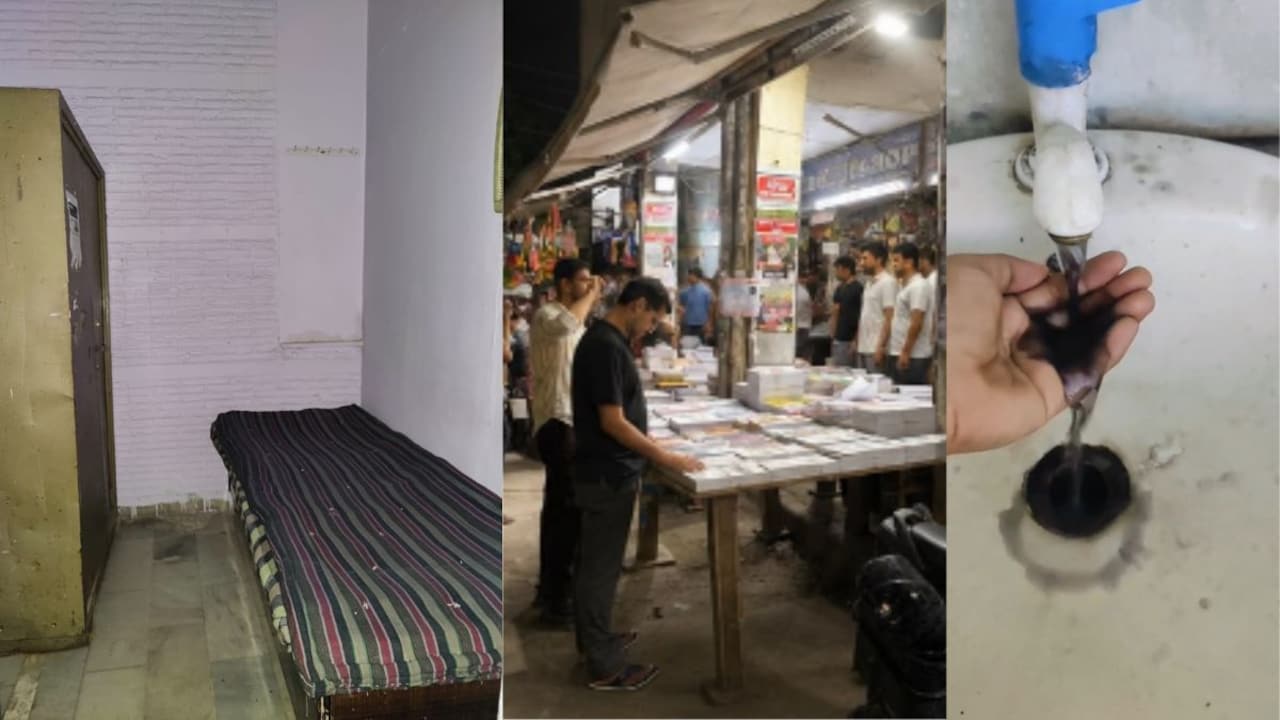
According to the students, a 20 litre water bottle costs anywhere between Rs 50 and Rs 90. Saurabh Sharma, a native of Aligarh, noted that the quality of groundwater in many areas is unsatisfactory. He mentioned that in some places, the water even changes color, and many students have complained of skin-related issues.
Falling Ill Means An Extra Financial Burden
Students said that falling ill in Mukherjee Nagar becomes a financial crisis, not just a health issue. According to Saurabh Sharma, a simple consultation with a general physician can cost between Rs 1,000 and Rs 1,500. Consequently, many students try to treat themselves by buying medicines from a pharmacy rather than visiting a doctor.
Fewer Rooms, ‘Money-Making Machines’
Housing issues in metropolitan cities, driven by rising populations and limited space, are nothing new. However, students alleged that in Mukherjee Nagar, the focus often shifts from meeting basic living needs to maximising profits.
Dharmendra, a Varanasi native and LLB graduate, explained that the area’s high demand for rooms is being exploited. He asserted that in many instances, storerooms are converted into living quarters and rented out. Small rooms built on rooftops of some buildings command rents ranging from Rs 5,000 to Rs 6,000.
Dharmendra noted that many such rooms lack adequate light and ventilation. Students also claimed that basic safety measures, such as fire exits, appear insufficient in some places.
PG Culture: An Economy Of Its Own
The ‘PG culture’ in Mukherjee Nagar has evolved into a massive economy of its own, the students asserted. Inu Bora, from Jhajjar, Haryana, pointed out that female students sharing the same room are often charged different rents.
One student might pay Rs 8,000, another Rs 7,000, and a third Rs 7,500, despite the amenities being virtually identical. Inu questioned the logic: if the room and facilities are the same, how can the criteria for determining rent differ?
Security Deposit: Students’ Biggest Grievance
One of the most common complaints among students in Mukherjee Nagar concerned the security deposit. Palak, a long-time resident of the area, stated that one must deposit an amount equivalent to a month’s rent (or more) when renting a room. The problem arises, however, when students vacate the room, she noted.
Palak said that landlords often deduct money from the security deposit, citing cleaning, repairs, or other reasons. “For students pursuing their studies with limited funds from home, even a sum of 6 or 7 thousand rupees is significant,” she asserted.
Mukherjee Nagar’s Own ‘Broker Street’
The ground report revealed that Mukherjee Nagar has its own distinct “Dalal Street.” Here, shares are not sold; rooms are. UPSC aspirant Anand Ratan Singh noted that an entire network of brokers operates in the area.
He said that even if a student finds a room and approaches the landlord directly, the issue of paying a brokerage fee often comes up in one form or another. According to Anand, even a student renting the cheapest room might need to arrange between Rs 20,000 and Rs 25,000 in the first month to cover rent, the security deposit, an advance payment, and brokerage fees.
A Look At Libraries
Mukherjee Nagar is also known for its libraries. Thousands of students spend hours studying in them every day. However, Inu Bora mentioned that she has had to switch libraries three or four times while preparing for the SSC exams. She noted that the cleanliness of the restrooms in many places is unsatisfactory. Meanwhile, library fees can range from Rs 2,100 to Rs 3,000 per month.
‘The Greatest Pressure Comes Not From Books, But From Expectations’
The struggle of students living in Mukherjee Nagar is not merely financial; the mental pressure is equally immense, the aspirants noted. Rahul Jadaun from Agra, a 2023 batch gold medalist in History who has also qualified for the NET twice, is still waiting for a job. Rahul said that often, the stress of the exam itself is not as heavy as the pressure arising from questions posed by society and relatives.
This pressure defines the story of every student who has spent years preparing for an exam and whose family’s hopes are pinned on them.
When News Of Paper Leaks Shatters Morale
While expenses like PG rent, water, and food are significant, many students said one of their concerns is the credibility of the examination system. Students had no specific complaints regarding the UPSC, but aspirants preparing for the SSC and certain state-level exams stated that news of paper leaks demoralises them.
One student, speaking on condition of anonymity, said: “Sometimes I feel like giving it all up and going back home. But then I remember my parents’ faces and their expectations. And so, the next day, I sit down to study again.”
MP Manoj Tiwari’s Take
Addressing the concerns raised by students in Mukherjee Nagar, North-East Delhi MP Manoj Tiwari stated that he regularly receives information about such issues and attempts are made to resolve them through the concerned departments.
He mentioned that he meets the public at his residence every Monday and has previously worked towards resolving student grievances regarding the CSAT controversy and issues related to coaching institutes. Tiwari added that councilors, MLAs, and MPs are working at their respective levels, and he is personally monitoring matters that fall under the purview of an MP.
Every morning, thousands of young people here open their books with renewed hope. Some have fathers who are farmers; others have mothers who are homemakers. Some have arrived here by selling family land, while others have taken out loans. The rooms are small, the struggles are immense, and the ultimate goal remains distant.