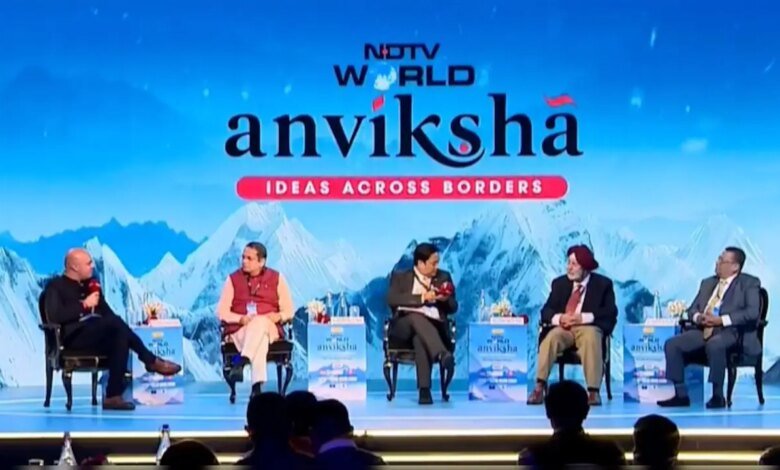
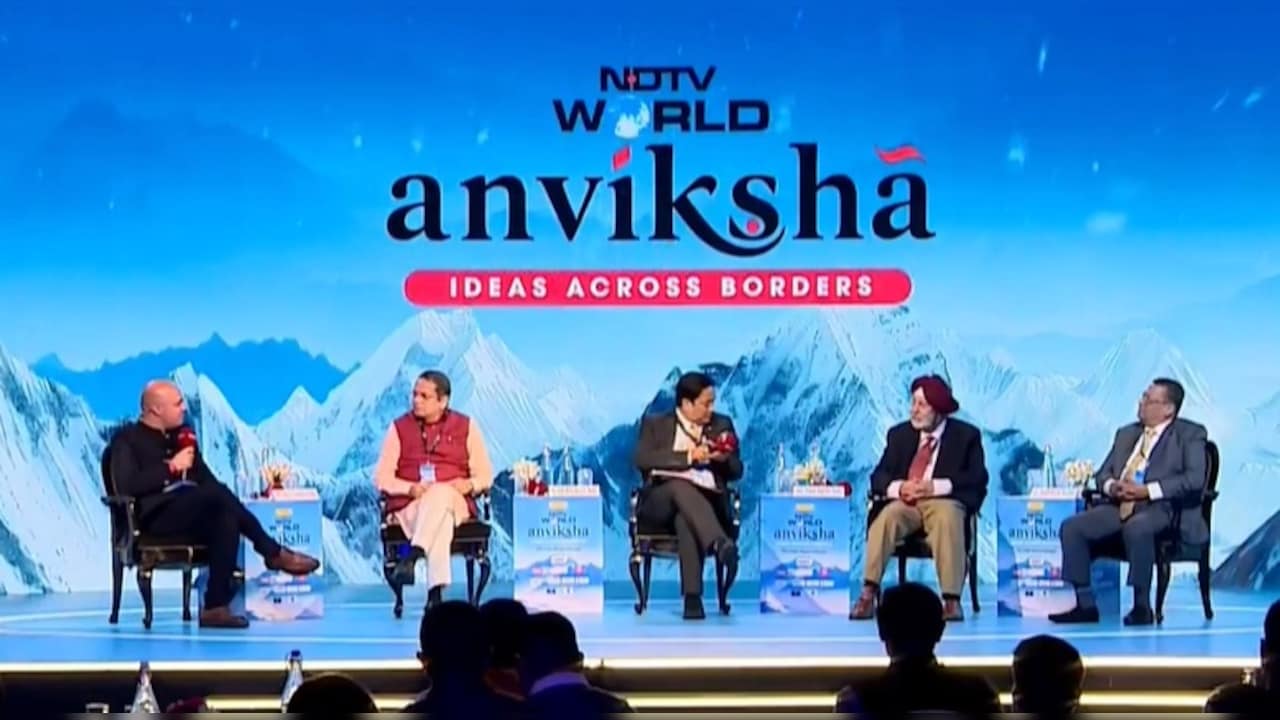
Prime Minister Narendra Modi’s conversation with Nepal Prime Minister Balen Shah is a reflection of the lose ties between the two nations, which is expected only to improve, said the panelists at the NDTV World Anviksha Summit held in Kathmandu today. The two leaders spoke on Wednesday after the massive flash floods at a river originating in Tibet hit an entire province in Nepal, washing away entire villages, highways, vehicles and even affecting power stations. India was the first responder in the matter, immediately sending help.
“PM Modi’s conversation with Balen Shah reflects the closeness between India and Nepal and also the help received during the 2015 quake,” said Major General Binoj Basniyat, strategic analyst and retired officer of the Nepal army.
“It appears that the floods are also a warning to collaborate — through nature, ecology and institutions,” he added in this context.
Read: Didn’t Expect Change To Be Violent: Nepal Ex-Minister Pradeep Gyawali On Gen Z Movement
PM Modi’s call to Balen Shah was “natural” since “we feel connected,” said Manjeev Singh Puri, former Indian ambassador to Nepal. Despite the generational change in the leadership in Nepal, the basic connect has not changed, he added.
Dr Vijay Chauthaiwale, the in-charge of foreign affairs of the BJP, pointed out that the current government of Nepal is a democratically elected one and India stands by its promise of support and not to dominate. Quoting the words of PM Modi in 2014, he said, “We are here to support and not to interfere”.
India, he said, has dealt with “every government with every respect” and the government of Balen Shah will not be any different. PM Modi, in fact, was the first world leader to call up the Nepal Prime Minister. While Shah has been invited to visit India, Chauthaiwale pointed out that he is not the first Nepal leader to visit in the last six months.
Many others including the Himalayan nation’s diplomats have visited India.
Through all this, there is a message of “continuity and consistency — nothing has changed,” he added.
Dr Nishchal N Pandey, Director, Centre for South Asian Studies, Kathmandu, said the big change has happened in Nepal – in that the young generation who were earlier desperately trying to migrate, now have options at home. Pointing to the new Prime Minister and his cabinet, he said they have been educated in India, Australia and the US.
As for the Indo-Nepal relationship – “I believe the best is yet to come,” he added.