New Delhi:
Powerful cyclone Arnab made landfall near the Andhra Pradesh coast early on Wednesday, with the India Meteorological Department (IMD) saying the process is expected to continue for the next few hours.
Arnab, classified as a “very severe” cyclonic storm, the third-highest category on IMD’s scale, was located over the west-central Bay of Bengal close to the Andhra Pradesh and Yanam coasts, the weather body said in a bulletin issued at 6:30 am.
The cyclone was located about 30 kilometre east of Narsapur, 45 kilometre south-southwest of Yanam, 70 kilometre south-southwest of Kakinada and 90 kilometre east-northeast of Machilipatnam.
“The cyclone remains practically stationary, and the landfall process is expected to continue for the next two hours,” the IMD said.
గడిచిన 24 గంటల్లో అర్నబ్ తుపాను కదలికలు : APSDMA #CycloneArnab #ArnabCyclone #CycloneArnabUpdates #BayOfBengal #APSDMA #AndhraPradesh #RTGS #WeatherUpdate #CycloneReliefMeasuresInAP https://t.co/YDijiSMayP
— Andhra Pradesh State Disaster Management Authority (@APSDMA) October 28, 2026
Winds of 115-125 kph and gusts of up to 140 kph are forecast, with a storm surge of 1 to 1.5 metres above normal tide likely to inundate low-lying areas of Andhra Pradesh, it said.
Over 1.8 Lakh People Evacuated Due To Cyclone Arnab
Cyclone Arnab brought heavy rain to several districts in Andhra and Odisha, which evacuated more than 1,80,000 people ahead of its arrival.
In Andhra, Visakhapatnam recorded the highest rainfall at 216 mm between 8.30 am on October 27 and 5:30 am on October 28, followed Kalingapatnam at 147 mm, Kakinada at 118, and Machilipatnam at 115.
Various airlines have cancelled their flights to Visakhapatnam and Vijayawada for Wednesday.
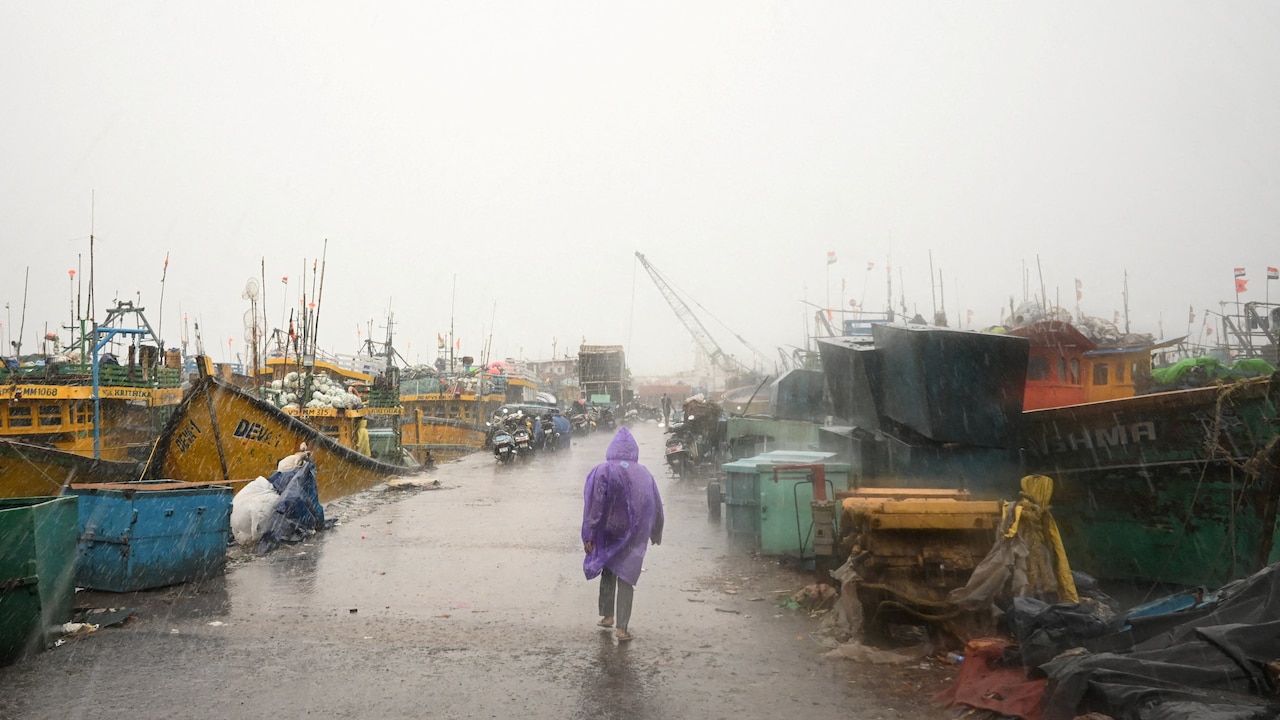
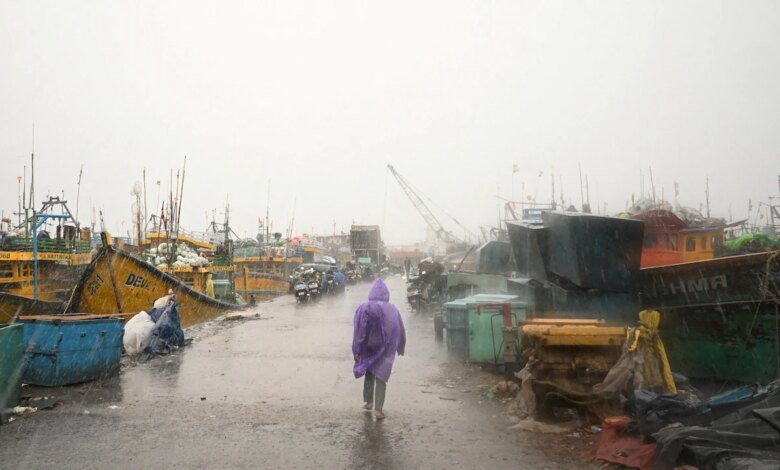
A man walks past docked boats along the harbour amid rain and gusty winds as Cyclone Arnab approaches, in Visakhapatnam on October 27
Photo Credit: REUTERS
In Odisha, Ganjam and Balasore were among the districts that witnessed heavy rain.
No loss of life has been reported in either state so far, but power supplies have been disrupted, and trees have been uprooted. Some schools have been closed, and some train services were also cancelled.
According to officials, heavy rainfall is expected to continue on Wednesday and Thursday due to the cyclone’s impact.
How Cyclone Arnab Was Named
The name Arnab was proposed by Bangladesh and is included in the official list of tropical cyclone names adopted in 2020 by the World Meteorological Organisation (WMO) and the United Nations Economic and Social Commission for Asia and the Pacific (ESCAP) Panel on Tropical Cyclones.
The list contains names submitted by 13 countries: Bangladesh, India, Iran, the Maldives, Myanmar, Oman, Pakistan, Qatar, Saudi Arabia, Sri Lanka, Thailand, the United Arab Emirates and Yemen.
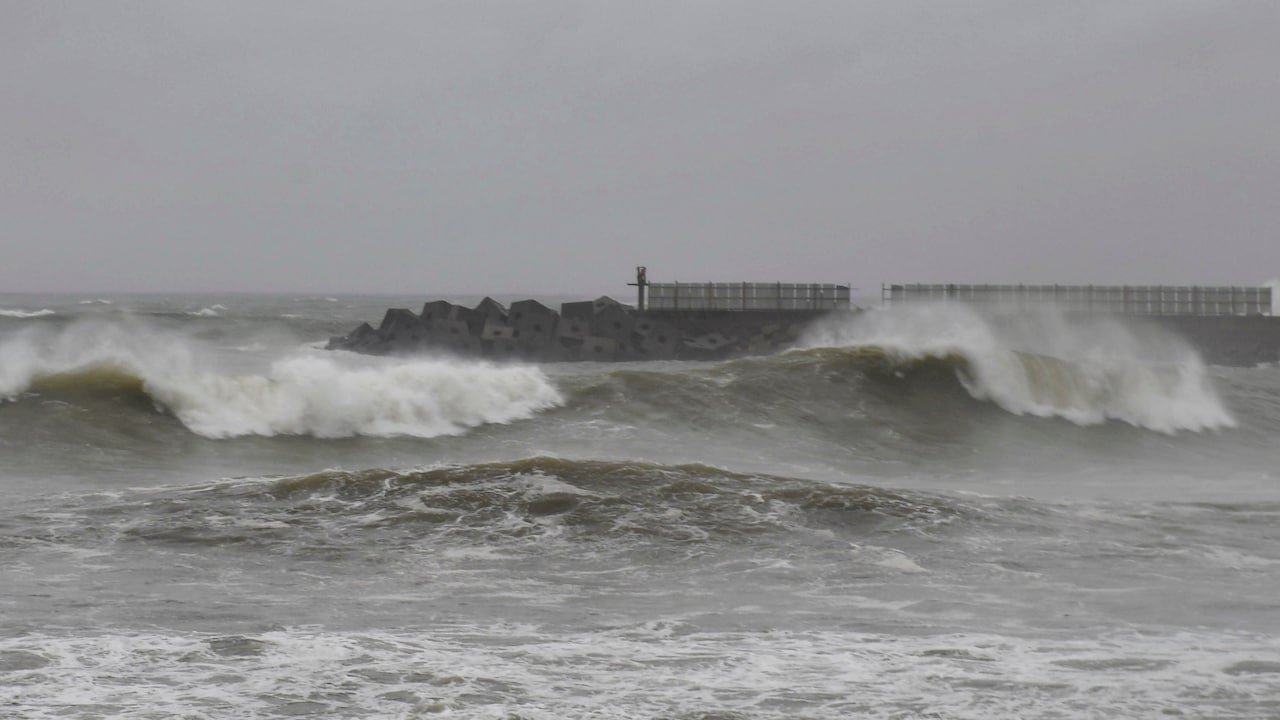
High tidal waves hit the coast in Visakhapatnam ahead of Cyclone Arnab’s landfall on October 27
Photo Credit: PTI
Each country contributed 13 names, bringing the total to 169. These names are used in sequence as tropical cyclones develop over the North Indian Ocean, which includes the Bay of Bengal and the Arabian Sea.
The name Arnab is commonly associated with the Bengali word for the ocean or sea.
Naming tropical cyclones helps people identify individual weather systems and stay aware of their development. It also reduces confusion when multiple storms occur at the same time.