New Delhi:
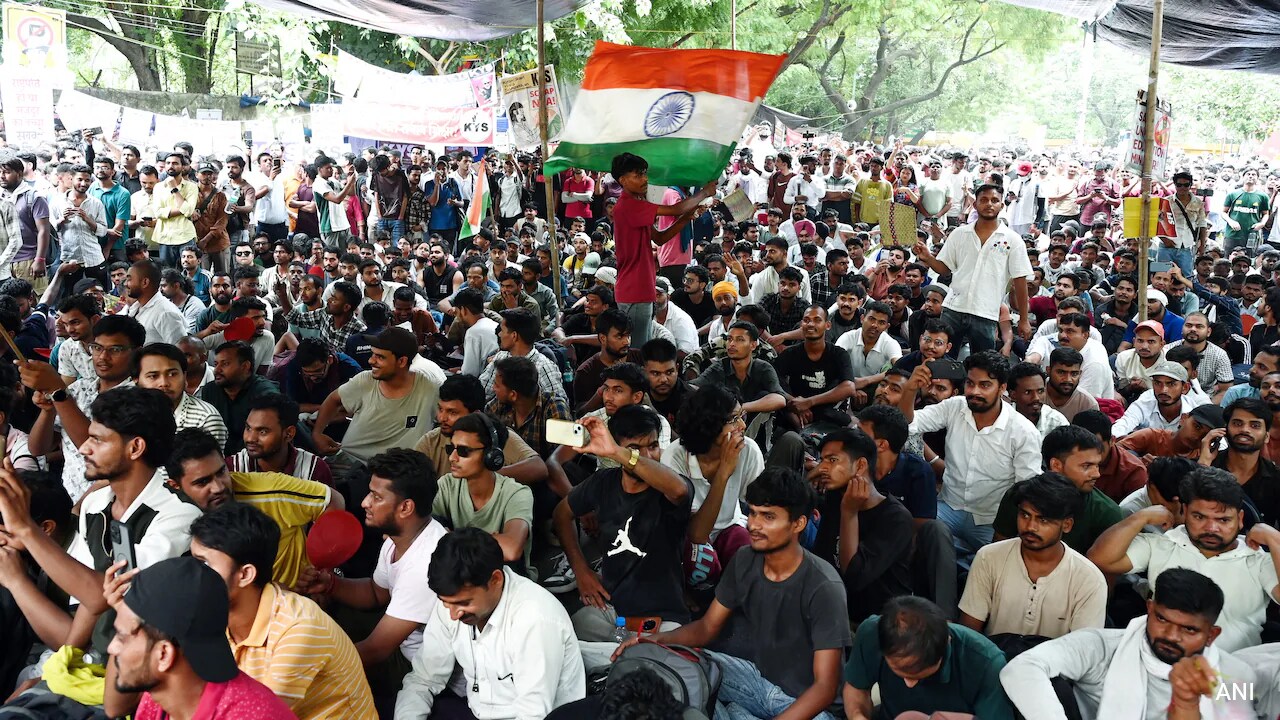
Protesters took to the streets of Delhi on Monday over the NEET exam paper leak and other issues, eventually reaching the very threshold of Parliament. Such a protest had not been witnessed in the past 12 years, but the government had anticipated it and made extensive preparations, sources said.
By the time Home Minister Amit Shah arrived at the Parliament House around 11:30 am, the protest was already underway. While both Houses of Parliament faced repeated adjournments, Shah was continuously monitoring the situation alongside senior ministers. He remained in contact with the Delhi police commissioner, the home secretary, and the head of the Intelligence Bureau. Clear instructions were issued to the Delhi Police to exercise restraint, avoid succumbing to provocation, and refrain from any action that might send the wrong message.
Consequently, despite some protesters resorting to stone-pelting and attacking police personnel, the police employed only mild lathi-charges in a few locations and used tear gas shells to disperse the crowd, said sources. Although more than 100 police personnel were injured in attacks, the police did not give in to provocation. Protesters were allowed to reach Rail Bhawan, located near the Parliament House. This, too, was part of the management strategy.
Meanwhile, the government had received a proposal for dialogue from the Cockroach Janta Party (CJP). The government entrusted Health Minister JP Nadda with the responsibility of holding the discussions.
Why Nadda?
Although the NEET exam is conducted by the autonomous National Testing Agency (NTA) – which is under the Ministry of Education – it is directly linked to the Ministry of Health. The National Medical Commission (NMC), which operates under the Health Ministry, determines the rules regarding the syllabus, minimum eligibility criteria, and cut-off marks for NEET. The Ministry of Health is also responsible for MBBS and BDS seat allocations, All India Quota counselling, and state-level coordination.
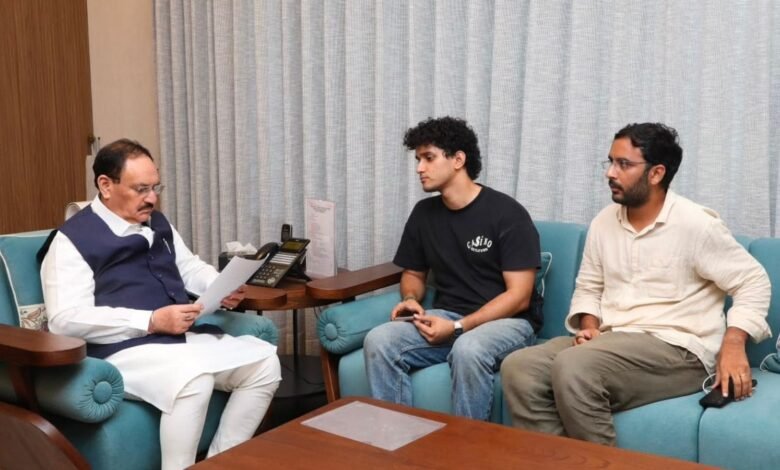
Given this context, it was deemed appropriate for Nadda to engage in talks with the protesters regarding issues related to NEET. As the Leader of the Rajya Sabha, Nadda’s presence in the House was expected; however, he left the proceedings midway to return to his residence, where two CJP representatives were already waiting. According to sources, two meetings took place between the CJP representatives and Nadda.
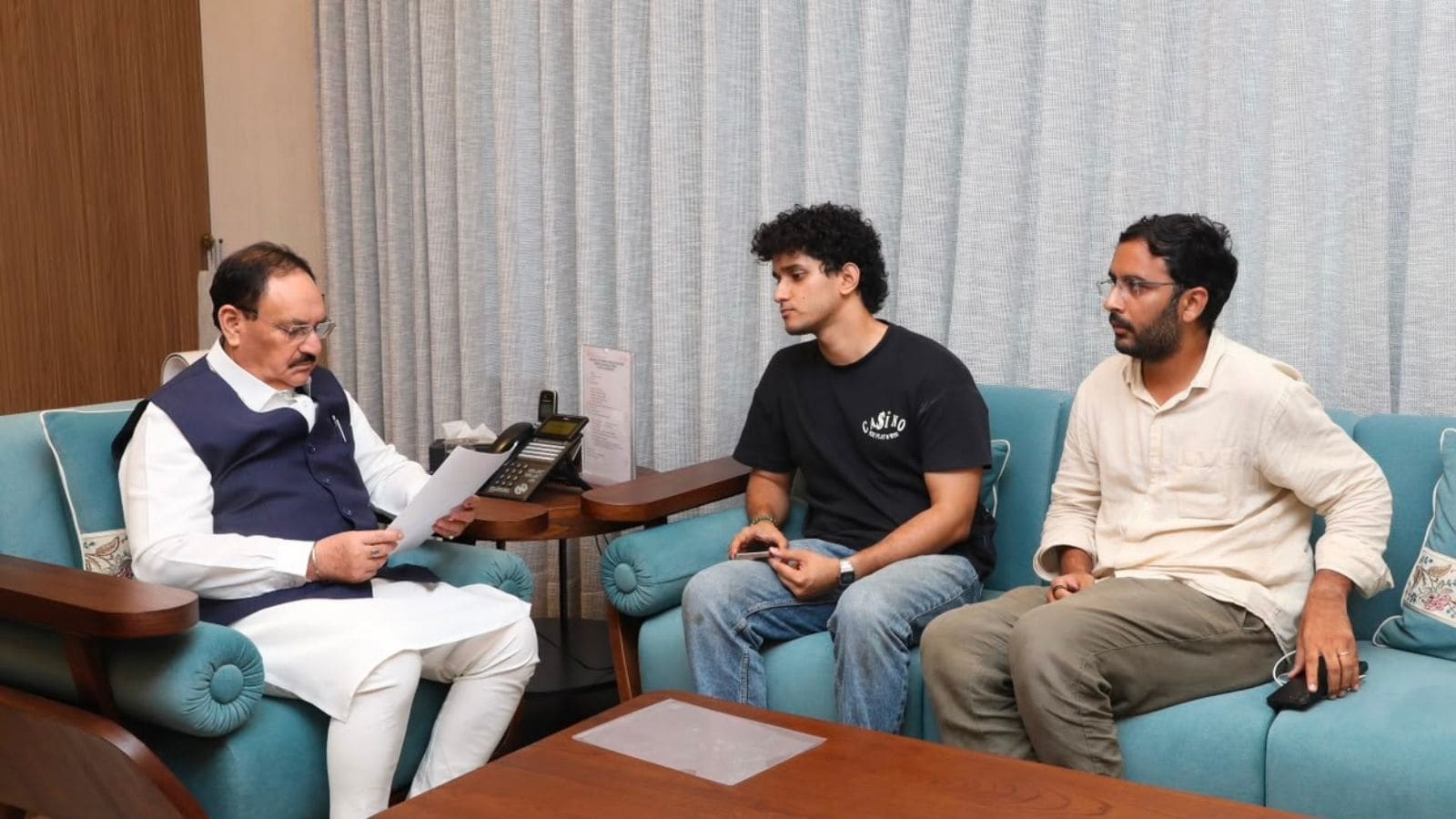
The first meeting occurred around 11.50 am, when Nadda asked about the demands, prompting the representatives to outline them. The minister asked why they hadn’t brought the demands in writing and requested a written submission.
READ | CJP Leaders Meet Union Minister JP Nadda, Submit Letter Of Demands
Subsequently, the two representatives handed over a written memorandum of their demands to Nadda at 4.00 pm.
According to sources, the minister offered no assurance or commitment regarding any of the three demands raised by the CJP during the meeting. He did, however, urge them to call off their protest and assist the administration in restoring normalcy.
Meanwhile, Nadda remained in constant contact with Amit Shah. The Home Minister, along with Commerce Minister Piyush Goyal, Education Minister Dharmendra Pradhan, and Parliamentary Affairs Minister Kiren Rijiju, spent over three hours together in his Parliament House office. The government was operating on two fronts: managing the street protests outside Parliament and countering the aggressive stance of the opposition inside the House.
The government has assessed that the protest on Monday received political backing. According to government intelligence, the participants primarily included activists from Chandrashekhar’s Azad Samaj Party, the Samajwadi Party, the Aam Aadmi Party, and Left-wing student organisations. There were also around 1,000 to 1,500 students with legitimate grievances of their own, but they ended up becoming part of the crowd of political activists.
The Delhi Police had implemented a massive security blockade across Central Delhi, with barricades set up at various locations. Reports indicate that a large number of people arrived in Delhi from neighbouring states via trains and buses to participate in the protest. Even Aam Aadmi Party workers from Gujarat had travelled to Delhi by train. Metro stations surrounding the Parliament House in Central Delhi were closed, forcing those intending to visit to walk long distances.
‘Chances Low’
Government data shows that over 50 lakh students have participated in the three major examinations held so far-NEET, JEE, and CUET. Of these, approximately 10 lakh students likely took the common entrance tests, while more than 40 lakh appeared for various entrance exams conducted across the country. Consequently, the counselling and admission processes have already commenced in many instances. According to the government’s assessment, genuine candidates are currently focused on admissions and counselling. Therefore, the likelihood of them participating in these protests in large numbers is considered relatively low.
Government sources also point out that an analysis of the NEET results reveals that the majority of toppers are first-time test-takers, with a significant number hailing from poor or lower-middle-class backgrounds. They highlighted that following the exam paper leak, authorities acted swiftly – prioritising the students’ future – to conduct a re-examination and declare results within a month, while also fixing accountability on those responsible for the lapse.
READ | “Are Surveillance Norms Being Followed?” High Court To Delhi Cops On CJP Protest
“Therefore, these protests appear to be driven more by political motives. This is also evident from the actions of the political party workers who joined the movement. The fact that Samajwadi Party MPs marched in support demonstrates the party’s intent to capitalise on this issue ahead of the UP Assembly elections – a shift from their earlier focus on the alleged theft of offerings at the Ram Mandir. Meanwhile, the Congress, which had previously been vocal about the paper leak issue, now seeks to raise the matter of the stolen offering. The party’s decision to stay away from Monday’s protest reflects this shift in strategy,” said a source.
Take On Demands
“The CJP’s demand, sources said, to remove Education Minister Pradhan is political in nature, and there is no question of acceding to it. A CBI inquiry into the paper leak is underway, and the officials involved have already been removed. Sonam Wangchuk remains hospitalised, and his discharge depends on his health and the doctors’ assessment. As for the demand to provide Rs 1 crore in compensation to the families of students who died by suicide, no such proposal is currently under consideration,” the source added.
It also remains unclear whether further talks will take place between the government and CJP representatives. Having faced protests on the streets, the government now faces the challenge of withstanding attacks from the Opposition within Parliament. The government intends to appeal to the Opposition to ensure the smooth functioning of both Houses, though it is unlikely they will agree. Consequently, if the deadlock persists, the first week of the Monsoon Session could be a washout.