New Delhi:
A joint statement issued after the conclusion of Bangladesh Prime Minister Tarique Rahman’s visit to China has put the spotlight on a new era in bilateral relations between the two nations. While a joint statement is limited to the relationship between the two countries, the Bangladesh-China joint statement talks about several issues that can affect the India-Bangladesh relationship.
Speaking to NDTV earlier this year on India-Bangladesh ties, Bangladesh Foreign Minister Khalilur Rahman said that Dhaka did not see its foreign policy as a zero-sum game and expressed hope that others would extend the same interpretive generosity. “Our relationship with other countries is not a problem,” he said.
With Tarique Rahman’s visit to China, experts in India believe some of the issues touched upon in the Bangladesh-China joint statement could impact India.
The joint statement says, “The Bangladeshi side believed that China’s 15th Five-Year Plan will bring important development opportunities to Bangladesh. Both sides agreed to elevate their comprehensive strategic cooperative partnership to jointly build a China-Bangladesh community with a shared future in the new era, to bring about more benefits to the two countries and peoples.”
“The two sides conducted an in-depth exchange of views on China-Bangladesh relations, and international and regional affairs of common interest and reached a broad consensus,” the statement added.
Also read: In Sign Of Easing Ties, India To Restart Tourist Visas For Bangladeshis
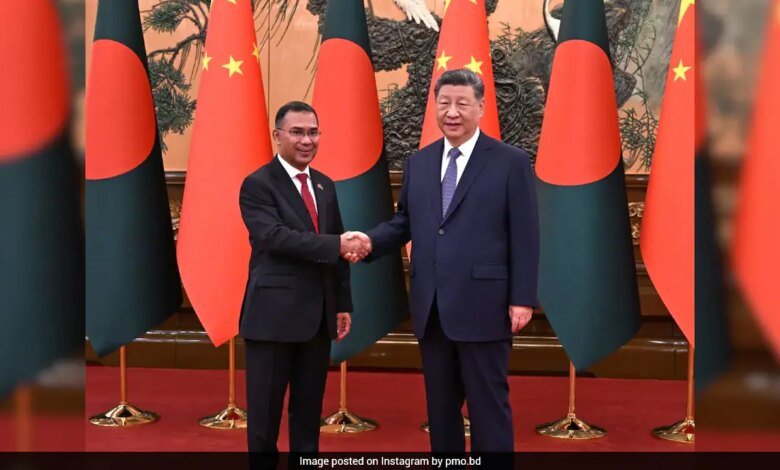
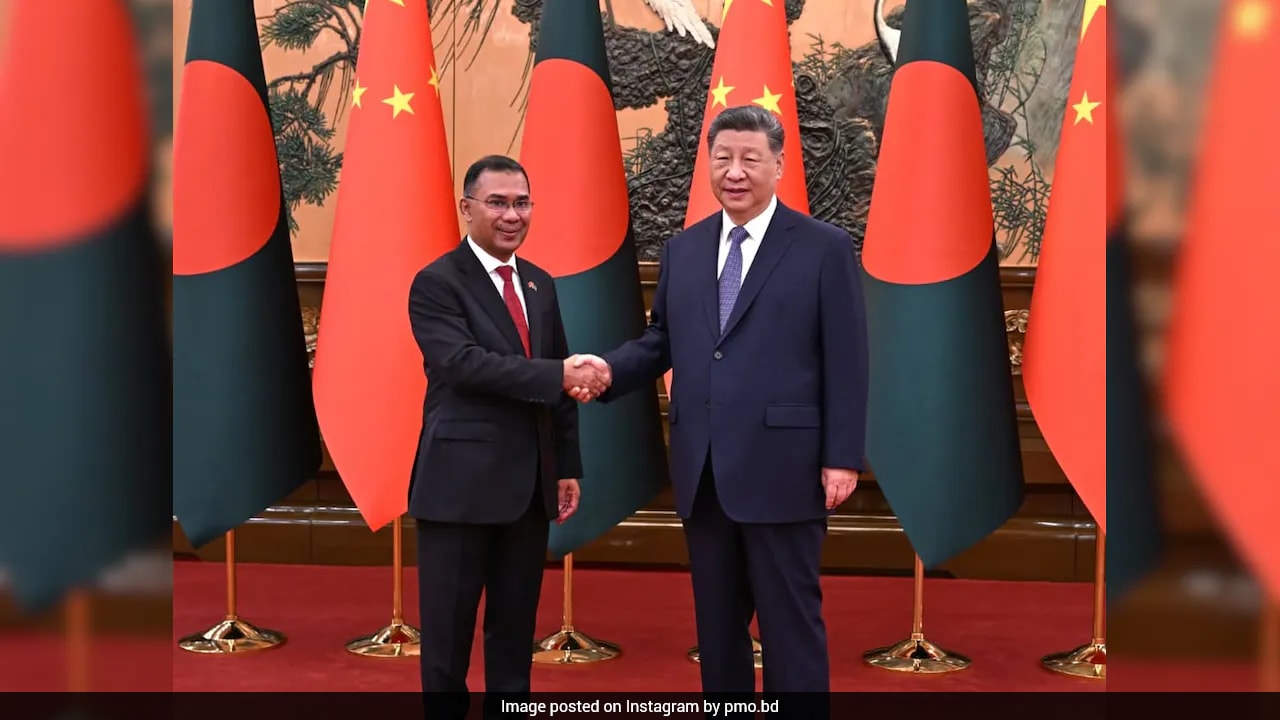
The decision of Rahman to visit China in his first international trip as the Prime Minister has led to interest over the level of engagement and presence Beijing is now planning in Bangladesh.
“The two sides agreed to keep the momentum of high-level interactions, increase exchanges of governance experience, and strengthen exchanges and cooperation between governments, legislative bodies and political parties. The two sides agreed to set up a mechanism for strategic dialogue between foreign ministers. The two sides agreed to explore the “2+2” dialogue mechanism on diplomacy and defence, the joint statement said.
What is also being looked at from a point of interest in India is the announcement on the Mongla Port. The two sides agreed to jointly advance the Mongla Port Facilities Modernisation and Expansion Project and the development of the Chinese Economic and Industrial Zone in Chattogram. However, the Muhammad Yunus regime had taken an anti-India position and cancelled allotment of land to India in Chittagong.
Earlier, India had secured a significant strategic win by obtaining the operational rights to a terminal at Bangladesh’s Mongla port. That development was seen as India’s efforts to counter China’s influence in the Indian Ocean region. This was seen as a step that would have implications for the regional dynamics, especially when it comes to influence in the Indian Ocean region. However, the joint statement puts both these facilities firmly in China’s hands.
Ambassador Veena Sikri, who has served as India’s High Commissioner to Bangladesh, told NDTV, “I think one has to compare this document, the joint statement of Bangladesh and China, with what was the joint statement when Prime Minister Sheikh Hasina came to India in June 2024, just before she was ousted. If you notice, in that document, the Mongla Port modernisation project was firmly given to India, as was the Teesta water management project within Bangladesh. During Muhammad Yunus’s interim regime, he made some changes, he had announced reversal of decisions but it was expectation I am sure of the Government of India that after Tarique Rahman became Prime Minister and keeping with his own statement of developing the friendship between India and Bangladesh and it was even talked about whether he would make India his first port of call after becoming Prime Minister, but that hasn’t happened. But then to see that in his joint statement with China that he is talking about Mongla Port development going to China…that is one big change.”
Another key element from the Indian perspective in the joint statement is the announcement on the Teesta masterplan. The joint statement says, “The two sides agreed to deepen cooperation in such areas as integrated water resources management, water resources planning, hydrological forecasting, flood prevention and disaster reduction, and river dredging, and related technology sharing. The Chinese side will provide support and help within its capacity to the Teesta River Comprehensive Management and Restoration Project (TRCMRP), and support experts from both countries in expediting the feasibility study of the project and relevant work. They agreed to strengthen cooperation in maritime affairs.”
Also read: Bangladesh PM Tarique Rahman Meets Chinese President Xi Jinping In Beijing
The Teesta River Comprehensive Management and Restoration Project (TRCMRP) is being closely watched in India, particularly because of the project’s geographical proximity to the strategically important Siliguri Corridor (Chicken’s Neck). Any expansion of external influence in the area, especially China’s presence, could intensify India’s security concerns and create potential strategic vulnerabilities for a corridor that connects India’s Northeast region to the rest of the country.
“On the Teesta again, in that 2024 joint statement, it was said that the water management project on the Bangladesh side would be done with India…so bringing in China in that area is definitely seen by India as a security risk, and that has been explained to the Bangladesh Government at all times. And for Prime Minister Tarique Rahman to go ahead with the changes made by Muhammad Yunus is not in any way to keep up with his own promise of working on the India-Bangladesh relation, reaffirming the friendship. This is a big surprise, this is a big disappointment, I would say, and I think the Government of India will certainly be looking at it very carefully,” Ambassador Sikri added.
According to the joint statement, Bangladesh and China will also step up cooperation in areas like healthcare and education, where India-Bangladesh cooperation is still at a large scale despite the strain in ties during the Muhammad Yunus regime. The joint statement ends with an invitation to the Chinese leadership and says Rahman invited the Chinese leadership to visit Bangladesh at a mutually convenient time.