Chandigarh:
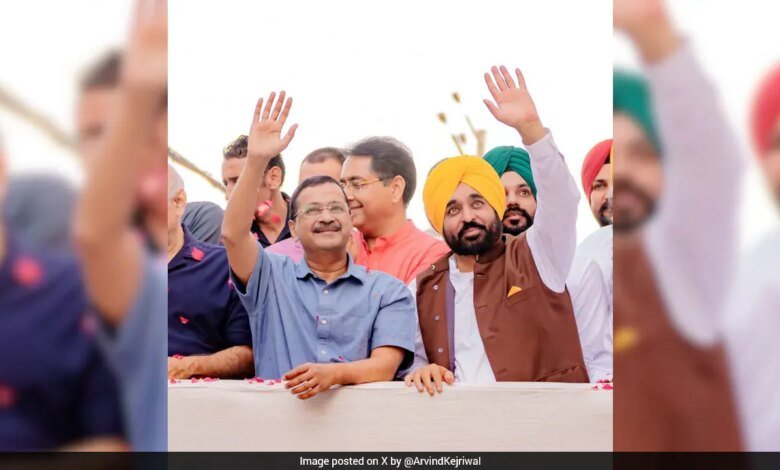
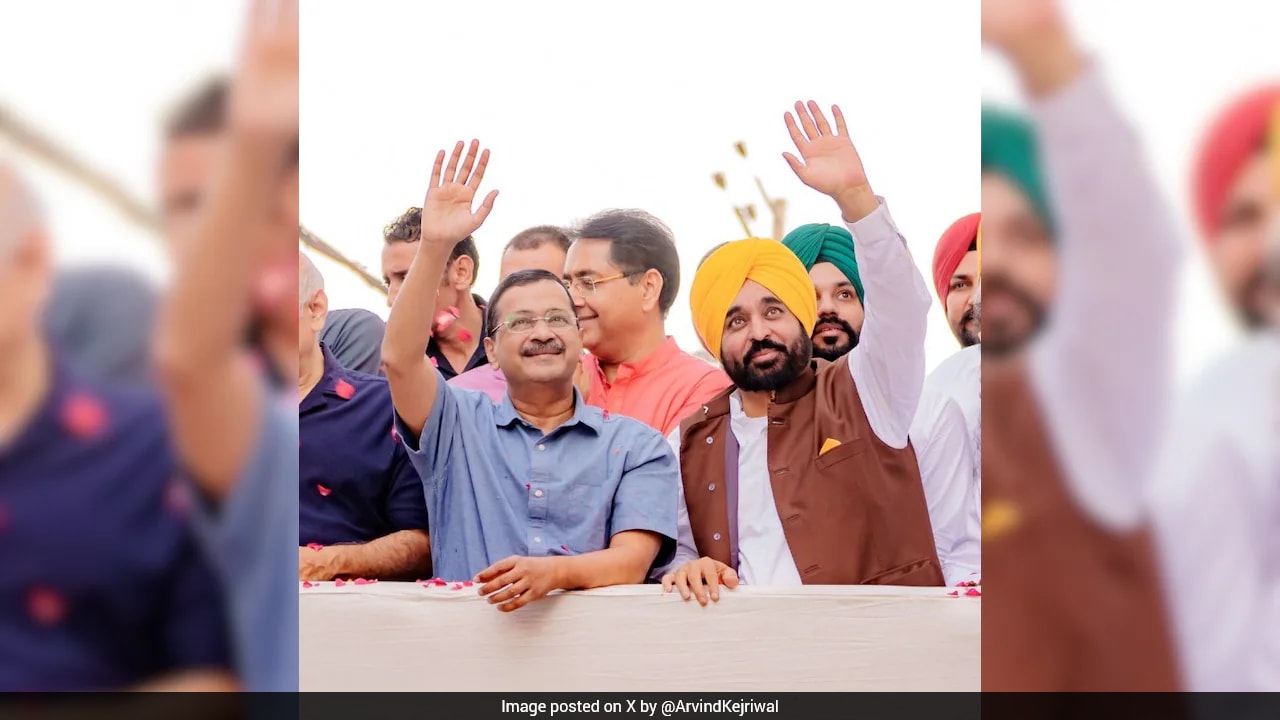
When Arvind Kejriwal arrives in Punjab on Saturday for a three-day participation in ‘Ek Shaam Bhagwan Shiv De Naam’ programmes in Amritsar, Gurdaspur and Batala, the visit will unfold against an unusually charged political backdrop: a growing political row involving an “objectionable” video that purportedly shows Chief Minister Bhagwant video allegedly hurting Sikh sentiments.
Just two days later, the Akal Takht is scheduled to hear all Sikh MLAs, including ministers and legislators of the Aam Aadmi Party (AAP), who supported the state’s anti-sacrilege legislation.
The convergence of these events has raised questions about whether AAP is attempting to shift the narrative from a Sikh religious controversy to a broader Hindu outreach.
“Political parties always try to woo every section of society and AAP is also following suit. Hence to woo the Hindu voters, the party is launching this programme closer to the day when the Akal Takht has summoned the ministers in the AAP government. On the Akal Takht issue, the party may be seen to be in a collision with the highest temporal seat, but on the ground the anger is still not so palpable,” said Shiv Inder Singh, a political analyst in Punjab.
Punjab’s politics has traditionally revolved around Sikh institutions, agrarian issues and regional identity. However, electoral arithmetic tells a more nuanced story. Hindus constitute nearly 38 per cent of Punjab’s population and are concentrated in dozens of urban and semi-urban constituencies.
In cities such as Amritsar, Jalandhar, Ludhiana, Pathankot, Batala, Hoshiarpur, Patiala and Mohali, Hindu voters often play a decisive role in determining electoral outcomes.
For AAP, the challenge today is not merely governance but perception.
The recent controversy involving Chief Minister Bhagwant Mann and the Akal Takht’s decision to summon Sikh legislators have created a politically uncomfortable situation. While the party insists it respects Sikh institutions, the opposition has seized the opportunity to portray AAP as being increasingly at odds with sections of the Sikh religious establishment.
This is where Kejriwal’s participation in Hindu religious events acquires political significance. The programmes are being organised by the Punjab government and are projected as cultural and devotional gatherings.
On June 13, Arvind Kejriwal and Bhagwant Mann attended AAP’s state-level ‘Ek Shaam Bhagwan Shiv Ke Naam’ event in Jalandhar, which drew a massive turnout. During the programme, Kejriwal announced the expansion of the state’s Tirth Yatra Scheme with the addition of three new pilgrimage circuits covering Salasar, Khatu Shyam, and Mathura-Vrindavan. He also unveiled plans for the revamp of the revered Kali Mata Temple in Patiala and promised to bring acclaimed actor Ashutosh Rana’s Ramayana-based theatrical production to Punjab, signalling the party’s growing emphasis on religious and cultural outreach in the state.
The BJP’s growing activity in Punjab may also be shaping AAP’s calculations. Since breaking away from the Shiromani Akali Dal, the BJP has sought to consolidate Hindu voters while simultaneously expanding its outreach to farmers and professionals. Recent visits by senior BJP leaders and the party’s engagement with prominent personalities suggest that Punjab remains a strategic focus despite its limited electoral footprint.
Political observers note that AAP’s 2022 landslide victory was built on a broad social coalition rather than a single community vote. However, as anti-incumbency begins to emerge and religious controversies dominate headlines, preserving that coalition has become increasingly important.
As the Aam Aadmi Party sharpens its outreach to Hindu voters, the Congress too appears keen to avoid ceding that space. Amid the ongoing restructuring of its Punjab unit, the party is actively considering accommodating a prominent Hindu face in the leadership setup, with former minister Vijay Inder Singla emerging as a strong contender for one of the key organisational positions. The move underscores a broader political recalibration in Punjab, where parties are increasingly looking to balance traditional caste and regional equations with a more visible outreach to the Hindu electorate.
Kejriwal’s Punjab visit may, therefore, represent more than participation in religious programmes. It could signal an effort by AAP to reassure Hindu voters that the party remains attentive to their concerns while navigating an increasingly complex relationship with Sikh religious institutions.
Whether this balancing act succeeds could shape the contours of Punjab’s political landscape ahead of the next Assembly elections.