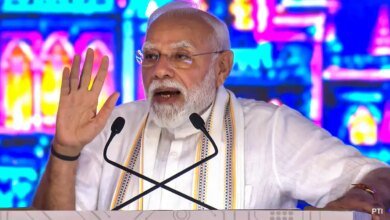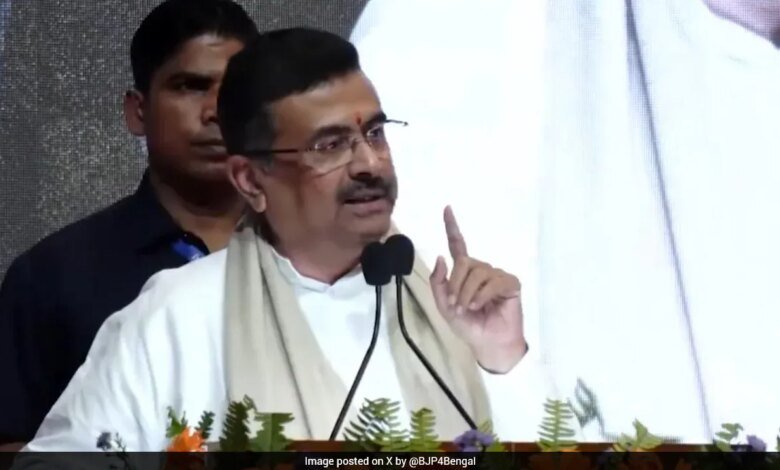
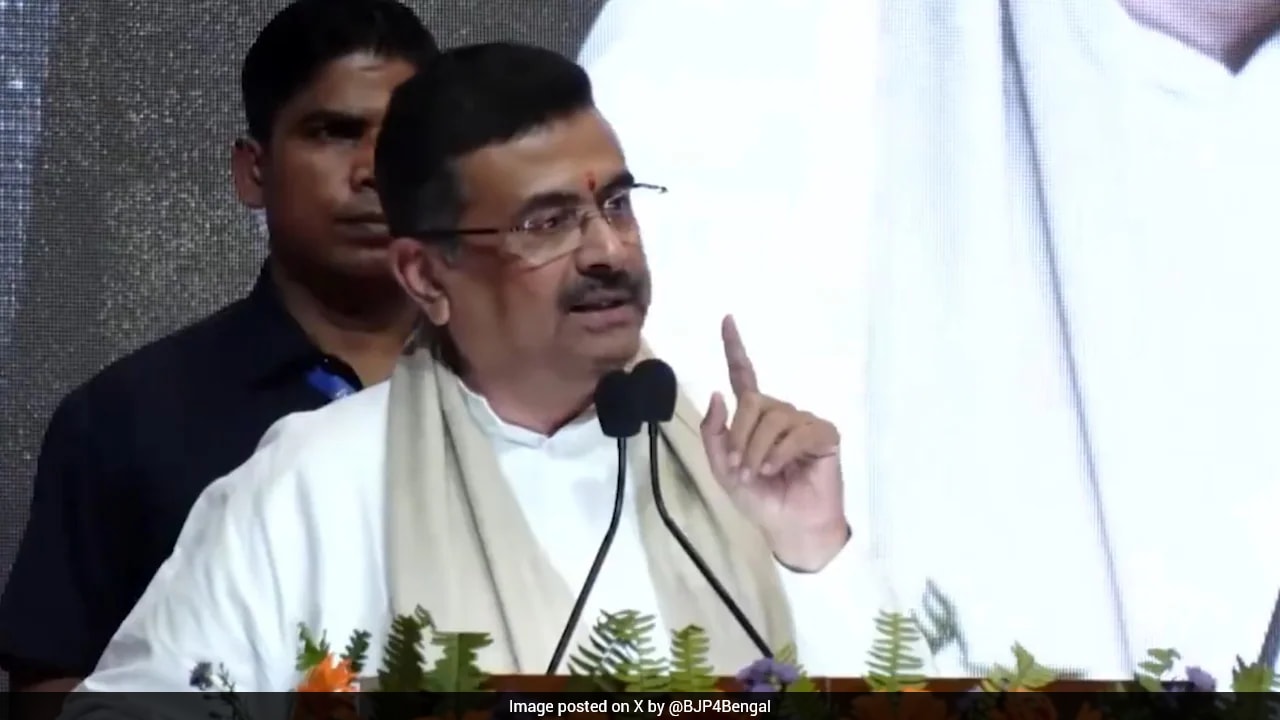
West Bengal Chief Minister Suvendu Adhikari will headline the Saffron Samman Yatra, also called ‘Gerua Samman Yatra’, that kicks off tomorrow in Kolkata.
Starting at Golpark, the march will pass through Dhakuria and culminate at the 8B bus stand, the exact spot where the Vande Mataram event was held on August 28, near the celebrated Jadavpur University, covering a distance of nearly three kilometres.
Organisers say the event aims to spread awareness about the values, ideals, and dignity associated with the colour saffron. The ruling party, the BJP, has said that the programme will seek to promote nationalist thought and has urged people to join the procession.
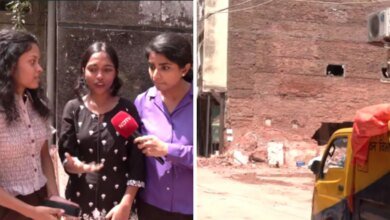
The event comes amid intense sloganeering and a graffiti battle between Left-wing student groups and RSS-affiliated ABVP at Jadavpur University days after clashes between the two groups. The university is witnessing a graffiti war, with its walls being repeatedly erased and rewritten as rival student groups trade slogans.
The ‘Yatra’ comes less than a fortnight after Adhikari attended a programme in which the full version of ‘Vande Mataram’ was sung by 10,000 people outside the Jadavpur University campus. There he had taken on both the Left and Trinamool for “allowing nationalism to fade from public consciousness”.
It assumes an additional significance in the wake of a controversy over a section of alleged BJP workers painting a portion of the state-run Academy of Fine Arts saffron. A few days later, a part of the boundary wall of a leading Bengali daily was painted in the same colour for a news headline terming the Jadavpur University clashes ‘saffron hooliganism’.
“Saffron is not just a colour. It symbolises our sacrifice, self-surrender, courage and Sanatan tradition,” read a message on a poster, advertising the upcoming programme.
At the Vande Mataram programme, Adhikari had slammed the “anti-national” forces inside the university and alleged that the institution had long been influenced by communists who had “distanced students from Independence Day, Republic Day, Indian and Bengali traditions and the country’s cultural heritage”.
“In their homes, you would never find pictures of Rabindranath Tagore, Bankim Chandra Chattopadhyay or Ishwar Chandra Vidyasagar,” he had claimed and said his government would restore nationalistic mood and observance of the state’s cultural traditions inside and outside the university campus.
Following his remarks, the university authorities had removed graffiti and other writings from the walls. The clean-up, however, did little to end the slogan battle.
Sources in the party say that during the Left’s rule for more than 30 years, there was a serious neglect of the old Indian, Sanatani and traditional ethos. After that, during the 15 years of Trinamool, an unusual kind of extreme cultural leftism also entered the party, party insiders claimed.
Many RSS leaders describe it as “cultural Marxism”, and they believe that it became deeply embedded within the Trinamool and was promoted further by several of its leaders.
Party insiders claim that the nationalist flavour of Bengal’s culture has weakened, and what Adhikari is now trying to do is bring that nationalist character back.
“Perhaps he is doing it with a little overdose, but the basic theory is that Bengali pluralism should remain, while there should also be respect for Indian Hindu nationalism. Hindutva has to be brought to the forefront,” a source said.
This has been the through line of the RSS, and Adhikari is implementing that perspective in Bengal, they said.
Adhikari, though not an exclusivist, wants to emphasise that one has to be nationalist.
Those who are opposed to the BJP are concerned that this could destroy Bengal’s heterogeneity, its pluralism and its inclusive approach towards all religions.
This week, self-styled godman Dhirendra Shastri, popularly known as Bageshwar Baba, appealed to Bengalis to give up non-vegetarian food during Durga Puja festivities, triggering a debate in Bengal, where food, religion and cultural practices have historically coexisted in ways that do not always conform to a strictly vegetarian religious framework.
However, RSS chief Mohan Bhagwat, speaking from London, has also said that there should not be any kind of negativism in one’s approach towards food habits or khanpan. “It is not I, it is we,” he said.
This is where confusion is emerging.
The heterogeneous Bengali model has been discussed repeatedly by figures ranging from Kshitimohan Sen to Amartya Sen. It has also been articulated by placing Rabindranath Tagore at the centre of that cultural understanding.
Bengalis worship Kali and celebrate Durga Puja. At the same time, Bengal has always had an intellectual community where a person can be a non-believer or an atheist and still identify with the broader Hindu cultural tradition. There has never been any real restriction or objection to this.
What is happening now, however, is that there is an argument that Bengalis have to return more strongly to their old heritage and their old culture, that they have to go back to it.
The West Bengal Civic Polls are due post Diwali.
The Calcutta Corporation, Howrah Corporation and several other municipalities may go to the polls, so ahead of the election, this hyper-publicity campaign around nationalism and Hindutva can be seen as an important strategy.
It can be a major way of reaching out to people.