New Delhi:
Union Home Minister Amit Shah has linked demographic changes in India’s border regions to infiltration and stated that the Modi government will deal firmly with the issue.
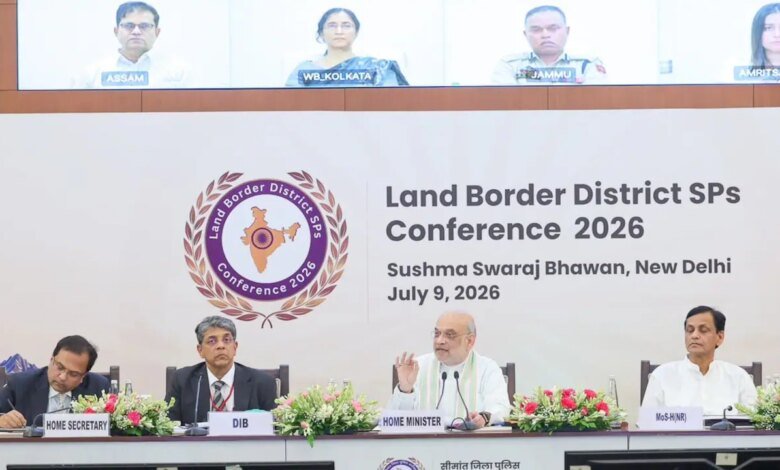
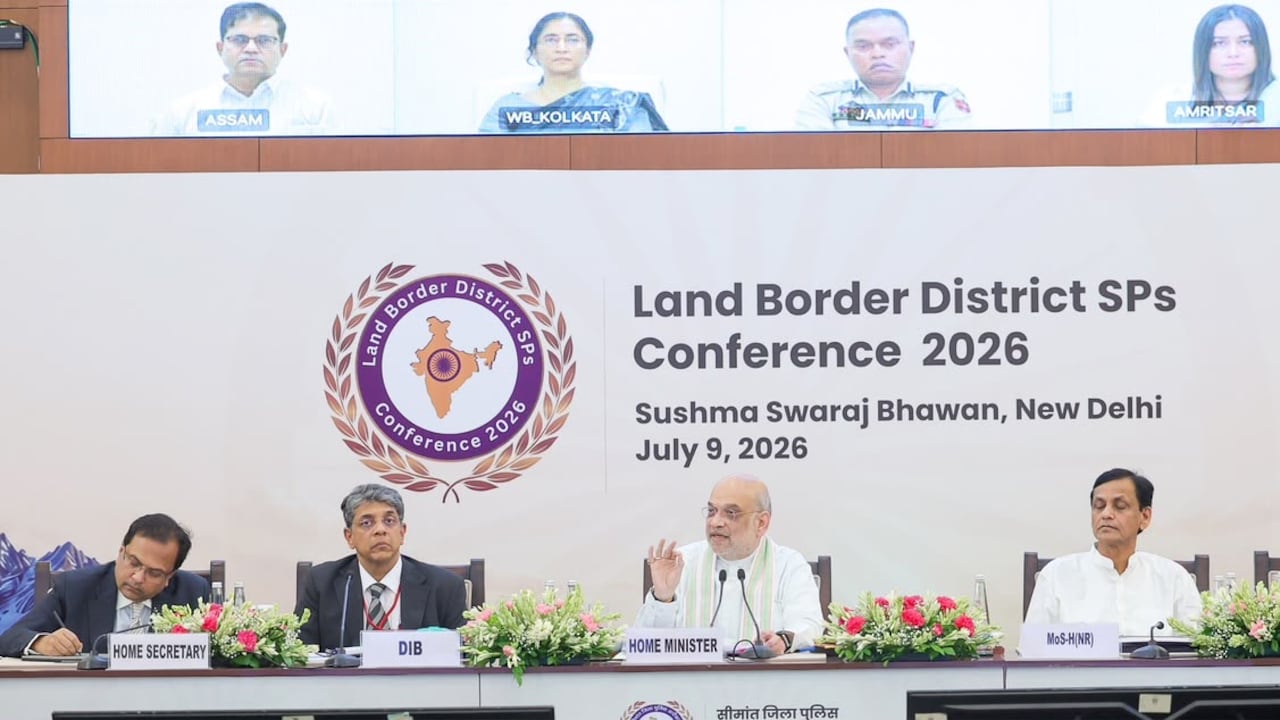
Addressing the Border Districts Superintendents of Police Conference 2026, Shah launched a new security plan which includes border protection, infrastructure development, intelligence cooperation and participation of local communities. Shah also stated that the government has launched a Demography Mission to analyse the factors behind abnormal demographic changes in border areas.
“Abnormal demographic change in border areas is due to infiltration and we need to act upon it,” Shah stated.
The conference was attended by Union Ministers of State for Home Nityanand Rai and Bandi Sanjay Kumar, Superintendents Of Police, Directors General of Police of border states, senior officers and representatives of intelligence and security agencies.
The Home minister said border security cannot be viewed in isolation and requires a national effort. “This conference has now become an institutional mechanism for addressing border issues and formulating policy responses,” Shah said.
The Centre, he said, is developing a new security strategy which involves border-guarding forces, district administrations, state governments, central agencies and local citizens. This strategy will make India’s border management proactive and preventive, he asserted
Shah said that the government’s vision is to develop a Smart Border system which will use technology, infrastructure and intelligence to strengthen surveillance and response. “In the coming years, the security architecture of India’s border will be one of the best in the world,” he said.
The minister also referred to multiple security threats in border regions, including infiltration, drug trafficking, smuggling, drone threats, organised crime, cybercrime and radicalisation.
“We are not only securing our borders, but making border districts economically strong and socially resilient,” he said, adding, “A secure border, a prosperous border region and a vigilant society can secure our nation.”
‘National Achievement’
Commenting on India’s performance in terms of internal security, Shah said India has registered significant success against terrorism in Jammu & Kashmir and insurgency in the northeast under the leadership of Prime Minister Narendra Modi.
These successes, according to him, are a collective national achievement and the government is now working on dismantling drug syndicates operating across international borders.
Shah said that the government plans to inflict damage to the drug trade in the next three years and he was confident that India would make huge gains on this front.
He said there is an increase of 400 per cent in border infrastructure development and the Vibrant Villages Programme is being implemented in which villages falling on the international borders are being developed through better connectivity, employment and welfare initiatives.
PM Modi, he said, has revolutionised the perception of border villages by terming the “last village” of the country as the “first village”. It aims at reducing migration from border regions and improving the living conditions of people living in the strategically important regions.
On the India-Myanmar border, Shah stated that the government is undertaking its biggest border security project. “The entire India-Myanmar border, which is 1,610 kilometers long, will be fenced at a cost of around Rs 31,000 crore,” Shah said.
This is aimed at preventing infiltration, cross-border crimes and enhancing surveillance in a strategically important border region.