New Delhi:
As Pune Police intensify their investigation into the alleged murder of 26-year-old businessman Ketan Agarwal, forensic gait analysis has emerged as a key scientific tool that could help investigators identify the accused despite attempts to conceal his identity on CCTV.
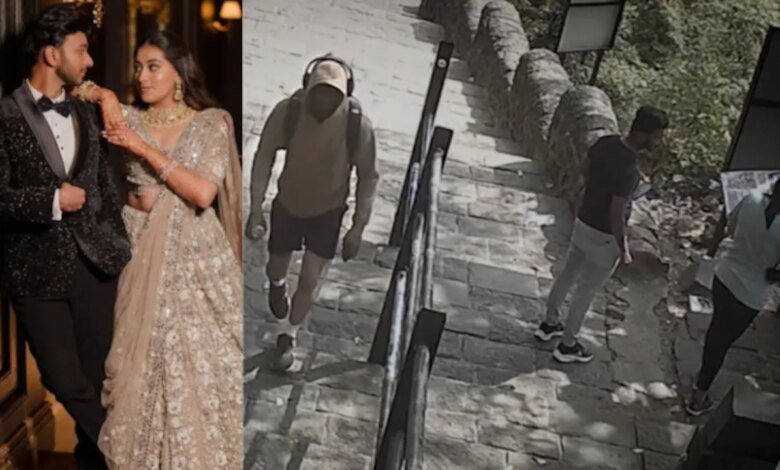
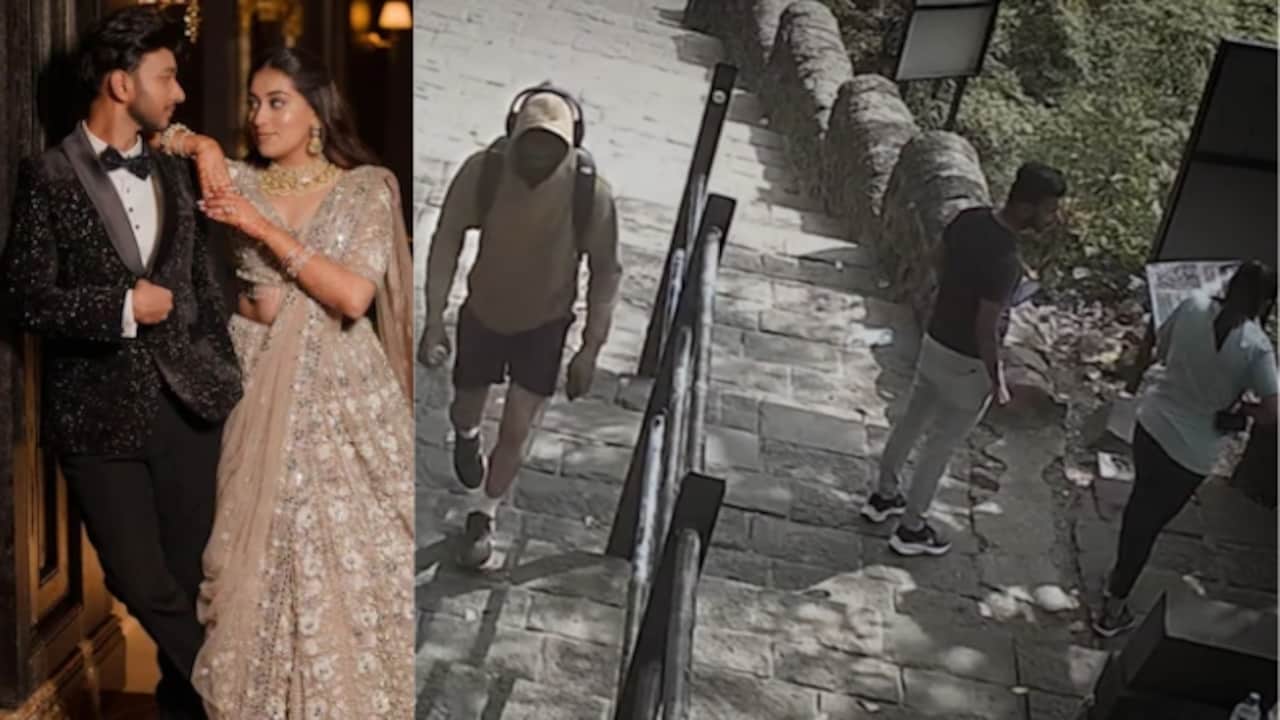
Police are planning to compare CCTV footage from Lohagad Fort, where Agarwal died after being allegedly pushed off a cliff by his 20-year-old fiancee, Siya Goyal, and her lover, Chetan Chaudhary, on June 18.
While examining the CCTV footage, the police had noticed 22-year-old Chaudhary, who was wearing shorts and a hoodie, tailing Ketan and Siya on the trek to the fort.
Investigators will now recreate a walk by Chaudhary and believe the exercise could establish whether the person captured on surveillance cameras is the accused.
According to police, Chaudhary’s face is not clearly visible in the CCTV footage because he was wearing a hoodie. This has prompted investigators to rely on gait analysis – a forensic technique that identifies individuals through their distinctive walking style, posture, stride length, limb movement and overall biomechanics.
As part of the exercise, the accused is expected to wear clothing similar to that seen in the CCTV footage and walk along the same route at Lohagad Fort. The recreated recording will then be compared with the original footage to identify similarities in movement.
IPS officer Mayank Gurjar, who headed the special investigation team (SIT) in the Chhattisgarh journalist Mukesh Chandrakar’s murder case, said gait analysis has become particularly significant in the Pune investigation because traditional facial recognition may not be possible.
Gurjar, currently the Deputy Commissioner of Police North, Raipur, said that every individual has a distinctive walking pattern shaped by skeletal structure, posture, stride and biomechanics.
Even when a suspect conceals facial features, these characteristics often remain consistent, he said.
Gurjar said that if forensic experts establish a match between the CCTV footage and the accused’s gait, it could significantly strengthen the chain of circumstantial evidence by placing the accused at the crime scene. However, he emphasised that gait analysis is corroborative evidence and cannot, by itself, establish guilt. It must be supported by forensic findings, digital evidence and witness testimony.
Gurjar also pointed out that gait analysis has already been used in several international investigations. Police forces in the United Kingdom have relied on the technique in homicide, robbery and sexual assault cases where CCTV footage was unclear or suspects had hidden their faces.
The technology was also deployed during the 2011 London riots, while China has integrated AI-based gait recognition into its surveillance network.
In India, he noted, forensic video analysis is still evolving, with the Pune murder investigation emerging as one of the most high-profile cases to employ the technique.
Former Delhi Police Special Cell officer LN Rao said that gait analysis helps investigators gather stronger corroborative evidence in a case.
“It involves analysing a suspect’s walking pattern, including gait, body posture and the angles of movement. Forensic experts examine these movement patterns to establish crucial facts. While gait analysis is not conclusive evidence on its own, it can significantly strengthen the overall case when supported by other evidence,” he said.
Cyber expert Raj Shekhar said advances in artificial intelligence have made gait analysis far more effective than before.
“In most cases where CCTV footage plays a crucial role, poor image quality or camera distance makes facial identification difficult. AI can analyse movement patterns and significantly improve the chances of correctly identifying a person. In the near future, AI-assisted analysis of CCTV footage will become routine, not only for police investigations but also for private security systems,” he said.
Sunny Nehra, a cybersecurity expert, said that in the Pune murder case, gait analysis has become important because the suspect’s face was concealed on CCTV, making facial identification difficult.
“Every person has a unique walking pattern, and AI can analyse these subtle movement signatures to help identify suspects. While gait analysis is corroborative rather than conclusive evidence, it significantly strengthens an investigation when supported by forensic, digital and witness evidence. A person can hide their face or change their clothes, but it is far more difficult to alter their natural biomechanics, making gait one of the most promising behavioural biometrics in modern forensic science,” he said.