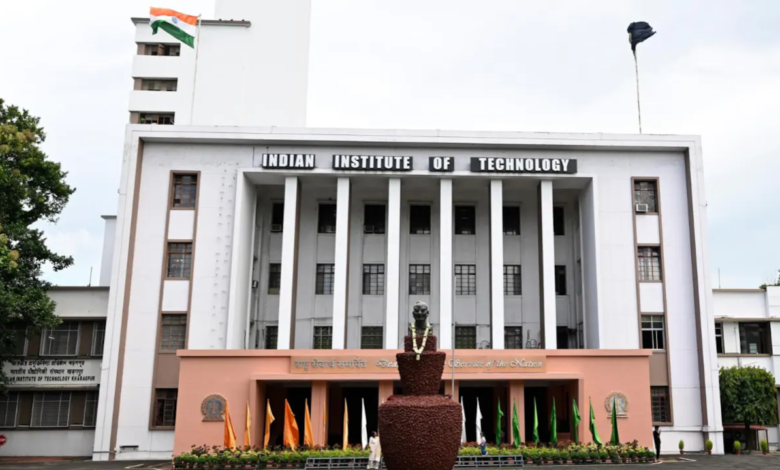
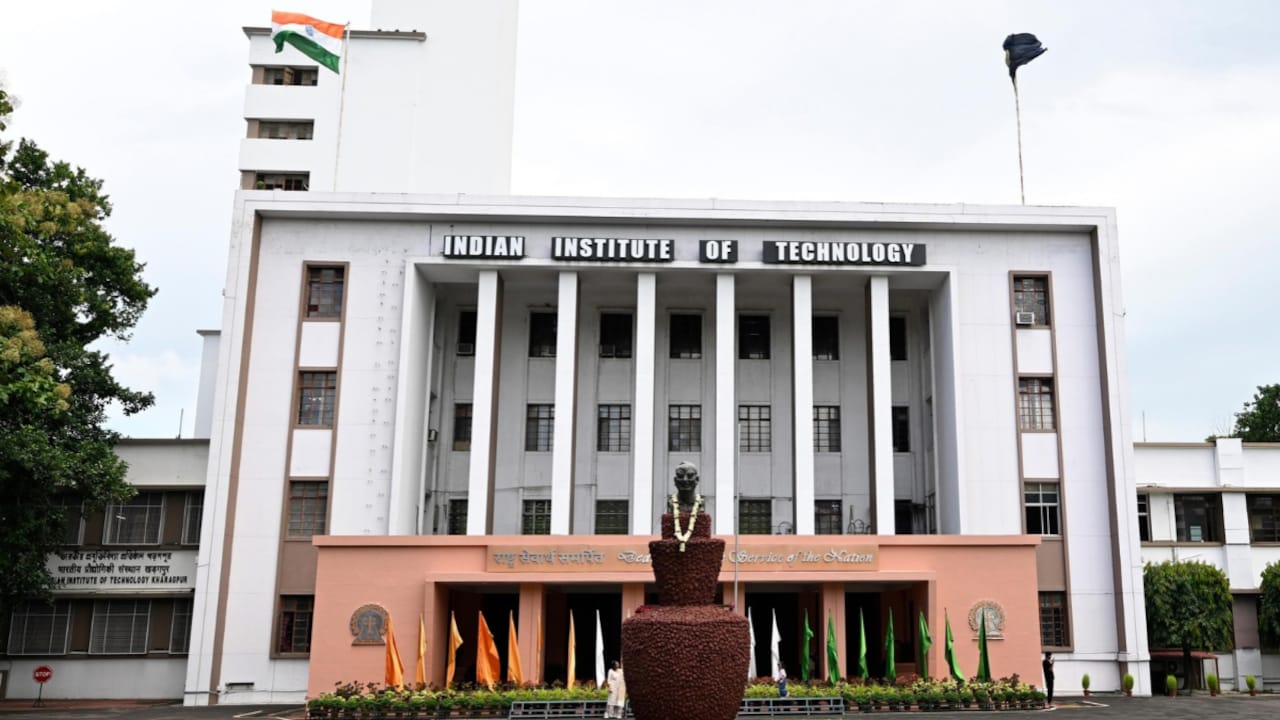
IIT Kharagpur: Once a notorious detention camp where freedom fighters were incarcerated and died is now transforming into a campus that will train doctors to heal. A place once marked by death will now nurture life. The same grounds that witnessed colonial brutality will now train healers.
Seventy-five years after India’s first Indian Institute of Technology was established on the grounds of one of the most feared colonial detention camps in the country, the Indian Institute of Technology (IIT) Kharagpur is preparing to write a new chapter in its remarkable history. In a deeply symbolic development, the institution, born at the site of the infamous pre-independence Hijli Detention Camp, is now entering postgraduate medical education, becoming the first IIT in India to launch National Medical Commission-accredited postgraduate programmes. India’s first IIT now gets a medical heart.
The announcement may appear, at first glance, to be another academic expansion by a premier institution. But viewed through the lens of history, it represents something much deeper. It marks the transformation of a place once associated with suffering, imprisonment and death into a centre dedicated to healing, research and the advancement of medicine.
For decades, IIT Kharagpur has stood as a powerful symbol of India’s journey from colonial subjugation to intellectual freedom. The campus occupies the grounds of the Hijli Detention Camp, a notorious British-era prison where many freedom fighters were imprisoned under harsh conditions. The detention camp was regarded as one of the most dreaded places of confinement in colonial India and was second only to the Cellular Jail in Port Blair in terms of its notoriety among freedom fighters.
Today, those same grounds are home to laboratories, classrooms, research centres and some of the country’s brightest students. Soon, they will also be home to postgraduate doctors being trained in modern medicine.
In a remarkable coincidence of history, a place where death once loomed over imprisoned freedom fighters will now train physicians whose profession is to save lives.
Beginning with the 2026-27 academic session, IIT Kharagpur will admit its first batch of postgraduate medical students. The institute will offer MD programmes in six disciplines: General Medicine, Radiology, Physiology, Pathology, Community Medicine and Biochemistry. Each discipline will initially have two seats, creating an inaugural batch of twelve students.
Those twelve students will become pioneers
They will be the first postgraduate medical students ever to study within the IIT system and among the first to experience a unique educational environment where medicine, engineering, artificial intelligence and scientific research exist side by side.
But the significance of the development cannot be measured merely by counting seats. To understand why this moment matters, one must return to the origins of IIT Kharagpur itself.
The Hijli Detention Camp was established by British authorities as a place to incarcerate Indian freedom fighters. The objective was not merely physical imprisonment. It was psychological domination.
During a visit to the preserved detention camp inside the IIT campus, IIT Kharagpur Director Prof. Suman Chakraborty, speaking to NDTV, reflected on the true purpose of the colonial institution.
“This was not just a jail; it was a symbol of mental imprisonment,” he said. “The purpose was not to kill a person instantly but to kill the thought process so that the entire nation would remain enslaved in mind.”
Those words continue to resonate across the campus.
The prison cells still stand as reminders of an era when free thinking was considered dangerous by colonial rulers. Freedom fighters, including Mr Santosh Kumar Mitra and Mr Tarakeshwar Sengupta, suffered and died under the harsh conditions imposed there. The site remains one of the most poignant symbols of India’s struggle for independence.
When India became independent, the newly formed nation made a profound choice. Instead of preserving Hijli merely as a monument to suffering, it transformed it into a temple of learning. In 1951, IIT Kharagpur was established on the very grounds where political prisoners had once been confined.
The symbolism was powerful
A place that once sought to suppress ideas would now nurture them. A site that once restricted freedom would now celebrate intellectual liberty. As Prof. Chakraborty observed during the interaction with NDTV, the transition represented a journey “from the life of the jail to the life of freedom”. Education became the instrument through which bonded minds could truly be liberated.
For seventy-five years, IIT Kharagpur has carried that legacy.
It has produced generations of engineers, scientists, entrepreneurs and innovators. It has sent graduates into leadership roles across India and around the world. From the corridors of government to global technology companies such as Google, IIT Kharagpur alumni have played significant roles in shaping modern India, with role models such as Mr Sundar Pichai, CEO of Google.
Now, the institute is taking another historic step. Its entry into postgraduate medical education represents the next stage of that evolution. The move has been years in the making. Dr B. C. Roy Multi-Specialty Medical Research Centre within IIT Kharagpur was established with the broader vision of integrating healthcare, research and technology. The new medical programme now brings that vision to fruition.
The idea is ambitious
Rather than treating medical education and technology as separate academic worlds, IIT Kharagpur wants to merge them.
Future doctors studying on the campus will have opportunities to interact with experts in artificial intelligence, computational sciences, biomedical engineering, healthcare diagnostics and advanced technologies.
Modern medicine is increasingly driven by data, machine learning, advanced imaging and digital health tools. Diagnosing diseases, interpreting scans and managing population health are all becoming more technology-intensive.
The institute believes that tomorrow’s doctors must be comfortable operating at the intersection of clinical medicine and technology.
The goal is not simply to train specialists. The goal is to train innovators. Announcing the launch of the medical programme, Prof. Suman Chakraborty described the broader vision behind the initiative.
“Our vision is not simply to train specialist doctors, but to create an ecosystem where clinical excellence meets engineering ingenuity, artificial intelligence and translational research.” He added that future graduates should be “not only outstanding clinicians, but also innovators capable of addressing some of humanity’s most pressing healthcare challenges.”
In many ways, those aspirations resonate with the original spirit that led to the creation of IIT Kharagpur itself.
The institute was founded to help build a newly independent nation capable of solving its own challenges through education, science and technology.
Today’s challenge is healthcare
India’s population continues to face major burdens from infectious diseases, non-communicable illnesses, access gaps and affordability concerns. Technology and innovation are increasingly seen as essential tools in addressing these problems.
By creating a medical education ecosystem within an IIT, the institute hopes to contribute solutions that are both scientifically rigorous and socially relevant.
There is another layer of symbolism that makes this story especially compelling.
For decades, the Hijli Detention Camp stood as a place associated with pain. Its prison cells witnessed suffering. Young freedom fighters were separated from their families and deprived of their freedom. Some never survived their incarceration.
Today, those structures remain preserved on campus, not as monuments to despair but as reminders of resilience and sacrifice.
And now, in what may be one of the most meaningful transformations in Indian higher education, a campus born out of that painful history is preparing to train healers and doctors.
A place once associated with the wounds of colonialism is embracing a future centred on healing. The contrast is striking. Where prisoners were once confined, students now pursue knowledge. Where thoughts were once suppressed, innovation flourishes. Where death once cast a shadow, medicine will seek to preserve life.
For the twelve students who join the inaugural batch, the significance of their admission will extend beyond earning a degree. They will become part of an extraordinary historical continuum. They will study at India’s first IIT, an institution that emerged from the ashes of colonial repression and became a symbol of intellectual freedom. And they will participate in a new chapter that seeks not only to free minds through education but also to heal bodies through medical science.
Seventy-five years after independent India transformed a detention camp into an institute of technology, IIT Kharagpur is once again redefining its purpose. The mission remains remarkably similar. Then, it was about liberating minds. Today, it is also about healing lives.
From the cells of the Hijli Camp to the medical wards of the future, the journey of IIT Kharagpur continues to mirror the journey of India itself. A nation that transformed suffering into strength is now turning one of its most powerful symbols of oppression into a beacon of healing, innovation and hope.