The ruling Aam Aadmi Party (AAP), which secured a historic mandate in 2022 based on a ‘vote for change’ and a host of freebies to lure voters, is struggling to fulfil the poll guarantees. While only a couple of promised freebies were implemented in the first year, half of the promises were parked for the last year of the tenure; a similar number remain unfulfilled.
The two schemes implemented in the first year of the tenure that truly benefited the people, despite the additional financial burden on the exchequer, are 300 units of free household power and free bus travel for women.
Interestingly, a resource crunch compelled the AAP government to park five major poll promises until the last year of its tenure. These schemes are: Mukh Mantri Mawan-Dheeyan Satkar Yojana (Rs 1,000 to Rs 1,500 to women); Meri Rasoi Yojana, free registration for ten lakh workers, the Punjab State Outsourced Personnel Act, 2026 and Expansion of Mukh Mantri Sehat Yojana (Rs 10 lakh cover).
Promises still treated as unfulfilled or only partly met are: Drug-free Punjab in weeks/months, plus fast rehabilitation – not delivered; the drug problem remains a live charge; 25 lakh jobs – the government cites about 65,000 government jobs and 5.5 lakh “opportunities,” which critics say is far short.
The list also includes the unmet promise to provide MSP on every crop and make farmers debt-free – a promise still unmet. End corruption and provide women with Rs 1,000 from day one-started only in 2026; the opposition also wants arrears for the missed years. Revenue claims used to fund welfare, including figures such as Rs 20,000 crore from mining and other sources, were cited as failed arithmetic, not actual money in the bank.
The Shiromani Akali Dal accused the AAP government of looting Punjab in the name of freebies and guarantees.
“AAP has done nothing in four years apart from looting Punjab’s treasury. They spent Rs 4,500 crore on advertisements over four years. Kejriwal ran the government, and the AAP government paid his travel bills. Mann’s role was limited. Development has a limited place on paper,” Sukhbir Badal said.
Prime Minister Narendra Modi recently hit out against the Punjab government, terming it the Kattar Beimaan Party, which tried to betray the people with advertisements.
“What is happening in Punjab today is no secret. Here, the reality of betrayal is being masked by advertisements. Serving the public requires honest intentions and a spirit of integrity. However, the party currently in power in Punjab possesses neither. It is known as a ‘Kattar Beimaan Party’. A brazen game of plunder is underway… Loans are being raised in Punjab’s name. While the state’s budget is consumed by interest payments on this debt, those running the government are living it up on that very money,” PM Modi said while questioning the functioning of the AAP government.
Punjab Leader of Opposition, Pratap Singh Bajwa, said AAP betrayed people in the name of freebies and overburdened the state exchequer.
“The same party that promised not to take even a single penny in fresh debt is now planning to borrow Rs 50,000 crore in just one year. Punjab’s debt is projected to soar to Rs 4.47 lakh crore, leaving every Punjabi burdened with Rs 1.04 lakh debt. AAP is not building Punjab’s future, it is borrowing against it. Future generations will be forced to pay the price for today’s political gimmicks and fiscal irresponsibility,” Bajwa said.
He also said that AAP’s Education Revolution (Sikhya Kranti) is exposed by its own government records. In over four and a half years, Punjab has opened only two new government schools and shut down seven. The school dropout rate has also touched the six lakh mark.
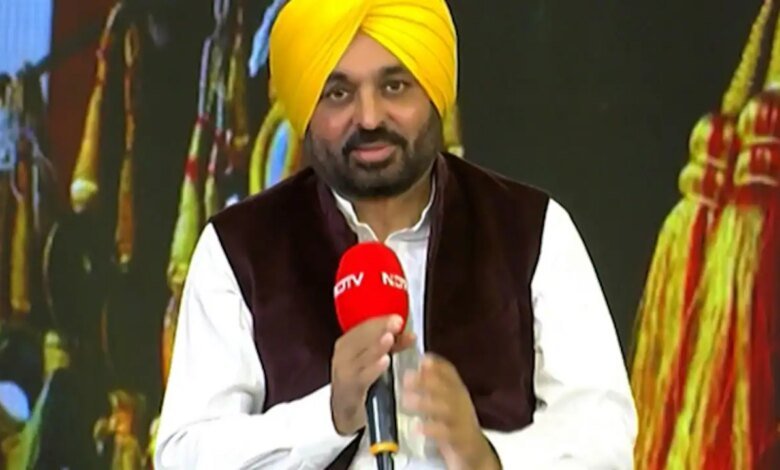
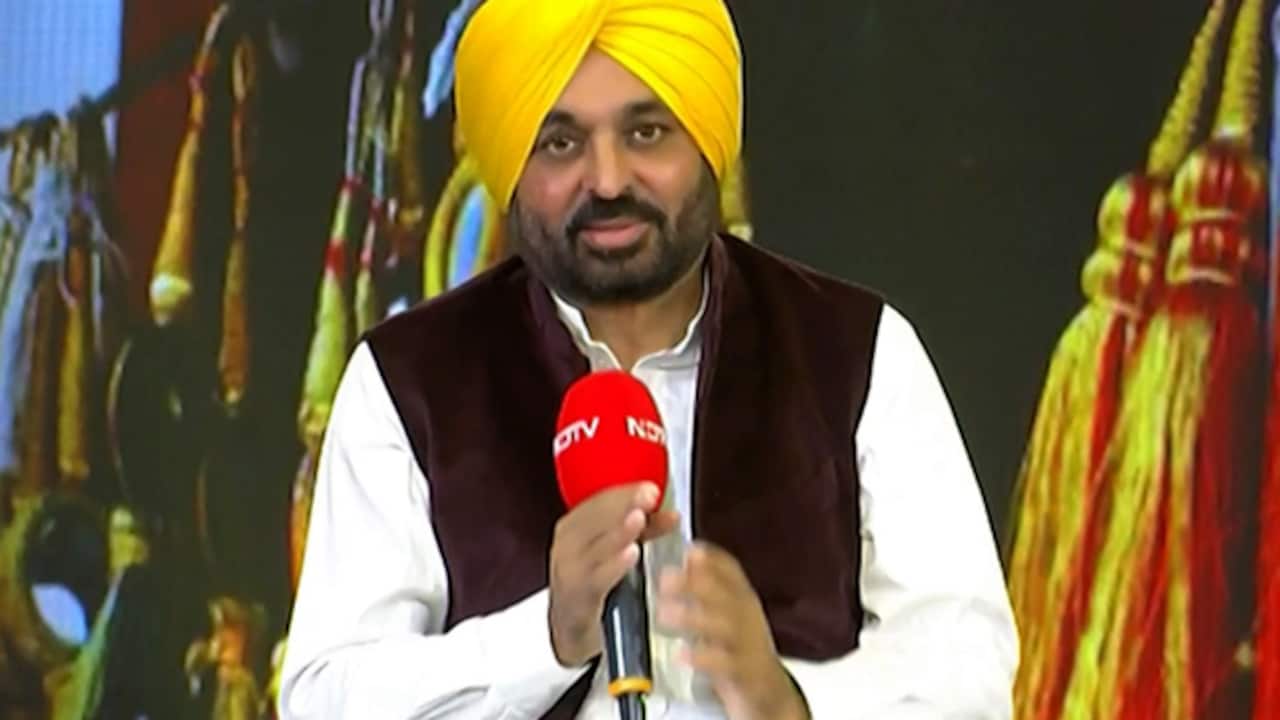
Chief Minister Bhagwant Mann claimed his government has fulfilled every guarantee the party promised to the people of Punjab.
“Punjab is moving on the path of progress. We have started a new tradition in politics by completing all promises in four years, whereas other parties were not able to do so even in five years. We fulfilled our first poll promise within three months. Bringing transparency to administration and providing employment to the youth have been our biggest achievements,” he said.
Mann denied the allegations of the opposition parties that the guarantees were either pushed to the last year of the tenure to betray the people.
“The opposition has no issues left against our government, which is why they are indulging in cheap politics. Our government has taken historic steps for public welfare and state development over the past four years,” he said.
Here is why, despite deferring the guarantees, handouts will benefit AAP
Psephologists say that while deferring the guarantees until the last year of the tenure speaks volumes about the empty coffers, the handouts like Rs 1,000 per month to women, besides the free bus travel, 300 free units and cashless treatment will help AAP regain a sizeable vote bank.
“Nobody is going to check the list of how many promises were deferred or how many are pending. People only remember what they got in return. Doles are a proven formula to retain the vote bank. This will assuredly help the ruling AAP in Punjab,” said Professor Pramod Kumar, Chairman, Institute for Development and Communication (IDC), Panjab University, Chandigarh.
The AAP’s guarantees speak volumes about its outreach and a simple claim that the party now reaches people where older regimes did not. Free power of up to 300 units, cash and food support, regularised contract workers and neighbourhood clinics are meant to prove that governance can be felt in a bill, a bus ride and a medical test.
“That is not a small political achievement. In a state long trapped between farm distress and fiscal stress, monthly relief is easier to defend than distant reform,” says Professor Kumar.
The economists and analysts also warn that the problem is that relief is not the same as repair. Heavy subsidies and recurring transfers have deepened the argument that Punjab is spending tomorrow’s revenue on today’s loyalty.
“Capital spending suffers when the exchequer is committed to bills that arrive every month. Crime, extortion and the drug trade remain the charges the opposition will not drop. Farm unions still say procurement and rural safety nets have not matched the promise. Welfare can shift the conversation. It cannot erase those files,” says Professor Varinder Sharma, Director, IDC.
Doles will work, but deficiencies in services – like strikes by the Aam Aadmi Clinic staff over meagre salaries, empty gyms, poor school infrastructure, allegations that the jobs were given to outsiders, and the non-payment of pending dues to the six lakh employees will work as a yardstick to measure performance.
That is also the risk of a politics built on delivery. When the transfer arrives, the party looks indispensable. When a clinic shuts, the same voter is sent back to crowded district hospitals. AAP can still argue that no rival will roll back free power or women’s mobility. It cannot argue that the health and education models are settled while its own staff are on strike. In an election year, competence is not announced in a scheme. It is tested on the trajectory of performance and delivery.