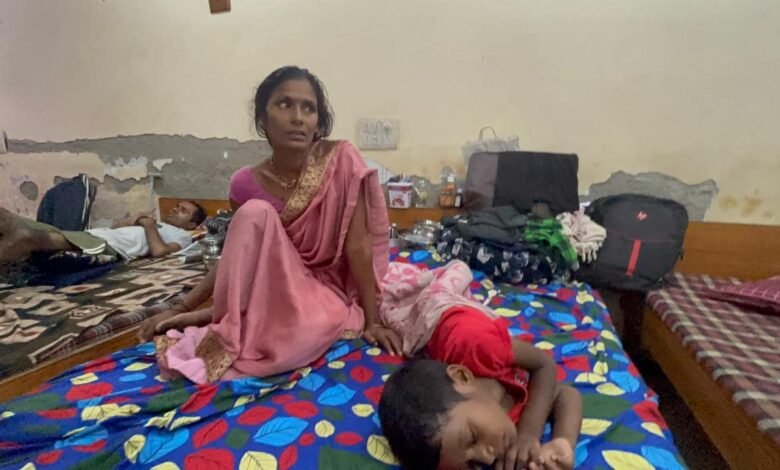
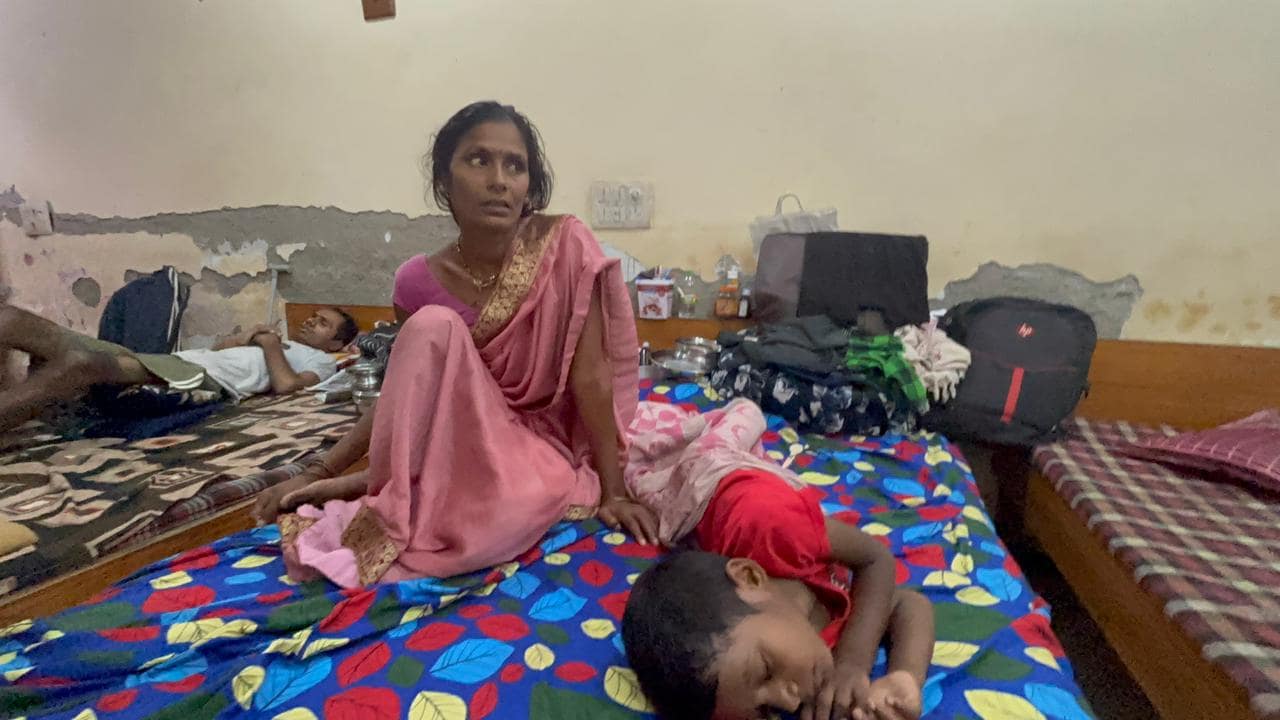
Sangeeta Devi and her son in a shelter home.
For others, the wait means repeatedly moving between their villages and the hospital, because there is nowhere to stay. Raza Khatoon from Bihar has already spent weeks here, sleeping in the underpass near AIIMS. She earns just Rs 5,000 a month and says private treatment is unaffordable.
“We were here for a month, then went back to the village. Now we have been here for 22 days. I was admitted after a miscarriage. I came here for hepatitis treatment. We don’t have money for private treatment. I earn Rs 5,000 a month,” she said, as her children hungrily ate food from the langar.
The lights of the subway flickered as she spoke. Even in the dim light, Khatoon’s gaze remained sharp.
For Sunil Patel from Jaunpur too, the metro and subway have become a temporary home. He has spondylitis and has been coming to AIIMS for one and a half years. “We live in the metro and subway. We are poor, private treatment is expensive. Here we get treatment. It takes time, but it is okay. When we come, we stay for more than a month,” he said. Beside him lies his fifteen-year-old daughter, who has been suffering from knee pain and swelling. Even in the September humidity, she chooses to stay wrapped in a blanket, a shield, she said, from unwanted stares as the family waits for treatment in the open.
For families battling cancer, the uncertainty is even harder. Avinash came from Jharkhand after his sixteen-year-old brother, who has blood cancer, was referred to AIIMS from Ranchi.
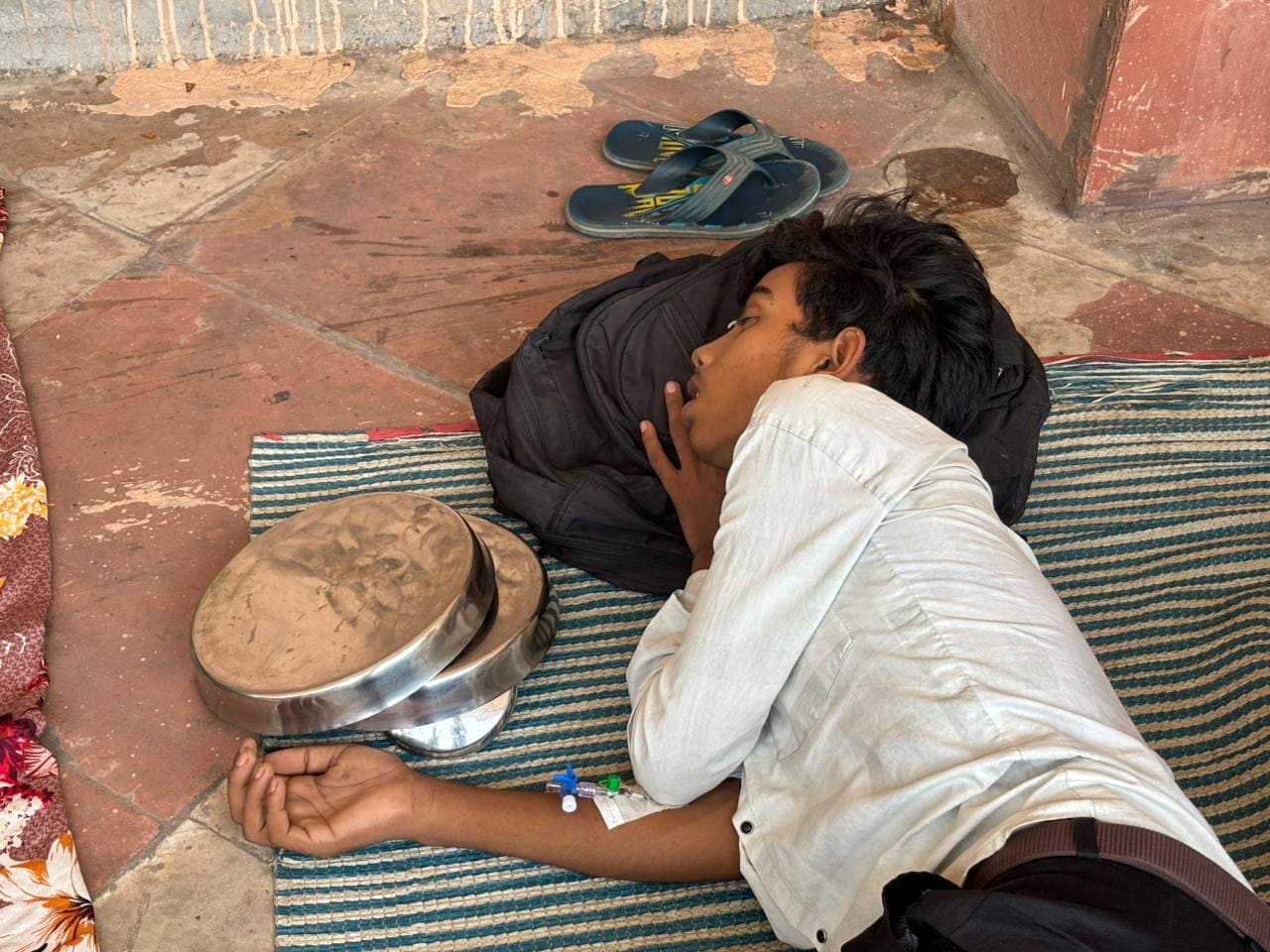
A 16-year-old from Jharkhand who has been diagnosed with blood cancer sleeps in a pathway inside AIIMS.
“We think it will take 15 days for the reports. Staying and food are an issue,” he said.
The family has now been here for 20 days, sleeping and waiting in the verandahs near the Emergency department. His sixteen-year-old brother, frail and almost skeletal, sleeps after his tests, the cannula still in his arm, while their mother occasionally rubs his forehead.
Beside this family waits another, with a similar story. A young boy from Aligarh also has blood cancer.
“We don’t have money for private treatment. Cancer treatment is very expensive. The issue is that it takes time for check-ups. There is no place to stay. We keep lying down here, our clothes stink, we can’t even freshen up. Travelling expenses are high, but treatment is free. We came at 1 am. We don’t know when our turn will come,” said Anil, whose brother has cancer.
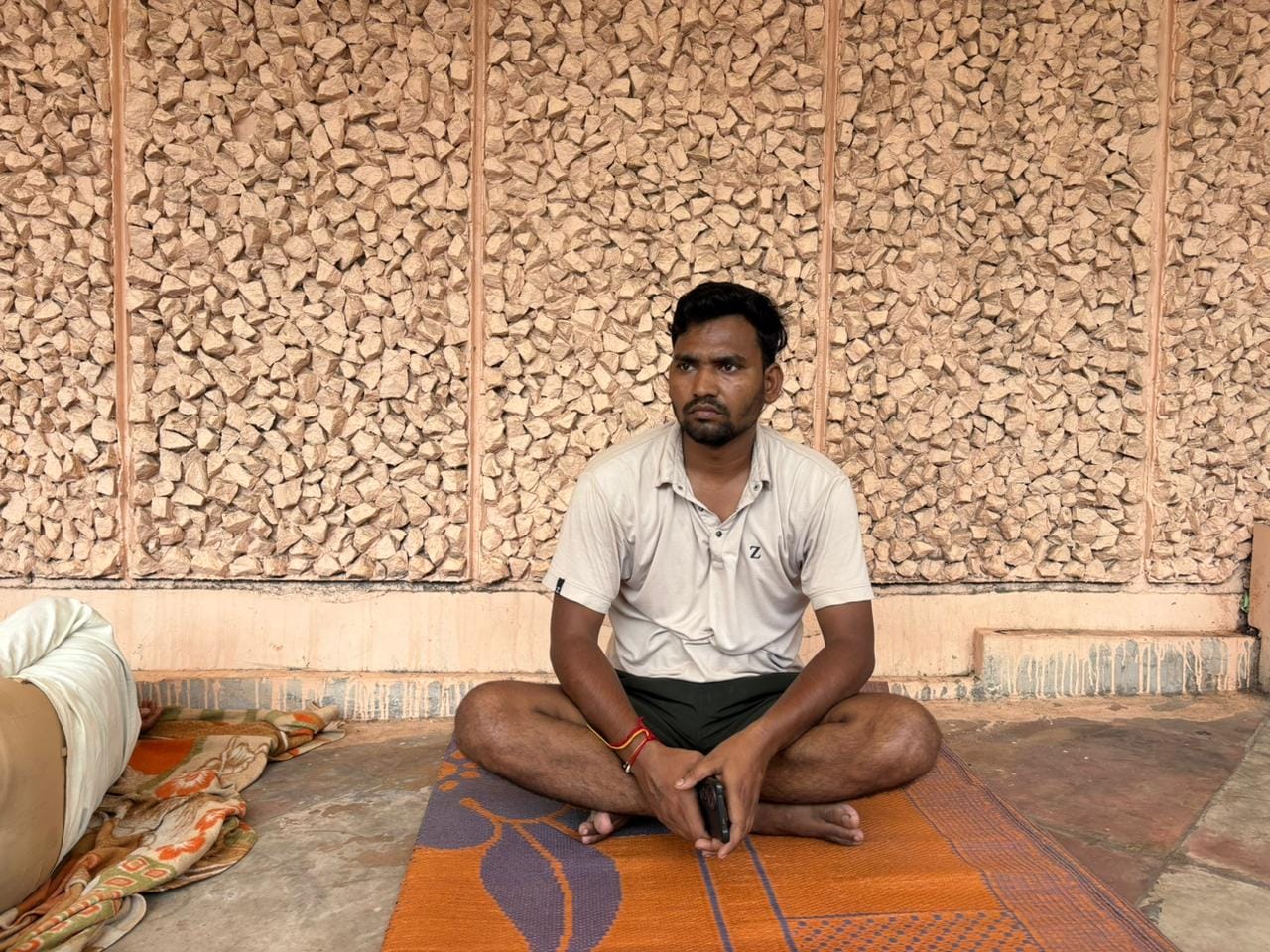
For the poor, AIIMS is their only hope, more so because private hospitals remain beyond their means. But that hope comes with a difficult price: being away from home, enduring long waits and endless queues, and spending weeks or even months in underpasses, shelter homes and on footpaths.
For every family sleeping in these areas, beyond food and sleep, there is only one thing they remain constantly alert to: their appointment and their medical files. Every day revolves around them.
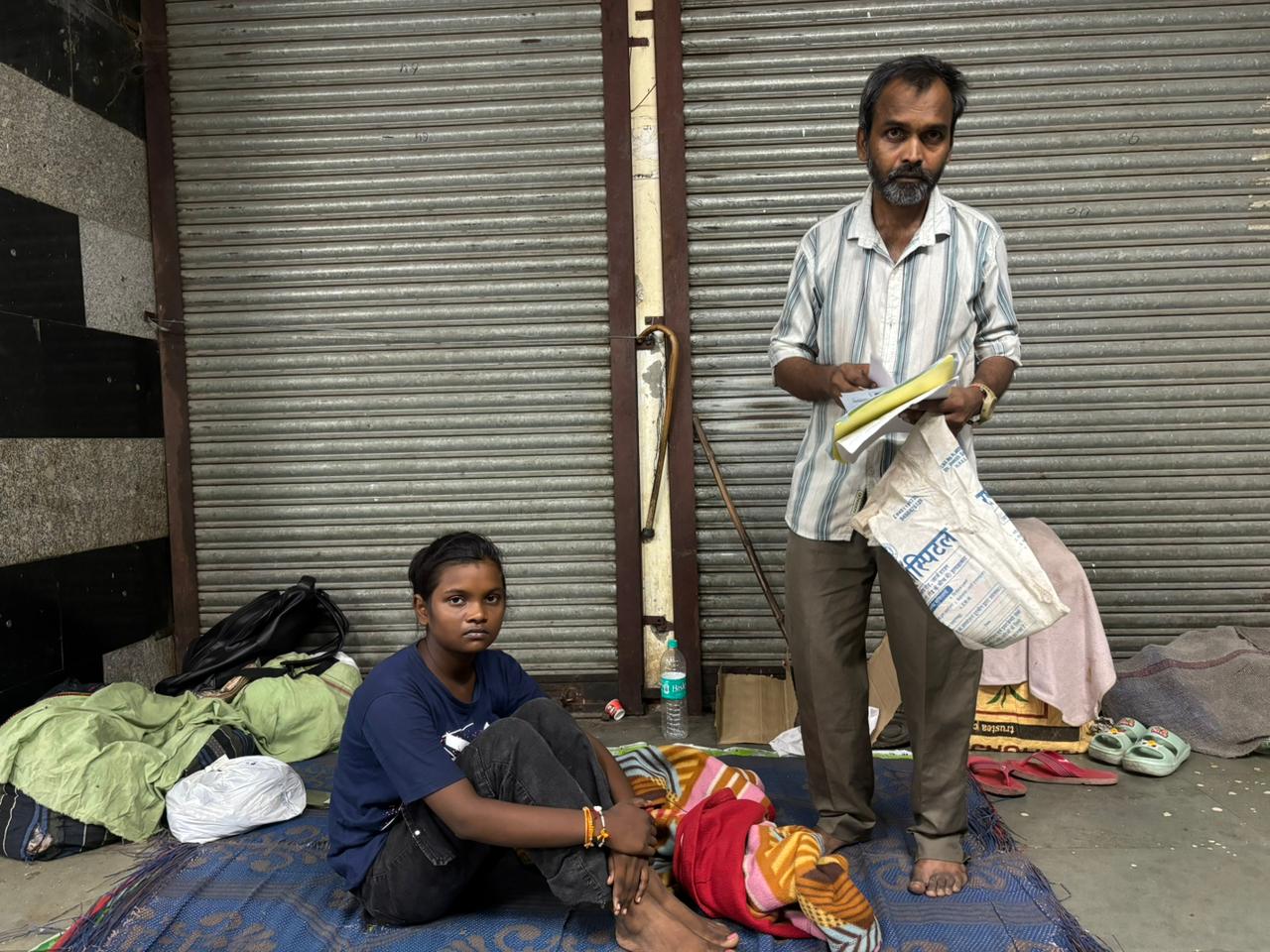
Anamika Patel and her father Sunil Patel sleep in an underpass.
For many, the doctors at AIIMS are nothing short of gods, and the institution itself is almost godlike. Stories of successful treatments travel from one family to another, keeping hope alive. And so, even as every passing day of waiting brings greater anxiety, they hold on, because AIIMS offers them something fundamental: treatment they can afford.