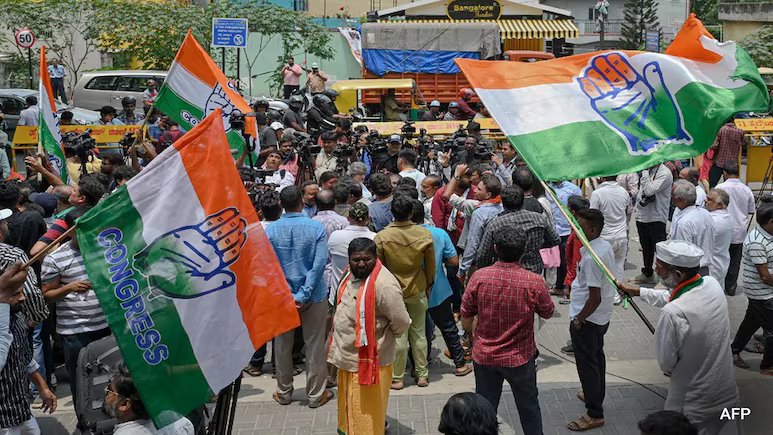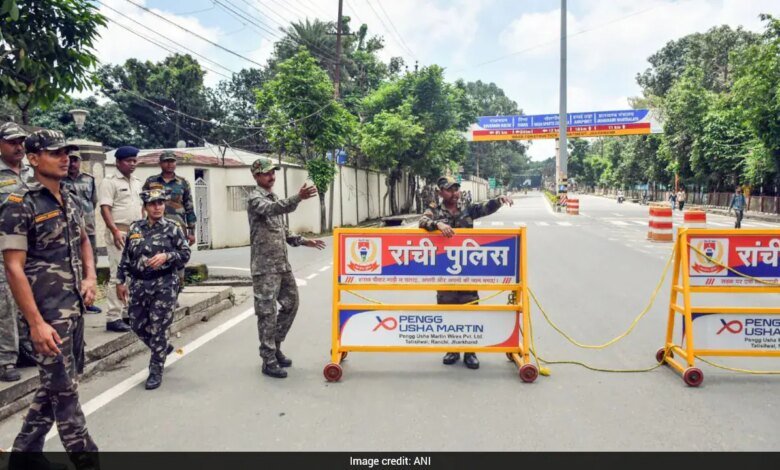
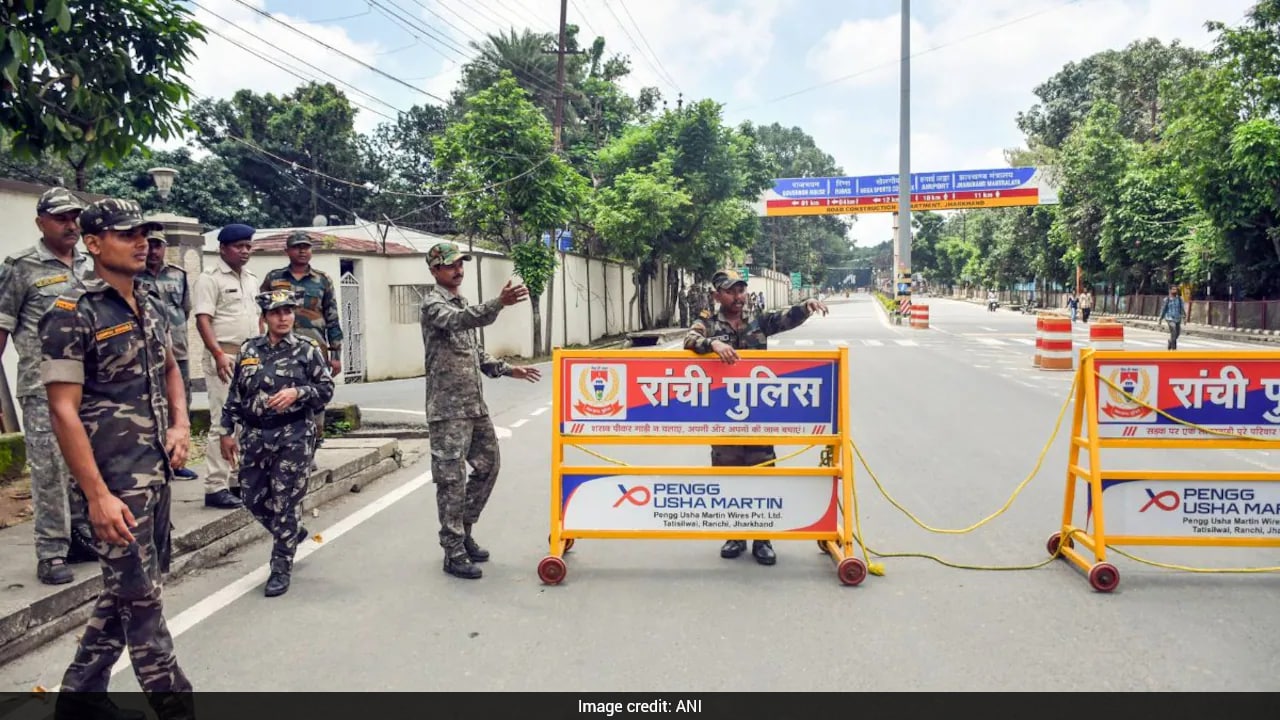
JPSC-JSSC Protest: The students’ protest regarding government job examinations in Jharkhand entered its 19th day today, with the stir intensifying. As the CID investigation progresses, the scope of the matter is widening. The probe has revealed the involvement of commission officials, the private company conducting the exam, its employees, middlemen, and certain candidates.
Following the arrest of former JPSC Chairman L Khiangte on August 10, the total number of accused arrested in this case has reached 20. Prior to this, the CID had arrested 19 individuals by August 7.
The name of Abhay Kumar Tiwari, also known as Manoj Kumar Tiwari, has consistently surfaced in connection with this case. Tiwari held a government job as a Block Supply Officer in Godda. Additionally, he is reported to have had ties with TSR Data Processing Private Limited (TDPL), the private company responsible for conducting the examination; he worked there as a marketing manager.
ALSO CHECK | Jharkhand Government Ready To Cancel 14th JPSC Prelims Exam: Check Latest Updates Here
The fact that the same individual held a government job while being associated with the exam-conducting company forms a crucial part of the CID investigation. The agency is working to identify Tiwari’s associates and determine his specific role in the examination process.
Reports related to the investigation indicate that Abhay Tiwari secured the 48th rank in the JSSC-CGL examination. It has also come to light that his brother, Akshay Tiwari, and his sister-in-law, Sushma Kumari, were selected in the same exam. Consequently, students have raised questions about the entire CGL examination process and demanded an inquiry.
Allegations regarding paper leaks and financial transactions have also emerged. According to reports based on CID interrogations, approximately Rs 12 lakh each was collected from about 15 candidates in Bokaro in exchange for providing the question paper and answers prior to the exam.
This points to a total transaction amount of around Rs 1.80 crore. It is also alleged that approximately 65 questions and their answers were provided to certain candidates and memorised by them prior to the examination. If these allegations are substantiated during the investigation, the matter will not be limited merely to irregularities in the exam; rather, it could be viewed as the operation of a larger network. However, these allegations have not yet been confirmed in court.
Questions are also being raised regarding the role of TDPL, the company that conducted the examination. According to reports, the Jharkhand Staff Selection Commission had blacklisted and de-listed TDPL on May 20, 2025. Despite this, the subsequent process by which the company secured work with the JPSC came under scrutiny.
It is alleged that the contract was awarded to the company based on nomination rather than through an open tender process. Reports indicate that the then Controller of Examinations at JPSC had raised objections to this procedure at the time.
Shweta Kumari Gupta, the then Deputy Controller of Examinations at JPSC, has been arrested. TDPL Director Ramveer Singh is also among those arrested. The CID has sealed TDPL’s offices in Ranchi and Lucknow and has initiated an examination of the documents and electronic devices found there.
The CID has made a series of arrests in the case. Initially, Shweta Gupta, Ramveer Singh, Mohammad Usman, Mohammad Ebad, and Abhay Tiwari were arrested. Subsequently, several others, including Arvind Mandal, came under the ambit of the investigation.
On August 4, Umesh Kumar, Buddheshwar Bhagat, and Ramesh Kumar were arrested. The following day, August 5, five more individuals were arrested. These reportedly included the computer operator of former JPSC Chairman L Khiangte, three students, and another accused individual.
Subsequently, on August 10, the CID arrested former JPSC Chairman L Khiangte. He had previously been questioned on multiple occasions. Raids had also been conducted at several locations, including his official residence and the JPSC office.
A report regarding the interrogation claims that Abhay Tiwari Khiangte has been accused of accepting approximately two crore rupees and a 20 per cent commission in exchange for securing work for TDPL. However, this allegation currently stems from an accused individual; the investigation is still pending. Khiangte has previously stated that he was unaware of TDPL’s blacklisted status at the time the company was selected.
With the roles of Abhay Tiwari and TDPL coming to light, the JSSC-CGL examination has also come under scrutiny. Students are demanding an investigation into the entire examination process, as well as the cancellation and re-conduct of the exam and a CBI probe into the whole affair.
However, the government is currently not in favor of cancelling the JSSC-CGL exam. It maintains that the examination process was conducted under judicial supervision and that many selected candidates are already employed; consequently, cancelling the entire exam would not be legally straightforward.
The government has now agreed to have the ED investigate alleged financial transactions linked to JPSC examinations. While the CID is investigating the paper leak and alleged criminal conspiracy, the ED may investigate the financial transactions and potential money trail.
Meanwhile, the resignations of three sitting JPSC members – Dr Ajita Bhattacharya, Dr Anima Hansda, and Dr Jamal Ahmed – have also raised questions regarding the matter.
The JPSC-JSSC controversy is no longer just about a single examination; it has become a question of the integrity of Jharkhand’s government recruitment system and the students’ trust in it.