Sriharikota:
Anxiety and nervousness gave way to excitement and euphoria as the clock struck 12:05:30 on a clear Saturday afternoon at the Sriharikota launch pad.
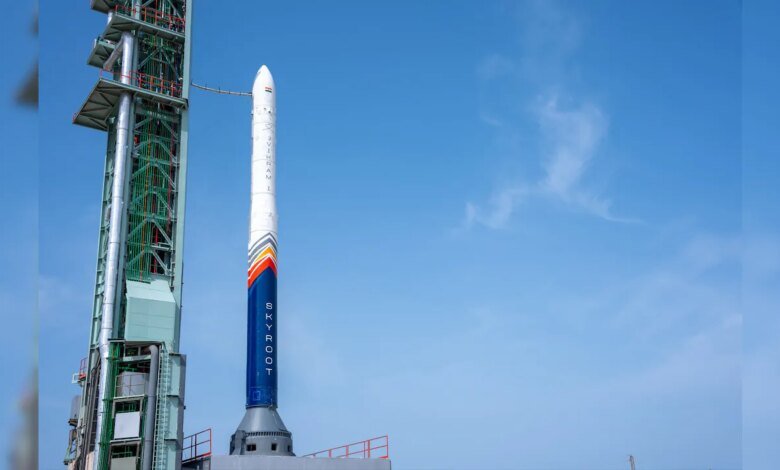
As Skyroot’s Vikram-1 rocket soared into space, it became the first privately developed Indian rocket to attempt an orbital mission, marking a defining moment not just for the company but also for India’s rapidly emerging private space sector.
The liftoff encountered a little hiccup as the rocket blastoff was put on a “planned hold” just minutes before the scheduled timing of 11:30 am by the mission control team.
At 12:21 pm, history was made when the mission was declared successful as the commentators at the launch site announced, “Hello, space. We have arrived”, with the injection of the payload in its orbit.
The liftoff has secured its place in the history of India’s space missions.
Hyderabad-based Skyroot Aerospace has joined a small and elite group of global companies that have successfully developed and launched orbital rockets.
The mission, called ‘Aagaman’, marks the arrival of India’s private sector in the global launch business.
Vikram-1 is carrying technology demonstration payloads from Grahaa Space, Cosmoserve, DCubed and Skyroot’s own SCOPE, along with Cosmos Diamonds’ artwork “Cosmic Bloom” and a micro-art piece featuring micro-sculptures of Sir CV Raman, Dr Vikram Sarabhai and Dr APJ Abdul Kalam.
Vikram-1 is a seven-storey-tall, multi-stage orbital launch vehicle built with an all-carbon composite structure and powered by in-house developed propulsion systems, including 3D-printed engines and high-thrust solid-fuel boosters.
Designed to carry small satellites weighing up to 350 kg to Low Earth Orbit (LEO), its first test flight is targeting a 450 km orbit at a 60-degree inclination.
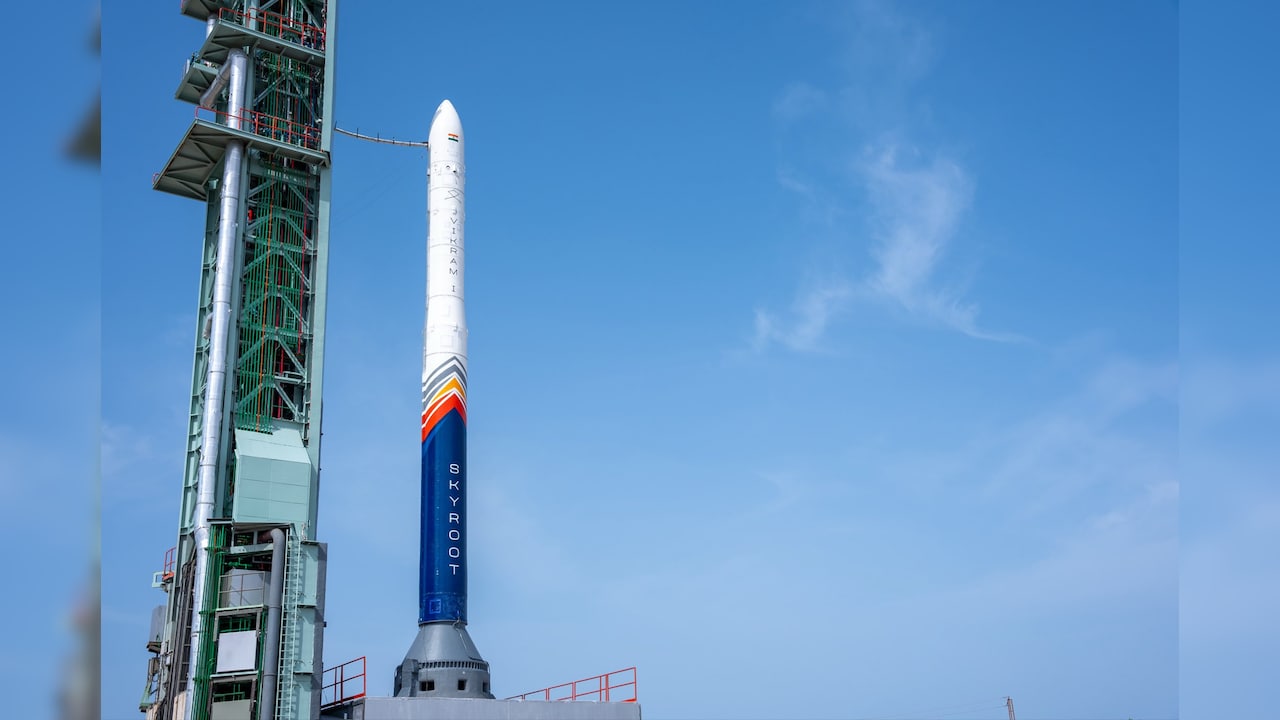
Named after the father of India’s space programme, Vikram Sarabhai, the Vikram-1 vehicle represents the next step for Skyroot after the company’s successful Vikram-S suborbital mission in November 2022.
In the buildup to the launch, Prime Minister Narendra Modi on Saturday morning termed the initiative “a historic new frontier” for India’s space journey.
He said the four-stage rocket is designed to provide rapid and on-demand launch services.
He added that the mission highlights the talent, determination and entrepreneurial spirit of India’s youth, and shows how reforms in the Indian space sector are unlocking new opportunities for innovation and enterprise.
“My best wishes to the entire Skyroot Aerospace team for a successful launch. May Vikram-1 soar high, create history and inspire a generation of innovators,” he said.
PM Modi also urged all Indians, especially “my young friends, to follow this historic mission and join in wishing Team Skyroot success using #IndiaWithVikram1”.
The rocket is also carrying a special message from the Prime Minister. The message, printed on a commemorative card, will travel beyond Earth’s atmosphere alongside hundreds of cards carrying wishes and aspirations from people around the world.
Among the payloads on Vikram-1 Test Flight-1 is something truly special—a handwritten postcard from Hon’ble Prime Minister Shri @narendramodi with the words, “Vande Mataram.” 🇮🇳🚀
It travels to space alongside handwritten messages from our team, investors, policymakers, and… pic.twitter.com/sJajN6NiVJ
— Skyroot Aerospace (@SkyrootA) July 17, 2026
In his message to Skyroot on a postcard, PM Modi simply wrote “Vande Mataram”.
Ahead of Mission ‘Aagaman’, Skyroot Aerospace said its Vikram-1 rocket also carries the signatures of the engineers, technicians and team members who helped build it, honouring everyone behind India’s landmark private space mission.