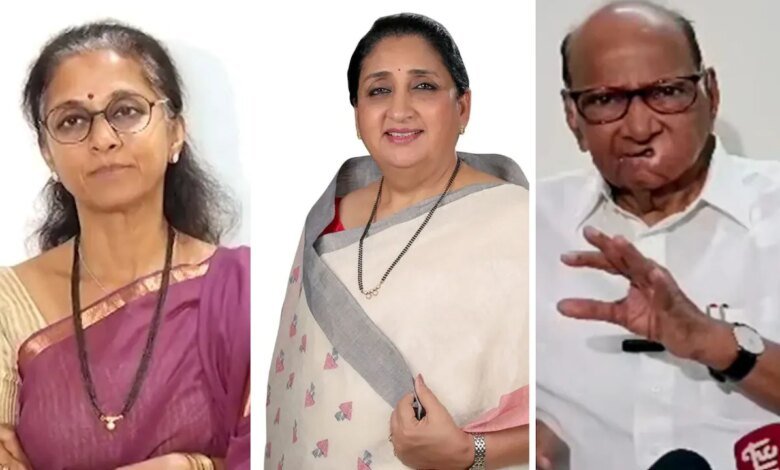
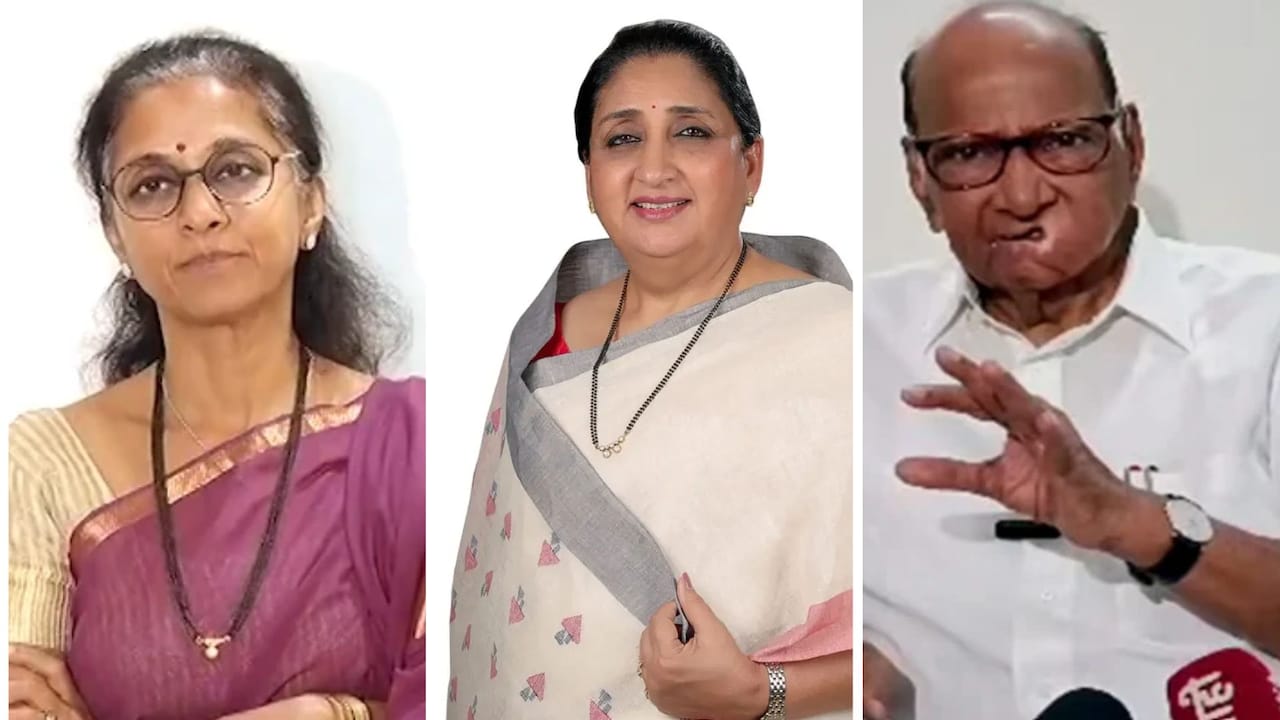
The political landscape of Maharashtra and the entire equation within the NCP have shifted following the death of Ajit Pawar. The two factions of NCP now appear headed for a “merger” that feels less like a reunion and more like Sharad Pawar reclaiming his lost legacy. Should the two factions of the NCP merge and the unified party join the NDA, the critical question becomes whose fortunes will rise within the Pawar family, and who will be sidelined.
Ajit Pawar was a mass leader and an able administrator. Without him, his family members – Sunetra, Parth, and Jay Pawar – lack the firm grip on the organisation that he once commanded. After his death, a merger could effectively mean that only Supriya Sule’s political stature continues to shine within the Pawar family.
The BJP is also well aware that without Ajit Pawar, his faction lacks a prominent grassroots figure capable of drawing in votes.
Rohit Pawar is working hard, but it remains to be seen how far he can rise given the internal dynamics of his party and the presence of Supriya Sule. In this context, his growing closeness to the Congress speaks volumes.
The BJP, which currently holds the reins of power, also needs the support of Sharad Pawar and his eight Lok Sabha MPs to strengthen its position in Parliament and weaken the Congress-led Opposition alliance.
Meanwhile, Sunetra Pawar is unwilling to relinquish control over her faction. She knows that the moment she loses that control, her political standing and position could well be stripped away.
Senior associates who had aligned themselves with Ajit Pawar are reportedly frustrated with Sunetra and her sons. This is precisely why Sunetra and her son, Parth Pawar, are staunchly opposed to any merger and are making every effort to maintain their standing.
Recently, a meeting took place in Delhi between senior NCP leaders and Union Home Minister Amit Shah, during which the possibility of a merger was discussed. Sunetra Pawar had pointedly kept away from that crucial meeting.
This latest development, reflecting the turmoil within the NCP factions, suggests that Sharad Pawar has begun a decisive battle from behind the scenes to reclaim the party he once led.
The veteran leader has yet to fully reveal his hand. His primary objectives include securing a significant political role for his daughter, Supriya Sule, and winning the ongoing legal battle over the party’s name and symbol.
But the biggest question remains: what will the future hold for the Pawar family members following a potential merger?
1. Supriya Sule (Sharad Pawar’s daughter): The biggest beneficiary! As Sharad Pawar’s only daughter and the long-serving Member of Parliament from Baramati, Supriya Sule currently serves as the National Working President of the Sharad Pawar faction and acts as the primary face of the party. A merger would significantly bolster her political prospects. Sharad Pawar is likely to agree to such a merger only if a prominent role – both within the government and the party – is secured for Supriya. In a unified party, she would indisputably be the second-in-command after her father. There is also growing speculation that she could be offered a major position within the Central government.
2. Sunetra Pawar (Ajit Pawar’s wife): A major setback. Sunetra Pawar entered active politics only recently and contested the Baramati Lok Sabha seat against Supriya Sule, losing it by a margin of 1,58,333 votes. However, following the death of Ajit Pawar, a wave of sympathy helped her attain a significant position within both the party and the government. Over time, however, even those close to her turned against her – a shift largely attributed to the attitude of her son, Parth. She has been striving intensely to maintain control over the party and retain the post of Deputy Chief Minister, though she failed to secure the crucial Finance portfolio held by her late husband. Following a merger, Sunetra Pawar’s standing would diminish the most; she lacks the political experience or the firm grip over MLAs that Sharad Pawar possesses. Once a merger occurs, Sharad Pawar and Supriya Sule would effectively take control of the party.
3. Sharad Pawar (The ‘Chanakya’ and founder of the party): The Supreme Leader. As the founder of the NCP (established in 1999), a former Chief Minister of Maharashtra, and a former Union Minister, the 86-year-old Sharad Pawar remains the undisputed head of his party and a key strategist for the INDIA bloc. Should the NCP merge, Sharad Pawar would emerge as a ‘kingmaker’ for the Mahayuti alliance. Even if reluctant, the BJP would be compelled to grant a leader of Sharad Pawar’s stature a significant role and share of power within their coalition. This would further weaken Eknath Shinde’s faction of the Shiv Sena. Although Sharad Pawar’s secular ideology stands in stark contrast to the views of Prime Minister Narendra Modi and Amit Shah, he might enter into such an arrangement to secure his daughter Supriya Sule’s future and reclaim the party’s original identity. Within a unified coalition, he would appear – at least nominally – as the “supreme boss,” even if the real control remains in the hands of the BJP.
4. Parth Pawar (Elder son of Ajit and Sunetra Pawar): Heading for the margins? Parth Pawar suffered a crushing defeat when he contested the 2019 Lok Sabha election from the Maval constituency, and he remained on the sidelines during the 2024 elections. Currently, he serves as a General Secretary of the NCP and is a Rajya Sabha Member of Parliament from Maharashtra. Along with his mother Sunetra, he is struggling to prevent the party from falling into the hands of Sharad Pawar. Parth’s future is the greatly at risk following the merger.
5. Rohit Pawar (grandson of Sharad Pawar): Emerging as a youth leader, yet uncertainty remains. Rohit Pawar, the grandson of Sharad Pawar’s elder brother Appasaheb, is the MLA for Karjat-Jamkhed. Following Ajit Pawar’s rebellion, he has emerged as the most assertive and popular youth leader within the Sharad Pawar faction. In a unified NCP he could become a prominent face for the party’s youth wing and state-level politics. If the NCP is allocated ministerial berths within the Mahayuti government, Rohit appears to be a strong contender. While he could well outpace Parth and Jay Pawar in the political race, to what extent he can elevate his own stature remains a significant question. Sources said Rohit Pawar is firmly opposed to a merger for several key reasons. He seeks to establish himself as an independent leader of the masses, aiming to avoid the label of “dynastic politics.” Furthermore, he fears that a merger could limit his opportunities for advancement within the organisation or the government, given the presence of figures like Supriya Sule, Parth, and Jay Pawar. Indications suggest that he will not compromise his independent political future or autonomy. Should a merger take place, he can choose to chart his own separate path.
6. Jay Pawar (younger son of Ajit and Sunetra Pawar): A limited role! Jay Pawar has recently become active within the local party organisation in Baramati and its surrounding areas, working behind the scenes. At present, he serves as a National Secretary of the NCP and as chairman of the party’s disciplinary committee. He holds no official position in the Maharashtra government. His appointment to these party roles caused discomfort even among senior leaders. Following a merger, Jay Pawar’s influence would likely be confined to that of a local leader; it would be extremely difficult for him to carve out a space among the established, prominent figures at the national or state level.