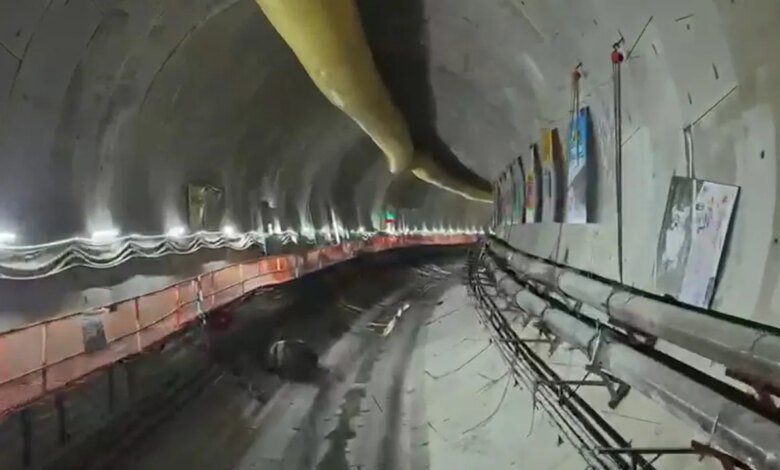
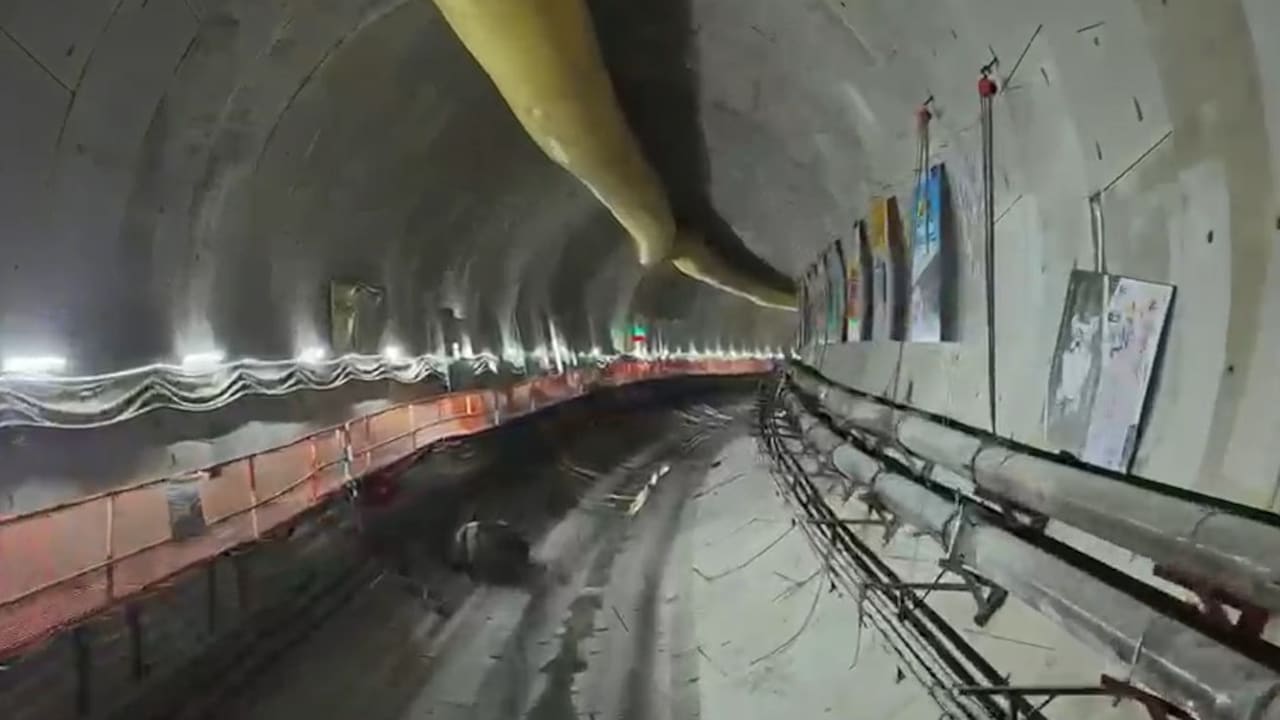
In a major leap for Mumbai’s infrastructure and connectivity, the Mumbai Metropolitan Region Development Authority (MMRDA) has completed one kilometre of excavation on the Orange Gate to Marine Drive underground road tunnel. This marks a crucial milestone for the Rs 8,056-crore project, which features twin tunnels spanning over 7 kilometres to link the Eastern Freeway directly to the Coastal Road. Once completed, the project will slash peak travel times between Orange Gate and Marine Drive from 30 minutes to just five minutes, significantly easing congestion across South Mumbai.
The project’s foundation stone was laid in January 2024 by Prime Minister Narendra Modi. The tunnelling work was launched in December 2025,with completion targeted for December 2028.
The infrastructure includes 7 km of twin underground tunnels. Each tunnel will feature two 3.2-meter-wide traffic lanes alongside one emergency lane. Cross passages are being built every 300 meters to connect the twin tunnels for emergency access.
Once completed, the tunnel will include advanced ventilation, ITS Smart Mobility technology, and an AI-enabled traffic management system for safety and efficiency.
The tunnel crosses the Harbour Line near Old Elphinstone Bridge, Western Railway near Charni Road Station, proposed Metro Line 11 and Metro Line 3 near Lamington Road Junction before ending near Bal Bhavan on Netaji Subhash Chandra Bose Road at Marine Drive.
The tunnel reaches a depth of nearly 52 metres below the surface. Its deepest point is located near Lamington Road at approximately 47-50 metres. As per MMRDA, approximately 14650 vehicles are estimated to travel daily on the Orange Gate tunnel project by 2029.
The project is being developed as part of MMRDA’s broader vision of creating a multi-layered transportation ecosystem for Mumbai, where elevated corridors, metro systems, coastal infrastructure, and underground road networks function as an integrated mobility architecture for a rapidly expanding global megacity.