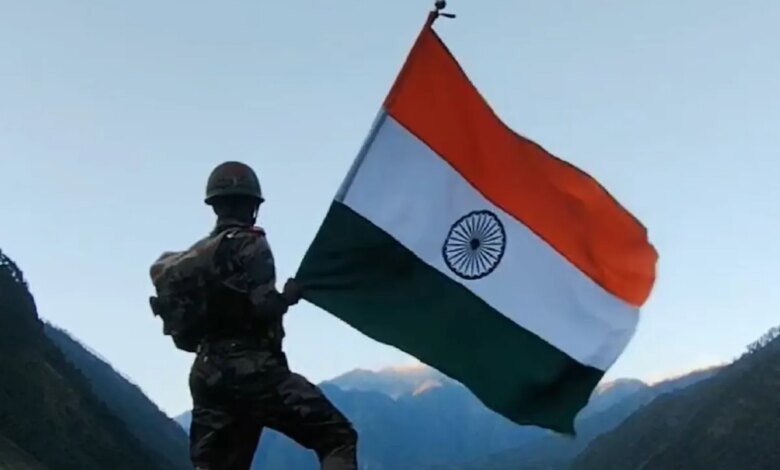

India will celebrate its 80th Independence Day on Saturday, August 15, 2026. The Tricolour, one of the centres of attraction on the occasion, will take centrestage and one element that stands out in it is the wheel, also known as the Ashok Chakra, which has 24 spokes. The navy-blue wheel has a striking presence in the white band of the national flag as it stands as a symbol of righteous law (Dharma). Derived from the Sarnath Lion Capital of Emperor Ashoka, the wheel signifies that there is life in movement and death in stagnation.
The wheel has been added in accordance with the Flag Code of India, 2002, which says, “The middle panel shall be white, bearing at its centre the design of Ashoka Chakra in navy blue colour with 24 equally spaced spokes. The Ashoka Chakra shall preferably be screen printed or otherwise printed or stencilled or suitably embroidered and shall be completely visible on both sides of the Flag in the centre of the white panel.”
But what do those 24 spokes actually mean? More than design, the spokes represent 24 virtues:
- Hope
- Love
- Courage
- Patience
- Peacefulness
- Goodness
- Faithfulness
- Gentleness
- Kindness
- Selflessness
- Self-control
- Self-sacrifice
- Truth
- Righteousness
- Justice
- Mercy
- Graciousness
- Humility
- Empathy
- Sympathy
- Knowledge
- Wisdom
- Moral Values
- Altruism
When the Constituent Assembly adopted India’s national flag on July 22, 1947, the Ashoka Chakra replaced the charkha that had featured in earlier versions of the flag.
The wheel’s symbolism was particularly significant for a country emerging from colonial rule. A wheel does not stand still. Its movement suggests progress, continuity and a nation moving forward rather than remaining trapped in the past.
That makes the Chakra more than an emblem placed at the heart of the Tricolour. It connects modern India with an ancient symbol of dharma while carrying a simple message: a nation, like a wheel, must keep moving.