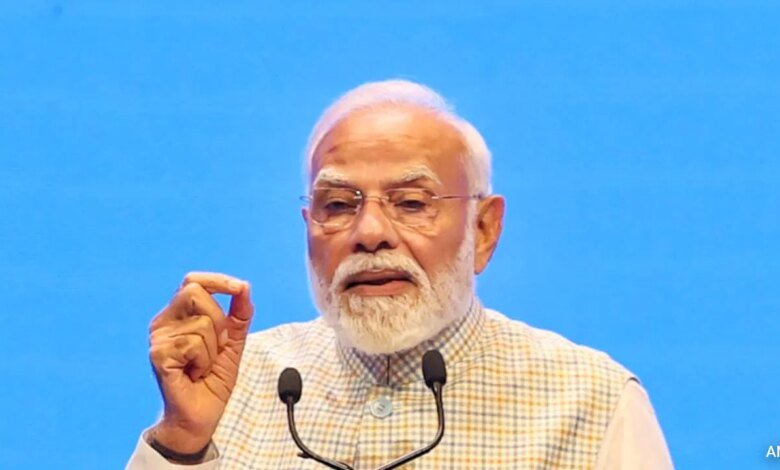
Prime Minister Narendra Modi on Thursday said that mobile internet speeds in India have increased ten-fold since 2022, when 5G services were launched in the country. He was addressing the 10th edition of the India Mobile Congress (IMC) at Yashobhoomi in New Delhi.
“In 2022, it was from this very platform that we launched 5G in the country. Then, in 2023, I spoke about how India was moving from 5G roll-out towards 5G reach-out. And today we are all seeing that 5G connectivity has reached every district of the country,” PM Modi said.
“Today there are more than 5.5 lakh base stations in India, from where 5G networks are operating. And mobile internet speed is 10 times higher compared to 2022,” he said.
The 10x figure may sound like a statistic meant for the telecom industry. But what does it actually mean for someone using a phone every day?
According to the Department of Telecommunications, the average mobile broadband download speed in India increased from 13.67 Mbps in March 2022 to 132 Mbps in December 2025, based on Ookla’s Speedtest Global Index.
Put simply, a 2 GB movie that would theoretically take around 20 minutes to download at the 2022 average speed could take only about two minutes now.
For a larger 5 GB file, the difference is even more striking – from roughly 49 minutes to about five minutes.
A 1 GB file, meanwhile, could theoretically take close to 10 minutes at the 2022 speed, compared with around one minute at 132 Mbps.
However, its important to note that these are theoretical calculations. Actual download times can vary depending on the network, signal strength, congestion, the server from which a file is being downloaded and the device being used.
The improvement is also visible in India’s 5G experience. According to Opensignal’s measurements for October-December 2025, average 5G download speeds were around 199 Mbps on Jio and 186 Mbps on Airtel, although speeds vary by operator and location.
For consumers, however, the significance of faster internet goes beyond downloading movies. Large apps and game updates can arrive faster, high-resolution videos can be uploaded more quickly, and cloud backups of photos and videos can take considerably less time.