Guwahati:
Home Minister Amit Shah arrived in Arunachal Pradesh for a two-day review visit amid the protest against the proposed 11,200-megawatt (MW) Siang Upper Multipurpose Project (SUMP).
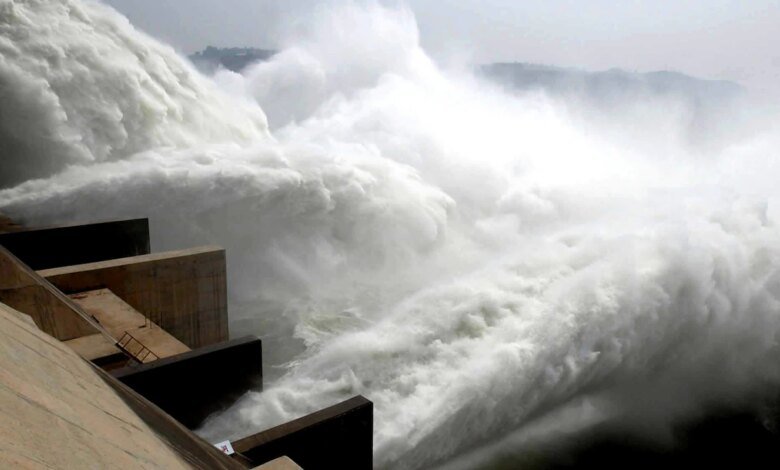
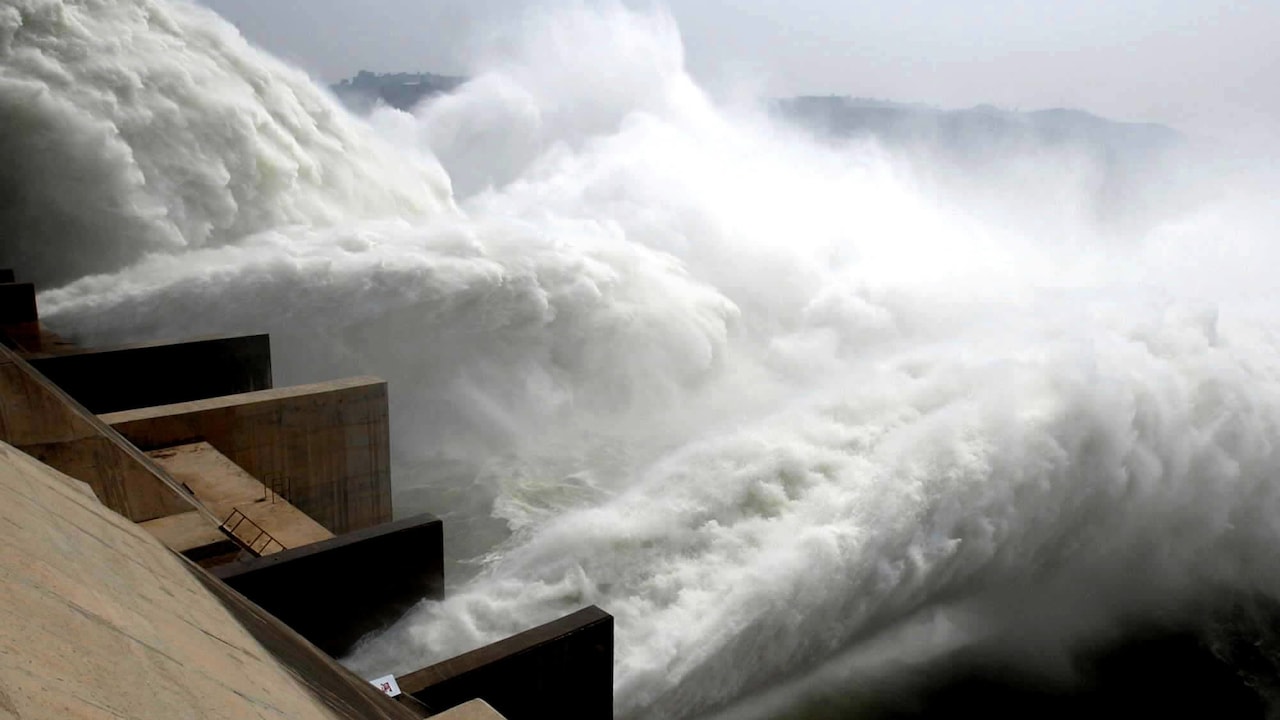
Taken up by the National Hydroelectric Power Corporation (NHPC) across the Siang, Upper Siang and East Siang districts, the project is designed to be India’s largest hydropower and water-storage facility, though it remains stuck at the pre-feasibility survey stage amid stiff resistance from sections of the indigenous Adi community.
Shah said he understood the concerns on the Siang mega dam and assured the people of Siang valley that they would have dialogue in the most positive way. However, he said this is a national project and a strategic one too for the growth and development of Arunachal.
Declared a “National Project” by the Union cabinet in February 2008, the SUMP is one of only 16 infrastructure initiatives in the country to hold that classification, Arunachal Chief Minister Pema Khandu said in an official statement on November 2.
Unlike conventional run-of-the-river hydroelectric plants, both the Centre and the state government have defined the SUMP primarily as a strategic water-storage and flood-moderation reservoir rather than solely a power-generation venture.
The push to fast-track the project’s pre-feasibility report (PFR) is driven by upstream developments across the border in Tibet, where the river originates as the Yarlung Tsangpo before entering Arunachal Pradesh as the Siang and flowing into Assam as the Brahmaputra.
In July 2025, China began constructing a 60,000-MW hydropower project in Medog County, roughly 40 km from the border, without prior consultation or hydrological data-sharing with India, Khandu noted in his open letter to the Adi community.
“Our valley faces real water risks, from sudden and exceptionally high flows arriving with little warning to water scarcity in the dry winter months, especially since around 65 per cent of the Aane Siang (Mother Siang) comes from China,” Khandu wrote.
“We cannot control what happens upstream, but we can control what we do on our side. We must prepare and build resilience. The Siang UMP therefore could be one of the options which should be scientifically and technically explored to develop feasible options to maintain ecological flow in the Siang River and the Brahmaputra,” he said.
According to the state government, the project has not yet been cleared for construction; current ground operations are restricted to technical and environmental investigations required to compile the PFR and assess whether a reservoir of this scale is viable in the seismically active belt.
“Let me be clear. We are not talking about dam construction at this stage. I assure each and every one of you that no decision has been made regarding construction of the Siang UMP by either the government of India or the government of Arunachal Pradesh,” Khandu said, adding that any subsequent step would require mandatory public hearings and consent under the Right to Fair Compensation and Transparency in Land Acquisition, Rehabilitation and Resettlement Act, 2013, and the Environment Protection Act, 1986.
To build local consensus for the PFR studies, the state government has signed village-level memorandums of understanding (MoUs) with sections of residents. Following a special state cabinet meeting chaired by Khandu and Deputy Chief Minister Chowna Mein, the government formed a committee under the Secretary (Land Management) to examine property compensation rates and draft a rehabilitation and resettlement (R&R) framework for likely project-affected families (PAFs), while directing the Urban Development Department to set up new development authorities in Yingkiong and Geku.
However, indigenous groups led by the Siang Indigenous Farmers’ Forum (SIFF), the Adi Baane Kebang (ABK) United and the SUMP Affected Area Youth Association have opposed the PFR surveys, warning that a mega-reservoir will submerge ancestral villages, paddy fields and orange orchards along the valley.
Tensions over survey preparations and the preventive detention of four activists in October under the Arunachal Pradesh Unlawful Activities (Prevention) Act, 2014, spilled over during a 12-hour shutdown that month. Crowds in Pasighat set fire to an NHPC office and police vehicles, prompting the deployment of 30 to 34 Central Armed Police Forces (CAPF) companies across the three districts.
While SIFF spokesperson Tagori Mize rejected Shah’s Saturday dialogue offer until all CAPF personnel are withdrawn and first information reports (FIRs) against protesters are dropped, former Union minister and Pasighat West MLA Ninong Ering said that completing the technical study is essential to know the exact submergence footprint.
“We must have the PFR because we want to understand how the dam will affect the people, which areas are likely to be submerged and what its overall impact will be. We do not want another Chipko movement or Tehri Dam movement. Unfortunately, we are already on the back foot because of the agitation,” Ering said.