Bhopal:
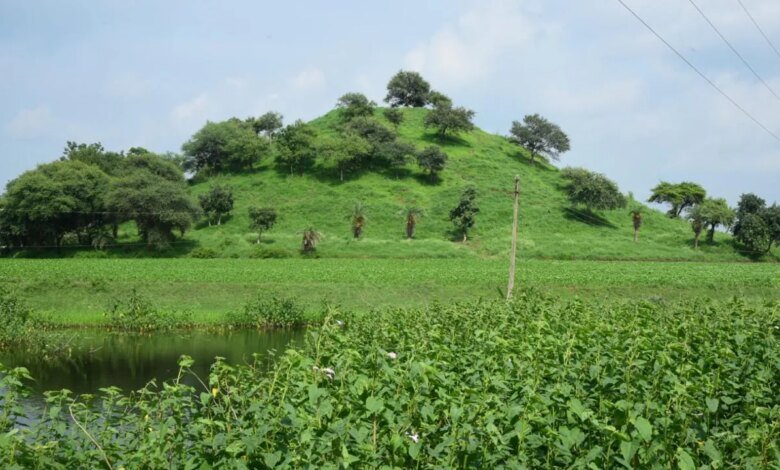
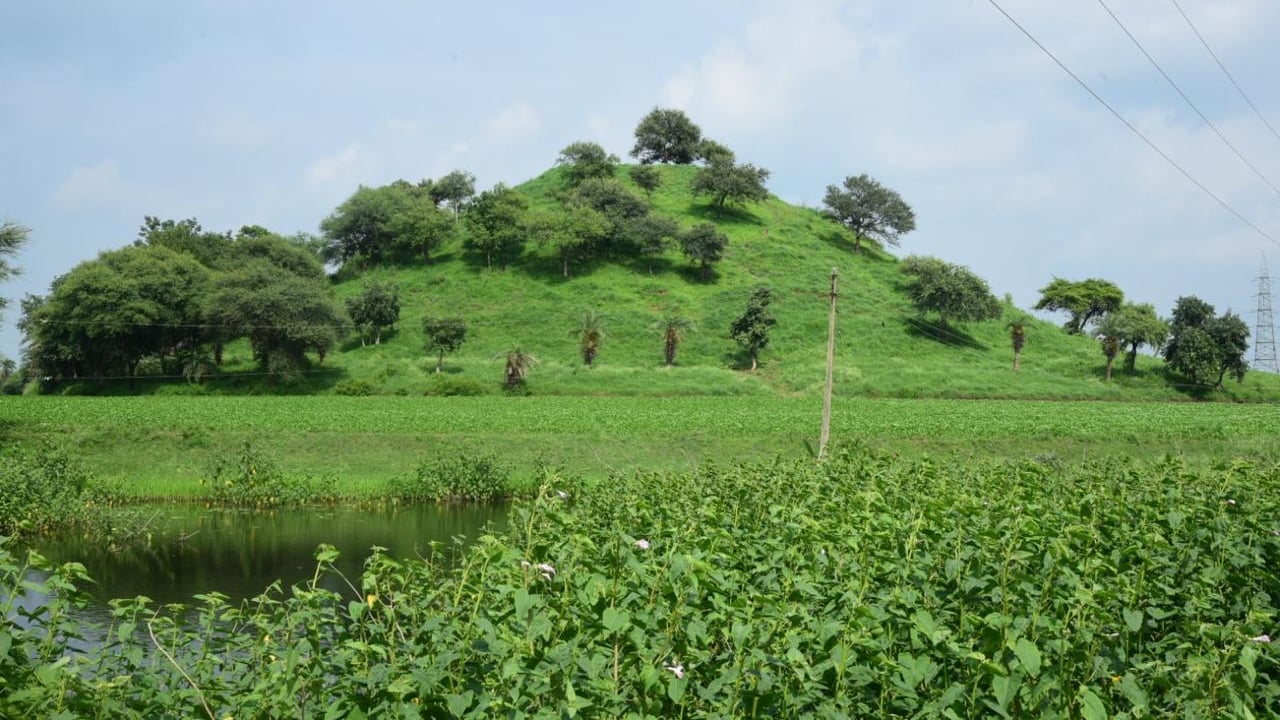
For nearly nine decades, one of Madhya Pradesh’s biggest archaeological mysteries has been hiding in plain sight under an enormous mound on the outskirts of Ujjain.
It may be bigger than Sanchi, more than 2,000 years old and possibly connected to Emperor Ashoka’s years in Ujjain. Yet no one knows for certain what lies beneath Vaishya Tekri because the last serious attempt to find out ended abruptly in 1939.
Now, Madhya Pradesh wants to dig again.
Chief Minister Mohan Yadav has pushed for fresh exploration of the site, and the state government is working with the Archaeological Survey of India (ASI) on the possibility of a systematic excavation of Vaishya Tekri, a site that a British-era archaeological report described as containing “perhaps the biggest known” Buddhist stupa.
The numbers recorded during the 1938-39 excavation were extraordinary.
The mound believed to contain the principal stupa was estimated to be around 350 feet in diameter and at least 100 feet high. By comparison, the Great Stupa at Sanchi is roughly 120 feet in diameter and about 54 feet high.
If those early measurements are borne out by a modern excavation, Vaishya Tekri could significantly alter the archaeological understanding of Buddhism in ancient central India.
But the ASI is being careful not to turn possibility into history before it is confirmed.
Nandini Bhattacharya, Joint Director General of the Archaeological Survey of India, told NDTV that the mound, earlier reports and archaeological material from the area do suggest the possibility of a stupa larger than Sanchi. She stressed, however, that this cannot be stated as a fact until excavation is carried out.
For archaeologists, that distinction is crucial.
Tradition links Vaishya Tekri to the Mauryan period and to Ashoka, who is believed to have served as governor of Ujjain before becoming emperor. Some accounts connect the construction of a Buddhist monument here to Devi, Ashoka’s wife and the daughter of a wealthy merchant of Vidisha.
The site has also been linked by scholars to the Kanakgiri Vihara mentioned in Buddhist traditions and, more speculatively, to a large stupa described centuries later by the Chinese traveller Hiuen Tsang. These connections remain hypotheses, not settled identifications.
What is certain is that archaeologists who excavated Vaishya Tekri in 1938-39 found something highly unusual.
Their report described a massive circular mound surrounded by a rectangular depression. Partial excavation exposed the remains of one principal stupa and two smaller stupas.
The main structure was unlike the standard masonry construction expected at such a monument. Its core consisted largely of tightly rammed local murum, while the exterior had been faced with large bricks set in mud mortar.
At the base, excavators recorded bowl-shaped masonry apparently designed to withstand the enormous outward pressure created by the mound.
The construction was described in the report as “peculiar” and unlike anything encountered elsewhere.
Much of the original brick facing had already disappeared by the time archaeologists reached the site, while erosion was believed to have washed away the upper portion.
That left two crucial questions unanswered: What was the stupa’s actual original height, and what did its complete architectural plan look like? Then the excavation stopped.
According to records from the period, work was abandoned after a gas-related incident in which labourers working at the site fell unconscious. The excavation was never taken to its logical conclusion.
Vaishya Tekri went back to being a mound for almost 90 years.
The challenge today is not merely archaeological. It is also financial and administrative.
Ujjain Divisional Commissioner Ashish Singh told NDTV that the entire land covering the site is privately owned. Acquiring it for excavation and preservation is expected to cost approximately Rs 40 crore, and a proposal has been sent to the government.
The administration, Singh said, is coordinating with both state and central archaeological authorities and will provide the necessary assistance if the excavation goes ahead.
That means the next chapter of Vaishya Tekri will depend on much more than spades and trenches. Land acquisition, conservation planning, weather, ground conditions and archaeological methodology will all have to be worked out before excavation begins.
For now, the enormous mound remains what it has been for generations: a tantalising archaeological question waiting for someone to dig deep enough to answer it.