A fragile US-Iran detente is in place with the possibility that it may hold. Qatar and Pakistan are the two mediators. In an interview recently to Financial Times, Qatar’s Prime Minister and Foreign Minister, Sheikh Mohammed bin Abdulrahman Al Thani, said regional countries are seeking to establish a new regional security framework with Tehran aimed at restoring long-term stability.
Qatar is one of the Arab Gulf states that has usually had a more accommodative and conciliatory position regarding Iran, with which it also shares the Pars gas fields. Qatar is almost entirely dependent on the Strait of Hormuz for its exports and imports. But Qatar also hosts the US military’s Central Command. This position, therefore, propelled it into the role of a mediator in the current conflict in West Asia. Mediation is also one of the tools of Qatar’s official foreign policy. That is why the Prime Minister’s words matter. A regional security makeover will surely be one of the outcomes of this war.
Advertisement – Scroll to continue
The US has till now been a key security partner of the Gulf states, with Iran being a major threat perception for these countries. There has, however, been an increasing perception, at least since the outbreak of the Arab Spring, that the US was not as invested in Gulf security and was increasingly pivoting to the Indo-Pacific to contain an assertive China. If the current administration of US President Donald Trump allayed these concerns for a while, then the Iran war has helped reignite them. American bases and military equipment in the Gulf countries, for instance, became a liability for these countries as Iran repeatedly targeted them during the war. Moreover, reports emerged that the US, in fact, moved some equipment out of these states to Israel. Influences and analysts the Gulf states openly criticised the US for failing to protect its Gulf allies in the manner they needed. Now, The Wall Street Journal, quoting American officials, has again published a report that amidst the damage suffered by its base in Bahrain, the Pentagon is considering reducing its military footprint in Kuwait and Saudi Arabia and shifting some of its operations to Israel.
In any case, the current detente, if it endures, speaks of a drawn down US presence in the region as well as highlights the limits of American power. A resilient Iran, with sanctions lifted, able to sell its oil and gas freely on the global market, the unfreezing of its assets and funds running in the billions of dollars, as well as a $300 billion fund for its reconstruction, in charge of the Strait of Hormuz (together with Oman), will emerge stronger from the war than any other country in the region, even if weakened economically and militarily.
Most Gulf states will thus look for alternatives – as they have for a while – even as they continue their security partnership with the US. While most, if not all of them, will try to work out some kind of agreement with Iran to deter any future attacks, the mistrust now runs deep.
In such a scenario China becomes a natural choice for many of the GCC states, as well as for Iran, of course. Over the years, China has strengthened its partnership with Iran, reflected in the support it offered in the current war, as well as with the GCC states, both at an individual level and as a bloc. China sources most of its energy needs from this region – in fact, more from the GCC than from Iran. Hence, China’s role in the region is certain to expand. But while China is a major economic partner and may export arms, it is doubtful that it will enter into any military alliance with any of them, which, in turn, will make the countries look for a regional security architecture.
Here, two distinct groups may emerge. Qatar, which has already faced Israeli attacks on its territory last year and also has an uneasy relationship with many of the other Gulf states, may well choose to deepen ties with Iran. In any case, Qatar has pursued close ties with Iran, which made it a trusted mediator for the Iranians, as opposed to Pakistan, which actually represented US interests. Qatar has had its own share of run-ins with countries like Saudi Arabia and the United Arab Emirates (UAE). Sharing the Pars gas fields with Iran as well as its dependence on Hormuz will be incentive enough to pursue closer relations with the Persian state, together with Oman. This will also neutralise any threats from Iran should conflict reignite there. Therefore, we may see a closer Qatar-Oman-Iran trilateral partnership emerging in the coming days.
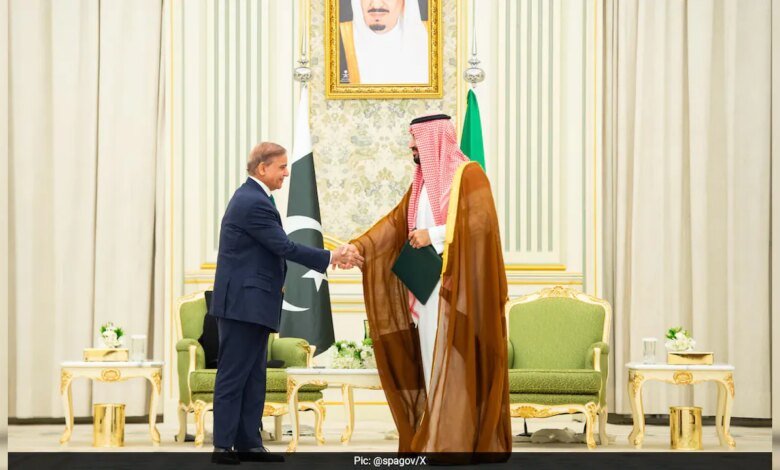
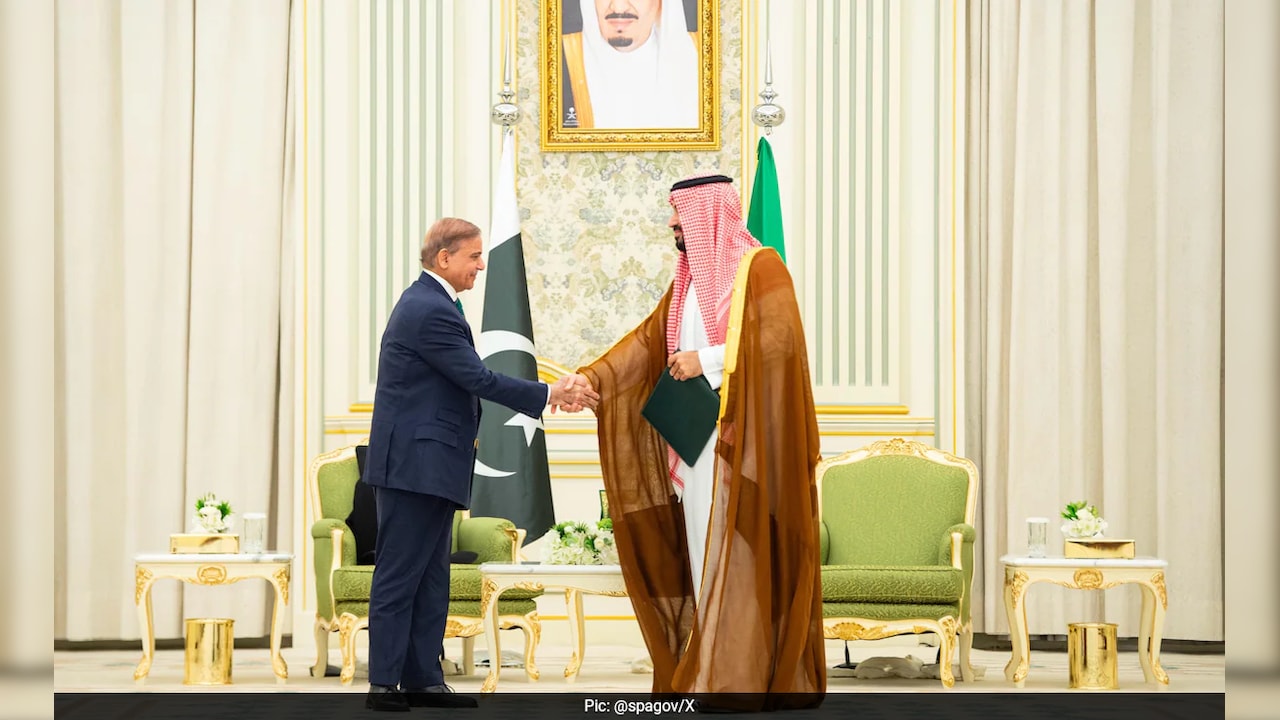
As opposed to this, another grouping already in the making will be of Saudi Arabia, Pakistan and Egypt. The Saudi-Pakistan partnership goes back decades but received a new lease of life with the mutual defence pact signed last year. Ironically, this was driven by Israel’s attack on Qatar, reflecting that the Saudis saw a challenge in Israel, too, along with the Iranian one. Even though the Saudis had entered a ‘truce’ with Iran in 2023 brokered by China, the current war has laid bare the huge trust deficit between them. This is also reflected in the joint statement issued after the GCC meeting with US Secretary of State Marco Rubio in Bahrain last week. Iran’s nuclear programme still poses a threat to GCC countries and will continue to do so till any definite resolution is achieved. The Saudis, also suffering from Iranian attacks and by the closure of Hormuz, will try to hedge strategically through defence alliances, like that with Pakistan, which, for all practical purposes, is largely one-sided. For instance, while Pakistan moved fighter jets and military personnel to Saudi Arabia during the war in preparation for any potential military activity, no Saudi effort was witnessed during Pakistan’s recent conflict with Afghanistan.
Egypt is also dependent on the Saudis economically, as is President Al Sisi for his presidency, which gives the Saudis enormous leverage over it; so, a formal alliance between the two is quite possible. This grouping may be favorable to Kuwait too, which shares a border with Saudi Arabia and is closely aligned with it both economically and security wise.
Turkey, while widely touted as a member of a potential Sunni alliance, may not actually join such a front. As a NATO member state, it may not be formally possible for it to join another military alliance. Moreover, there is a trust deficit between Turkey and Saudi Arabia and Egypt. All three countries are, however, trying to smoothen their relationships with each other. But Turkey is also closely tied to Qatar, and has tried to take a moderate position regarding Iran. It will, therefore, keep trying to balance relations with all sides.
This leaves the UAE, which bore the brunt of Iran’s attacks but has also been increasingly at odds with Saudi Arabia, its close ally once. Its ties with Israel also places it at odds with other GCC states, except Bahrain. The partnership with Israel, especially in defence and security may, therefore, increase, but it will probably be kept low profile. Iran has clearly emerged as a winner in the larger Muslim world, and Arab leaders will have to contend with this at least as long as a resolution to Gaza is not found.
Israel is the only country in the region that has not welcomed the Iran-US MoU, as none of its major objectives in the war have been achieved. Instead, the war has managed to cause fissures in its relations with its closest partner and ally, the US. Much will depend on how its negotiations with Lebanon pan out and on how the issue of Iran’s proxies will be resolved – a subject again deferred for later. The GCC states find common cause with Israel in this, but their normalisation with the country remains a distant possibility for now as they hold the latter responsible for the current crisis.
All these states will also be bracing themselves for Iranian oil to enter the markets. This will help stabilise oil prices in the short term, just as reopening Hormuz has helped bring prices down. But in the long run, oil prices will be determined by OPEC, of which Iran is also a member.
For India, this is good news. In fact, the war has exposed India’s vulnerabilities. She is majorly dependent on imports for her energy requirements, oil prices went up, gas shortage was reported from across the country, prices on commodities soared, markets took a hit. The closure of Hormuz even dented her fertilizer imports, critical for her agricultural needs. There are large Indian expatriate communities in the GCC, a number of whom lost their lives in this conflict. Her seafarers came under attack, and overall, the economy was dealt a huge blow. In such a scenario India has only to gain from the detente. But with the new regional dynamics emerging, she will have to carefully recalibrate her relations with multiple power centres in the region and go back to her time-tested policy of balancing relations without overtly aligning with any side.
(Aditi Bhaduri is a senior journalist)
Disclaimer: These are the personal opinions of the author