New Delhi:
The glow on the screen is costing billions at the billing counter.
Every time a Korean drama protagonist steps into the frame with flawless, translucent skin, a digital shopping cart in Mumbai or Delhi fills up. What started as a niche subculture of Hallyu (Korean wave) fans has morphed into a massive economic engine in the Indian beauty market.
But beneath the aesthetic glass bottles and the promise of a “porcelain” glow lies a complex economic web. It is driven by geopolitical soft power, heavy marketing machinery, and a growing anatomical disconnect that has Indian dermatologists waving red flags.
The Soft Power Machine And The Mirage of Seoul Skin
The sudden influx of Korean skincare onto Indian vanity shelves was not an organic retail accident. It was a calculated economic strategy.
“What triggered the Indian K-beauty obsession is a mix of Korean soft power,” explains Dr Saurabh Arora, Managing Director of Auriga Research. “Our people are not only consuming their skincare products, but also binge-watching K-dramas and enjoying K-pop. This is a conscious effort by the Korean government.”
Through pop-up mall events and K-pop days, Korea exported a highly specific cultural ideal. “We all in India idealise a particular kind of skin, which is fair and flawless,” Dr Arora notes. “Koreans have a different kind of skin. We are falsely idealising that these products can give us that kind of skin.”
The emotional hook was set long before the formulas arrived. Dr Ajayita, Gold Medal BAMS physician and Founder of AClinic Chandigarh, points out that the marketing relies on deep psychological projection. “K-dramas and K-pop built the emotional pull first. Korean skin became the skin of the person we were rooting for on screen.”
Once the emotional connection was secured, the Korean cosmetic industry deployed its second weapon: hyper-innovation. Dr Arora highlights multi-phasic products, capsule creams with spheres sitting in gel, and sheet masks that make consumers feel they are participating in an elite scientific ritual. “They are so well designed and the story is so well told,” he says.
However, Dr Jenovia Daun Jung of KorinMi argues that this phenomenon is not purely marketing-driven, but rather built on a foundation of results. “The K-beauty wave in India isn’t just about great marketing, it’s about trust that has been earned over time,” she explains. “Korean skincare built its credibility through visible, consistent results, whether that’s healthier skin, a stronger barrier, a more even tone, or the much-talked-about glass skin effect.”
For an Indian audience tired of archaic beauty standards, this approach offered a paradigm shift. “For many Indian consumers, who have long been sold ideals of fairness rather than skin health, K-beauty felt refreshingly different,” Dr Jung adds. “It offered not just products, but a philosophy that explained why ingredients work and how to care for your skin. K-dramas and K-pop certainly helped spark curiosity, but people stayed because the results spoke for themselves.”
The Climate Clash: Why Seoul Routines Fail Mumbai Monsoons
As millions of rupees flow out of Indian bank accounts into K-beauty imports, consumers are hitting a biological wall. The economic promise of “glass skin” is crashing against the reality of tropical sweat and high-melanin biology.
“Korean beauty products have gained immense popularity for their focus on hydration,” says Dr Aarzoo Pahwa, Consultant Dermatologist at Kailash Deepak Hospital. “However, Indian skin is highly diverse, and the country’s climate varies from humid coastal regions to dry interiors. Some formulations may feel too heavy for people living in humid regions or those with excessively oily skin.”
Dr Pahwa stresses that Indian consumers face unique issues like hyperpigmentation and intense UV radiation-concerns international products aren’t inherently built to fix.
The clinical fallout of this mismatch is keeping local dermatologists busy. “Korean skincare was made for Seoul’s cooler, drier weather,” warns Dr Ajayita. “India is the opposite on both counts. A nine-step routine that works fine in a Seoul winter will clog pores within a week of a Mumbai monsoon.”
More alarming is the economic irony of Indian consumers paying premium prices for products that can actively damage their skin tone. “Certain brightening actives, used at Korean strength without proper buffering, can actually darken deeper Indian skin tones instead of evening them out,” Dr Ajayita reveals. Her clinical verdict? Take the raw ingredient science, but leave the rigid, multi-step foreign routines behind.
Dr Jung agrees that copy-pasting foreign routines can be problematic, noting that “a product that works for a Korean skin type in Seoul’s dry winters may not be right for someone in Delhi’s humid summers.” However, she emphasises that the underlying Korean science is highly compatible with Indian needs when properly adapted. “Korean skincare focuses on skin barrier health, hydration, and pigmentation management, which are some of the biggest concerns for Indian skin as well, especially with our heat, humidity, and high UV exposure,” she states.
To bridge this climatic and biological gap, clinics like KorinMi are moving away from self-prescription and toward deep personalization. “Before building a routine, it’s important to understand your skin barrier, hydration levels, and how your skin responds to pigmentation and inflammation,” Dr Jung explains, noting that her patients undergo a 3D Skin & Scalp Analysis before any treatment. “The Korean approach gives us a strong foundation, but the real difference comes from personalisation. That’s what helps us deliver results that are both visible and sustainable for Indian skin.”
Consumer Reality: Is Snail Mucin a Hype or a Necessity?
For the everyday consumer, the decision to buy Korean often comes down to accessibility, novelty, and trial-and-error.
Poonam Kumari, a 30-year-old New Delhi resident, has experimented extensively with both domestic and Korean brands. “I’ve used COSRX Snail Mucin, and I find it works well during the winter months,” she says. “It provides a good level of hydration.” However, she views it through a pragmatic economic lens: “Cheaper and better alternatives for hydration are available in the Indian market-I would not say this is a must-have.”
Kumari also integrates the Innisfree Volcanic Pore Clay Mask into her routine for a refreshed feel, noting that a single small bottle lasts nearly ten months. Despite the lack of “dramatic or instant results,” the economic draw remains strong. “I would still explore Korean skincare products over alternatives because they are generally more affordable and widely available in the Indian market,” she adds.
This highlights the core hurdle for local brands: K-beauty has mastered the supply chain and pricing sweet spot, making global trends feel hyper-local and affordable to Gen Z and millennial buyers.
The Indian Counter-Attack: Science Over Influencer Proof
To win back market share, Indian beauty brands are shifting their strategies. They are no longer trying to look Korean; they are lean-cooking formulas designed for the Indian climate.
“Indian skincare brands are definitely better geared to compete,” states Dr Arora, whose CRO (contract research organisation) firm works closely with domestic brands. “They are adapting quickly to new formats from Korea while Indianising them. The first sale can come from your design or marketing, but repeat sales and consistent profitability only come from products that give results.”
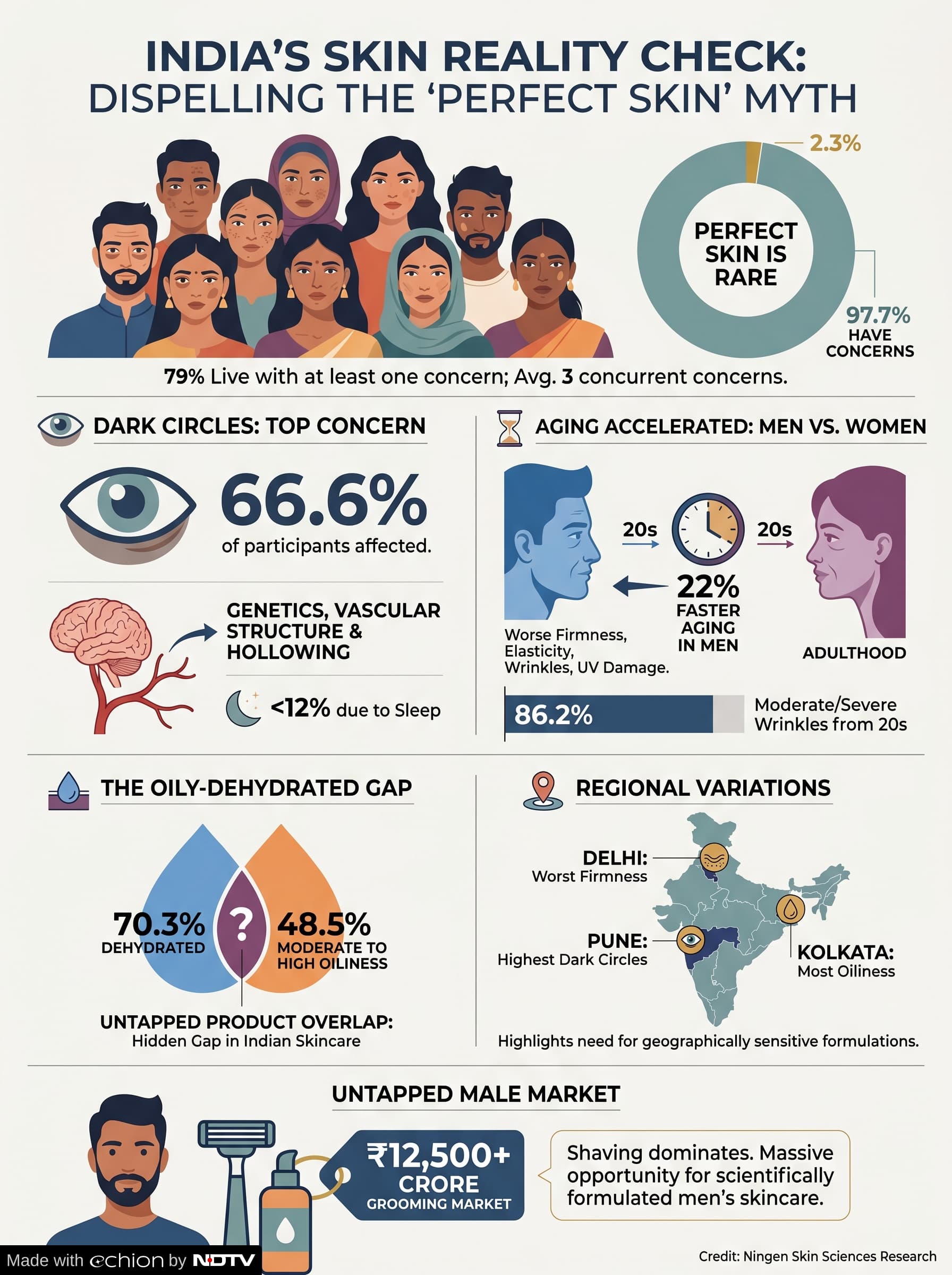
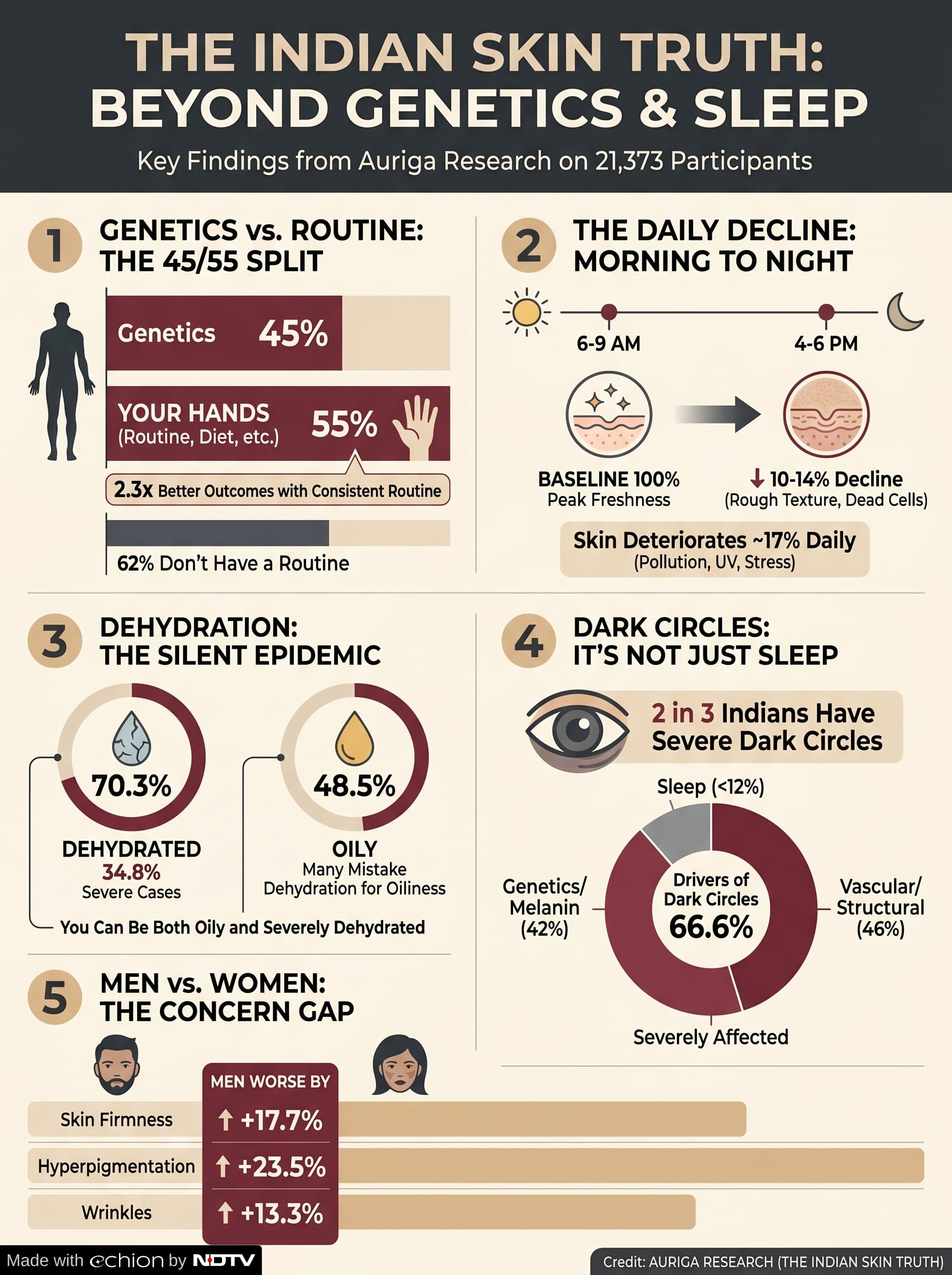
He notes that clinical trials are rising sharply. His firm recently conducted a detailed concern-analysis study for the Indian brand Ningen to develop products specifically targeted at local issues like severe dark circles and early skin sagging.
Dr Pahwa agrees that the competitive edge lies in scientific credibility rather than matching foreign marketing aesthetics. “Indian brands now offer products tailored to local skin concerns. Many incorporate globally recognized ingredients like niacinamide, ceramides, and salicylic acid,” she explains. “By delivering high-quality formulations at competitive prices, brands can appeal to a wider audience without compromising on efficacy.”
The ultimate victory for domestic brands might lie in translating ancient data into modern, transparent communication. Dr. Ajayita argues that India does not need to copy centella when it has manjistha and turmeric, nor chase “glass skin” when kumkumadi oil has treated pigmentation for centuries.
“K-beauty won over Gen Z by explaining why an ingredient works, not just naming it. Indian brands, especially Ayurvedic ones, have under-explained their actives for years,” Dr Ajayita says.
By closing that communication gap, formulating for humidity, and leaning into deep physiological science-like targeting muscle-layer tension instead of just the skin surface-Indian brands are building a defensive wall. “That’s an edge K-beauty genuinely can’t copy,” she concludes. “They’re not formulating for this climate, we are.”
But the standard for consumer trust has been permanently elevated. “Consumers today are looking for more than just products, they’re looking for brands they can trust,” observes Dr Jung, whose practice represents the exact intersection of Korean clinical expertise and Indian skin realities. “Indian consumers are becoming increasingly informed and asking better questions about what they’re putting on their skin. Brands that can meet that curiosity with transparency, scientific credibility, and genuinely personalised solutions will continue to earn their trust.”