Chennai:
“The constitutional protection of speech is tested when speech is ugly, not when it is polite. It is never the decorous critic whom power is tempted to arrest.”
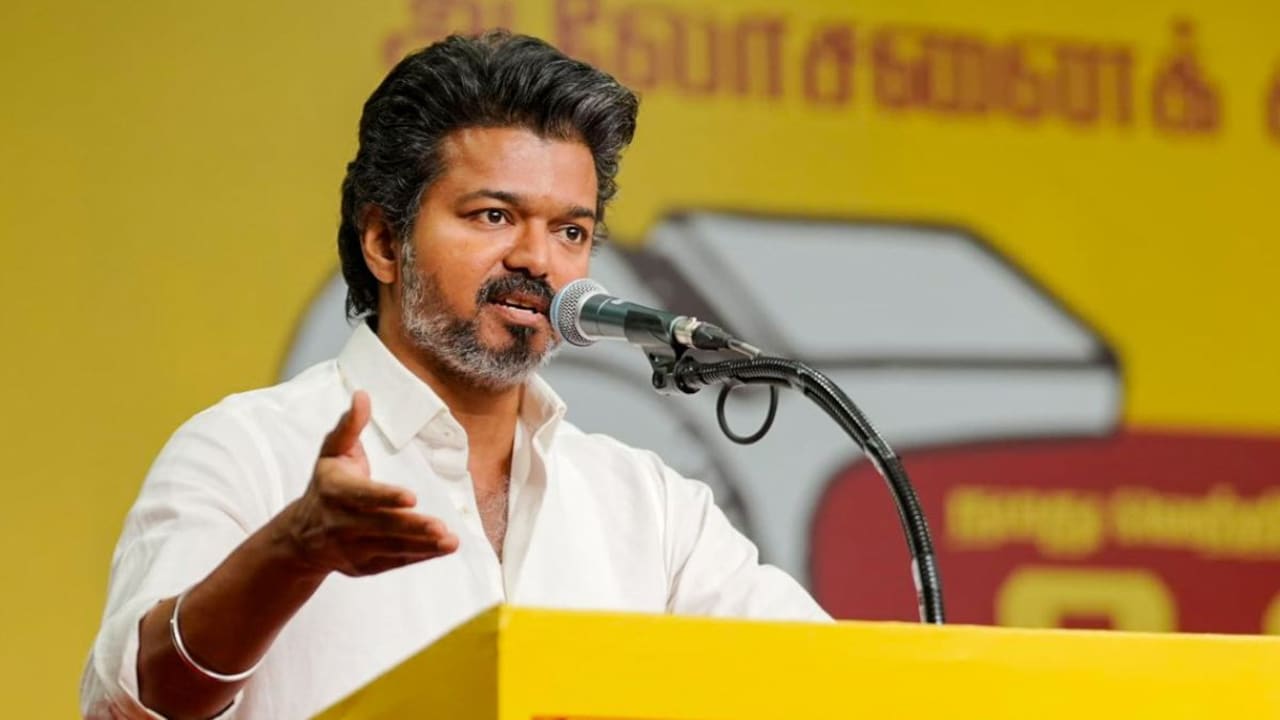
In a robust defence of the right to political expression, the Madras High Court made this observation as it granted anticipatory bail to D Sudha, a woman councillor from the Dravida Munnetra Kazhagam (DMK), who was booked over alleged derogatory remarks about Chief Minister Vijay.
In a strongly worded 16-page order, Justice N Ramesh said those holding high public office must be prepared to face criticism, ridicule and even abuse. He added that the police cannot use the threat of arrest to answer political speech that does not incite violence or public disorder.
“Those who hold high office in a republic hold it on the term that they will be criticised, lampooned and, not rarely, abused,” the judge observed.
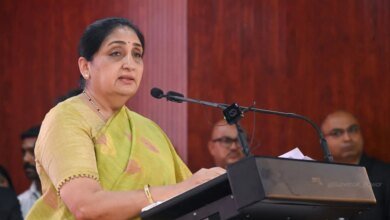
Sudha represents Ward 95 of the Greater Chennai Corporation and is a functionary of the DMK’s women’s wing. She is alleged to have called the Chief Minister a “dog” and a “corpse” at a party meeting at Raja Annamalai Mandram on October 7. A functionary of Tamilaga Vettri Kazhagam (TVK) lodged a complaint 12 days later. A first information report (FIR) was then registered under sections 296(b), 352 and 353(1)(c) of the Bharatiya Nyaya Sanhita.
The court noted that the speech was directed at one individual, the leader of a rival political party, and not at any community or class of people. It also pointed out that the speech urged nobody to take any action.
The judge questioned the police’s reliance on the possibility of clashes between supporters of rival parties. He pointed out that no untoward incident could be attributed to the speech, either in the 12 days before the complaint or since.
The state’s fear of social media quarrels spilling onto the streets was precisely the kind of “remote, conjectural or far-fetched” danger that cannot justify restrictions on free speech, the court said.
The judge also asked why the police had not considered a preliminary inquiry before registering the FIR, particularly when the alleged offences carried a maximum punishment of three years.
The court said the grievance was essentially one of alleged defamation of the Chief Minister. The law provides a separate procedure for prosecuting defamation of public functionaries, including a complaint by the Public Prosecutor with prior government sanction.
“What has been done here is to bypass that filter – to convert an insult to a dignitary into a public-order crime on the complaint of a bystander,” the judge said.
READ | Exclusive: Vijay To Be 1st Tamil Nadu Chief Minister To Attend Davos Summit
The court also made observations on the need for police impartiality in politically sensitive cases.
“The police serve the State, which endures, and not the party in government, which changes,” Justice Ramesh observed.
Referring to allegations that the police act swiftly against Opposition voices, while complaints against those aligned with the ruling establishment are not registered, the judge said an even hand between the ruling party and its opponents was a condition of the police’s constitutional legitimacy.
The judge also referred to the recent detention of Madras Institute of Development Studies professor Kalaiyarasan. Plainclothes policemen picked him up early in the morning over an abusive social media post that was later found to have come from a fake account.
Noting that the Chief Minister had received the professor at the Secretariat and a minister had publicly acknowledged the lapse, the court observed, “An apology, however high its source, is not accountability, and a remedy that depends on the Chief Minister’s personal intervention is not a remedy at all.”
READ | State Flag, Mandatory Tamil: Vijay’s Minister Sparks Controversy With Fresh Remark
The court also rejected the state’s request to bar the councillor from speaking against the Chief Minister as a condition of bail.
“A court that gags a politician as the price of liberty does indirectly what Article 19 forbids the State to do directly,” the judge said.
The judge clarified, however, that protecting the right to speak did not amount to endorsing the language Sudha used. He noted that she had expressed regret and apologised to the Chief Minister.
Allowing her anticipatory bail plea, the court directed Sudha to execute a bond of Rs 25,000 with two sureties. She must report daily to the police at 10.30 am until further orders and appear before the jurisdictional magistrate within 15 days of the order copy being made ready.