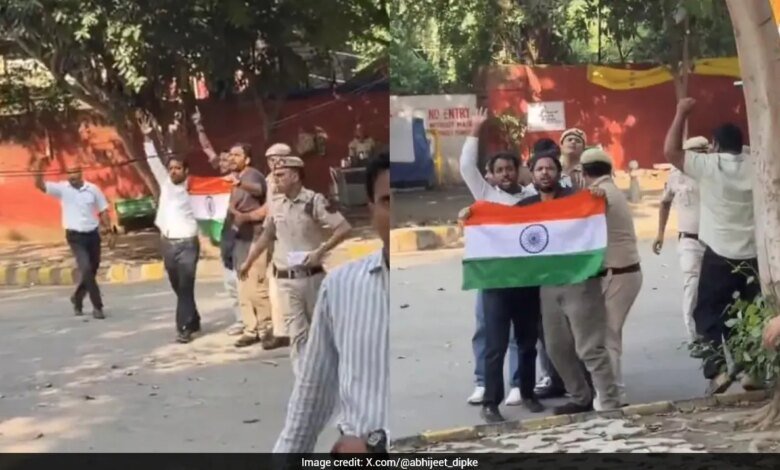
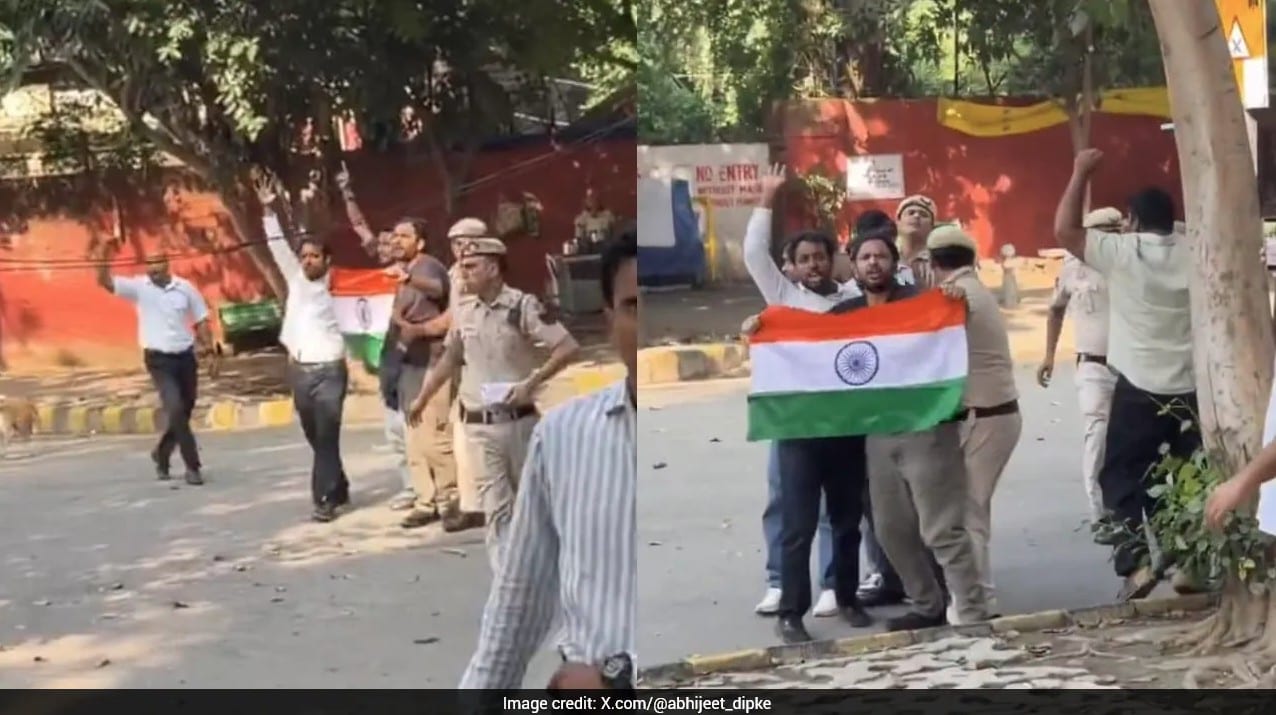
The Delhi High Court on Wednesday pulled up the Cockroach Janta Party (CJP) leaders Ashutosh Ranka and Saurav Das as they moved the court against the magistrate’s order of extending their custody.
The court made some strong observations on the conduct of the CJP leaders, who were arrested on charges of violating their bail bond by attempting to protest at denotified Jantar Mantar.
Questioning their actions, the court also made reference to protests and violence in other countries where student protests have turned violent.
“You are at the forefront (of the protest). When you break barricade, there are chances that more people may follow. There might be persons who may not be under your control,” the court noted.
Justice Subramonium Prasad then referred to the violence and arson in other countries.
“We have seen it happened outside our country. What started as student protests turned into something with arson and burning of buildings.”
Further slamming the CJP actions, the court questioned the “breach of bond” that the CJP leaders signed after their first arrest.
CJP leaders, including Das, Ranka and Abhijeet Dipke were first apprehended at Delhi airport on October 10 as they landed to lead a protest at Jantar Mantar.
Read | In Abhijeet Dipke’s Message To “Cockroaches”, Pause In Protests And A “Real Leaders” Reveal
They were then let off the same day after furnishing peace bonds of Rs 50,000. Das and Ranka were, however, apprehended again on October 14 after their attempt to stage the Tiranga protest at Jantar Mantar. They were sent to five-day judicial custody. While extending their judicial custody, Special Executive Magistrate (SEM) in its October 19 order observed that the respondents had deliberately breached their bonds and immediately committed a breach of peace.
They had then moved High Court against the magistrate’s order.
The High Court reprimanded the leaders on the breach of the bond.
“When you break a bond, aren’t authorities not entitled to seek a stricter bond,” the court asked the CJP leaders.
“You Are Not GenZ”
The court also sought to know the age of the CJP leaders. When informed that they are 27 and 31, the court noted that Ranka and Das are not GenZ and went to question the CJP’s cause.
“Then you are not GenZ. What age of people are millennials? It was student protest, children were there but now it’s another cause. People remain same but cause is changed,” the court noted.
The court also noted that questions about identity, intention and what a person does in life become important for magistrate when assessing apprehension of breach of peace.
“Next question is who are you? What are you? What is your association? What is purport of the association? When there is apprehension of breach of peace and tranquility, all these questions will assume importance,” the court told the CJP leaders’ lawyer.
The court suggested that CJP leaders’ lawyer wait till their appearance before the magistrate in the evening. The lawyer then withdrew the plea.