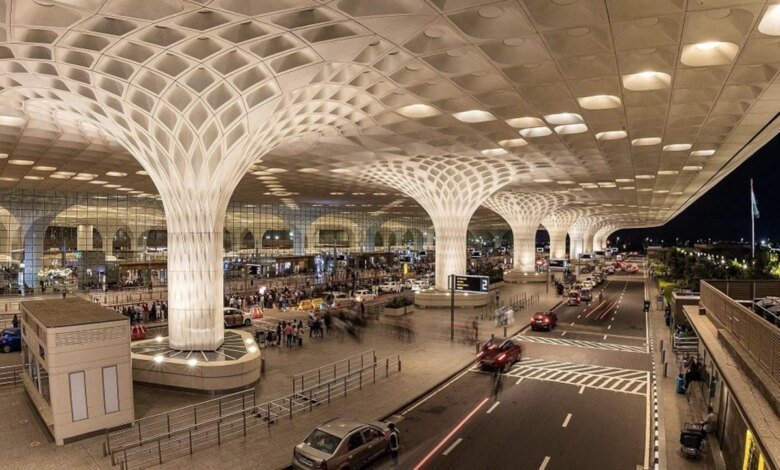

Airlines will operate their winter flight schedules as planned, with Adani Airports assuring carriers that existing slot allocations will not be disturbed, following a meeting with the Civil Aviation Ministry over the proposed redevelopment of Mumbai airport’s ageing Terminal 1. A proposal to cancel 265 weekly international flight slots has been set aside, sources told NDTV.
The meeting between Mumbai International Airport Limited (MIAL), airlines and the ministry on Tuesday ended on a positive note, with both sides agreeing to work towards a plan for the redevelopment of Terminal 1 and the redistribution of flight operations between Chhatrapati Shivaji Maharaj International Airport (CSMIA) and Navi Mumbai International Airport (NMIA).
Sources said the airport operator and airlines will work out the logistics and timeline for the proposed changes. A follow-up meeting with the ministry is scheduled for October 20, while another meeting on October 28 is expected to finalise the plan.
In a statement following the meeting, a Mumbai International Airport Limited (MIAL) spokesperson said Jeet Adani and Arun Bansal met with the Airport Operators Committee (AOC) of Mumbai airport and assured airlines of “minimisation of disruption” and “fully respecting historical slots allocations”.
“They have further given a commitment not to disturb any slots for the winter schedule,” the spokesperson said.
The meeting has resulted in a series of agreed steps, including the formation of a joint working group, a commitment from airlines to support redevelopment from the summer schedule, and assistance for carriers that wish to shift operations to Navi Mumbai.
Six Steps Agreed Upon At The Meeting
MIAL has committed to protecting existing slot allocations for the winter schedule. Airlines are expected to operate their schedules as planned, and the proposal to cancel 265 weekly international flight slots has been set aside.
A joint working group will work over the next two weeks to draw up an implementation plan for the redevelopment of Terminal 1. The group will work on the logistics and timeframe required to carry out the project while minimising disruption to existing flight operations.
According to MIAL, airlines have committed to supporting the redevelopment and traffic-balancing measures from the summer schedule. This means the proposed operational adjustments are to be worked out for implementation from the summer schedule rather than disrupting the winter schedule.
MIAL has assured full support to any airline that wants to shift some of its operations to Navi Mumbai International Airport. The arrangement allows individual airlines to engage with the airport operator on the operational requirements of any proposed shift.
The airport operator and the airlines will engage with the network and slot-allocation teams of individual carriers before the next meeting. These consultations are intended to work out airline-specific requirements and the operational details of the proposed changes.
Sources said the next meeting with the Civil Aviation Ministry is scheduled for October 20. A subsequent meeting on October 28 is expected to finalise the implementation plan. MIAL’s statement specifically confirms the October 28 follow-up meeting.
The MIAL spokesperson said, “Both teams agreed to have follow up meeting on October 28, and till then to engage with each airline Network and Slot teams!”
The spokesperson added that the meeting concluded with a renewed commitment from both sides towards developing Mumbai airport’s infrastructure to the standard expected by Mumbai residents.
The meeting follows a dispute over MIAL’s proposal to reduce 265 of the 770 weekly international departure slots at Mumbai airport’s Terminal 2, a cut of around 33 per cent. The proposal was linked to the planned redevelopment of the northern section of Terminal 1B, with the airport operator seeking to accommodate domestic flight operations affected by the work.
The proposed changes had raised concerns among airlines about disruptions to schedules already planned for the winter season, the short notice and the lack of clarity on the operational arrangements underpinning the transition.
Airlines also sought greater information on the terminal’s structural safety, redevelopment timelines, capacity calculations and consultations with carriers. Changes to established flight operations could affect aircraft deployment, crew arrangements, ground handling and passenger connections, particularly for airlines operating across both Mumbai airports.
The dispute prompted the Civil Aviation Ministry to bring MIAL and airlines together to work towards a mutually acceptable arrangement. The immediate priority has been to balance the need for redevelopment with the requirement to minimise disruption to scheduled flights.
MIAL plans to begin the partial redevelopment of the northern section of Terminal 1B in January 2027, citing safety concerns involving the approximately 60-year-old structure. The airport operator has said these concerns became more pressing following a fire incident at the terminal in April.
The redevelopment is expected to temporarily affect around five million passengers annually, approximately 9 per cent of Mumbai airport’s total annual traffic of around 55 million passengers.
MIAL has proposed shifting affected operations to Navi Mumbai International Airport. The operator has said the redevelopment is necessary to address infrastructure concerns and improve passenger-handling capacity.
Once modernisation is complete, Terminal 1 is expected to handle up to 20 million passengers annually, compared with its current capacity of around 15 million.
The transition to Navi Mumbai is part of the broader effort to balance traffic between the two airports as Mumbai’s aviation infrastructure expands. However, the proposal has required coordination between the airport operator and airlines to ensure that changes to terminal usage do not cause unnecessary disruption.
(Disclaimer: New Delhi Television is a subsidiary of AMG Media Networks Limited, an Adani Group Company.)